
Table of Contents
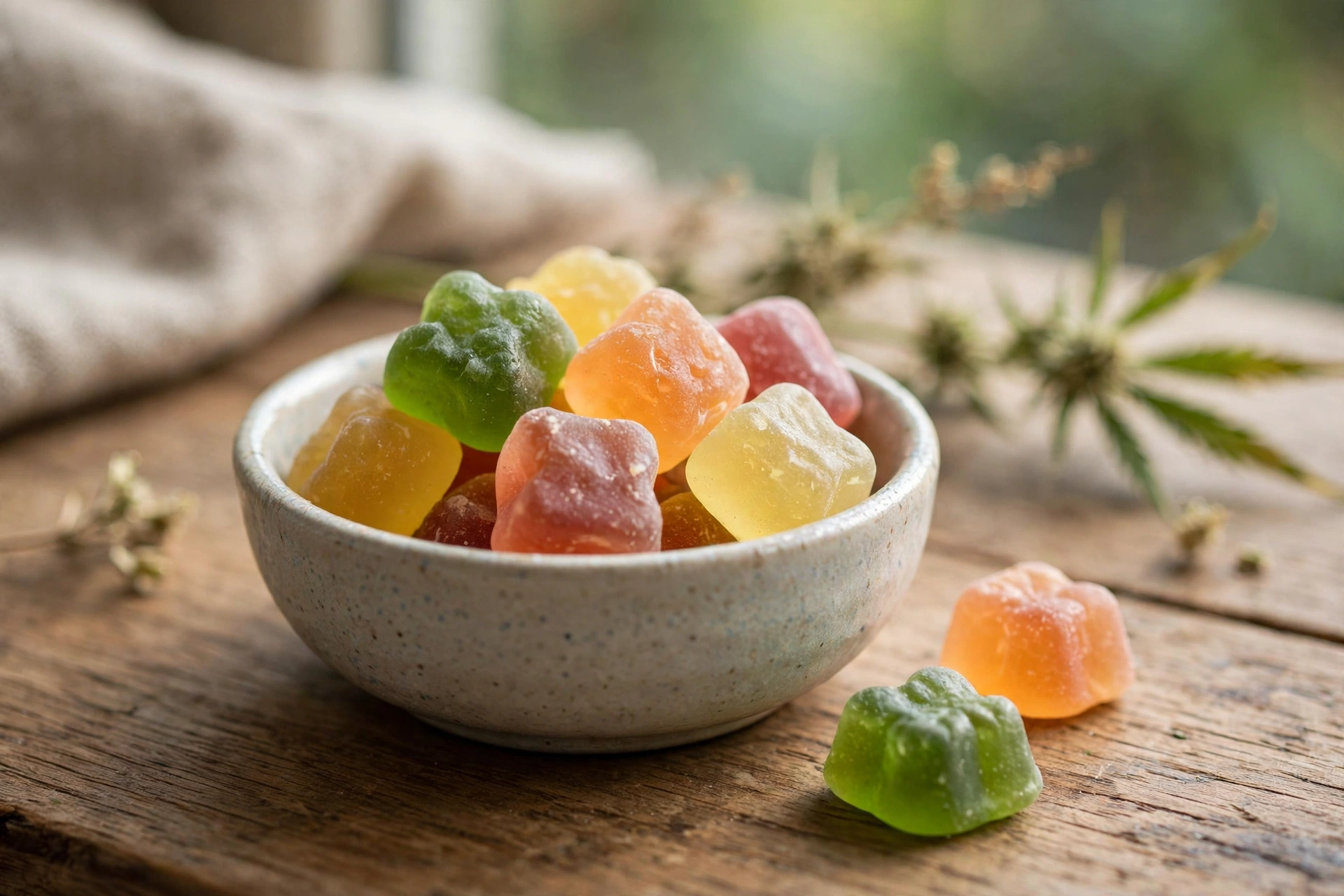
Sometimes an edible does nothing, even when everyone around you is feeling it. The most likely reasons are a dose smaller than the label promised, not waiting long enough, tolerance, or the way your liver handles THC. A small share of people may also process edibles differently because of a gene variant affecting a liver enzyme called CYP2C9.
So how are edibles supposed to work?
Smoking sends THC straight from your lungs into your bloodstream, so you feel it within minutes. Eating it takes the scenic route. THC has to survive your stomach, move into your small intestine, and then travel through the liver before it reaches the rest of your body. That detour is called first-pass metabolism, and it changes the drug itself.
In the liver, an enzyme called CYP2C9 converts much of the delta-9 THC into a metabolite called 11-hydroxy-THC. This metabolite crosses into the brain readily and is generally described as stronger and longer-lasting than the THC you inhale. That is why edibles tend to feel heavier and last longer than smoking the same amount, and also why the experience varies so much from person to person.
Timing matters too. Most people start to feel an edible somewhere between 30 minutes and 2 hours after eating it, and the effects can last 4 to 8 hours or more. If you judged your edible after 20 minutes and decided it was a dud, you may simply have checked too early. Our guide to how long the effects of edibles last walks through the full timeline in more detail.
Why didn’t my edible work? The usual suspects
Before blaming your genes, run through the ordinary explanations first. They account for most missing highs.
You didn’t wait long enough. This is the classic one. Edibles can take up to 2 hours to kick in, and some people report waiting closer to 3 hours. If you took a second dose after 45 minutes because nothing was happening, you may have set yourself up for a much stronger experience later, when both doses arrive at once. The safest general rule is to wait at least 2 hours before deciding an edible did nothing.
Your tolerance has crept up. Regular cannabis use dulls the response to THC over time. A dose that once felt strong can start to feel like nothing, especially if you use cannabis most days. Tolerance builds quietly, so people often notice it only when a familiar product suddenly seems weak.
Your stomach was empty, or very full. THC is fat-soluble, so what you ate around the edible can change how much gets absorbed. Research has found that taking oral THC with a high-fat meal increases absorption, though it can also slow the onset. An edible swallowed on a totally empty stomach may be absorbed less efficiently, while a heavy meal can delay everything by an hour or more.
The dose was lower than you thought. Edibles are sold in fixed doses, but the amount printed on the packet is only as good as the testing behind it. Cutting a gummy in half or eyeballing a brownie also makes the dose a guess, since THC is not always spread evenly through a homemade or hand-cut product.
Could the label just be wrong?
Yes, and this is not a rare problem. A 2015 JAMA study of edible labels led by researchers at Johns Hopkins University School of Medicine tested 75 edible products bought from dispensaries in Seattle, San Francisco and Los Angeles. Only 17% were accurately labeled, meaning the measured THC content was within 10% of what the label claimed. About 60% contained less THC than the label said, and 23% contained more.
That study is now a decade old, and testing rules have tightened in many regulated markets since 2015, so today’s shelves are probably better than the ones the researchers sampled. But the finding still explains a lot of confusing experiences: if your gummy held half the THC its label promised, a dose that should have worked may simply have been too small to notice. Choosing products with a recent third-party lab report, and checking that the batch number on the report matches the packet, is the best defence against a misleading label.
What about being “ediblocked”?
You may have seen the word “ediblocked” online. It describes people who feel nothing from edibles at any dose, while smoking or vaping works normally for them. The idea behind it is real biology, but the story is more complicated than a single “edible-proof” gene.
The CYP2C9 gene comes in several common variants, and the version you carry changes how fast your liver converts THC into 11-hydroxy-THC. In a 2009 study of 43 healthy volunteers, researchers found that people carrying two copies of the slow CYP2C9*3 variant had roughly three times the THC exposure of people with the common version, and about 70% less of the inactive breakdown product THC-COOH. In other words, the slow variant tends to make edibles hit harder and last longer, not weaker.
That cuts against the simple version of the “ediblocked” story. Researchers have not identified a single gene variant that makes someone universally immune to edible THC. Some people do clear THC unusually quickly, or convert it down a different pathway, but the evidence points to a mix of factors — genetics, tolerance, gut absorption, and the dose itself — rather than one switch you either have or don’t. A genetic test can tell you which CYP2C9 variant you carry, but it cannot diagnose why an edible failed on a given night.
If you consistently feel nothing from edibles at doses that clearly affect everyone around you, and smoking works normally for you, a difference in how your liver handles oral THC is a plausible piece of the puzzle. It is not proof of anything on its own, and it is worth talking through with a doctor rather than simply pushing the dose higher and higher.
What to try next time
There is no trick that guarantees an edible will work, and chasing a missing high by stacking doses is how most bad edible nights begin. A few habits help you learn what actually works for you.
First, give it a full 2 hours before deciding anything. Second, keep notes: the product, the labelled dose, whether you had eaten, and how long it took to feel anything. Patterns show up fast once you write them down. Third, buy products with a matching lab report where you can, and store them properly — heat and light degrade THC over time, and our guide to whether melted edibles are still safe to eat covers what heat does to a product you left in a warm car.
Finally, if an edible ever feels too strong rather than too weak, do not panic. Lie down, drink some water, and wait it out — the effects pass. Our guide to managing edible effects that linger longer than expected explains what helps and when to seek medical care. And if edibles never work for you at all, that is worth mentioning to your doctor, especially if you take other medicines processed by the liver. For a broader overview of how this family of compounds works, see our THC and cannabinoids hub.
Frequently asked questions
How long should I wait before deciding an edible didn’t work?
Wait at least 2 hours. Most edibles start working between 30 minutes and 2 hours after you eat them, and some people need closer to 3 hours. Taking more before that window closes is the most common cause of an unexpectedly intense experience later, when both doses take effect together.
Can you build a tolerance to edibles specifically?
Tolerance is to THC itself, not to edibles as a format. Regular use of any cannabis product dulls your response over time, so a dose that once felt strong may start to feel like nothing. People who use cannabis daily often notice edibles fading first, because they were already working with a delayed and variable onset.
Does eating food with an edible make it stronger?
Food can change absorption because THC is fat-soluble, and research has found higher absorption when oral THC is taken with a fatty meal. But a heavy meal can also slow things down, so the effect may arrive later rather than stronger. An empty stomach may mean less efficient absorption. Neither pattern is guaranteed for everyone.
Why do edibles work for my friends but not for me?
People differ in liver enzymes, gut absorption, body composition, tolerance, and the dose they actually took. Variants in the CYP2C9 gene change how quickly THC is converted to 11-hydroxy-THC, and some people clear THC unusually fast. The label may also be at fault, since a 2015 JAMA study found only 17% of sampled edibles were accurately labelled.
Are edibles weaker if they melted?
Melting itself does not automatically destroy the THC, but heat and light degrade cannabinoids over time, and a melted product may no longer have THC spread evenly through it. One bite could hold most of the dose and another almost none. Check for spoilage signs and storage guidance before eating a product that melted.
This article is general information, not medical advice. If you have questions about cannabis and your health or medicines, talk to your doctor. See our medical disclaimer.
Affiliate Disclosure
The CakeHeights Editorial Team is committed to providing accurate, research-backed information about cannabis and hemp products. Some links on this page are affiliate links, meaning we may earn a commission at no extra cost to you if you make a purchase through them. Our recommendations are based on independent research, testing, and analysis. We only promote products we believe offer genuine value to our readers. Learn more →

Related Articles
 THC & Cannabinoids
Is Delta-8 Safe? A Balanced Look at the Safety Data
 THC & Cannabinoids
THC % to mg: How to Work Out How Strong Your Edible Really Is
 THC & Cannabinoids