
Table of Contents
Linalool is the terpene behind lavender’s floral scent, and it turns up in cannabis too — usually as a supporting note, not the star. It will not get you high on its own, and its calm reputation rests mostly on animal studies and lavender-oil trials, not proven effects in people. Here is what we know, and where the evidence stops.
What is linalool?
Linalool is a terpene, one of the aromatic compounds that give plants their smell. Chemically it is a monoterpene alcohol, a small molecule that evaporates easily — which is why you smell it the moment you open a jar. It is not a cannabinoid, so it cannot produce a high, and no amount of it will stand in for THC.
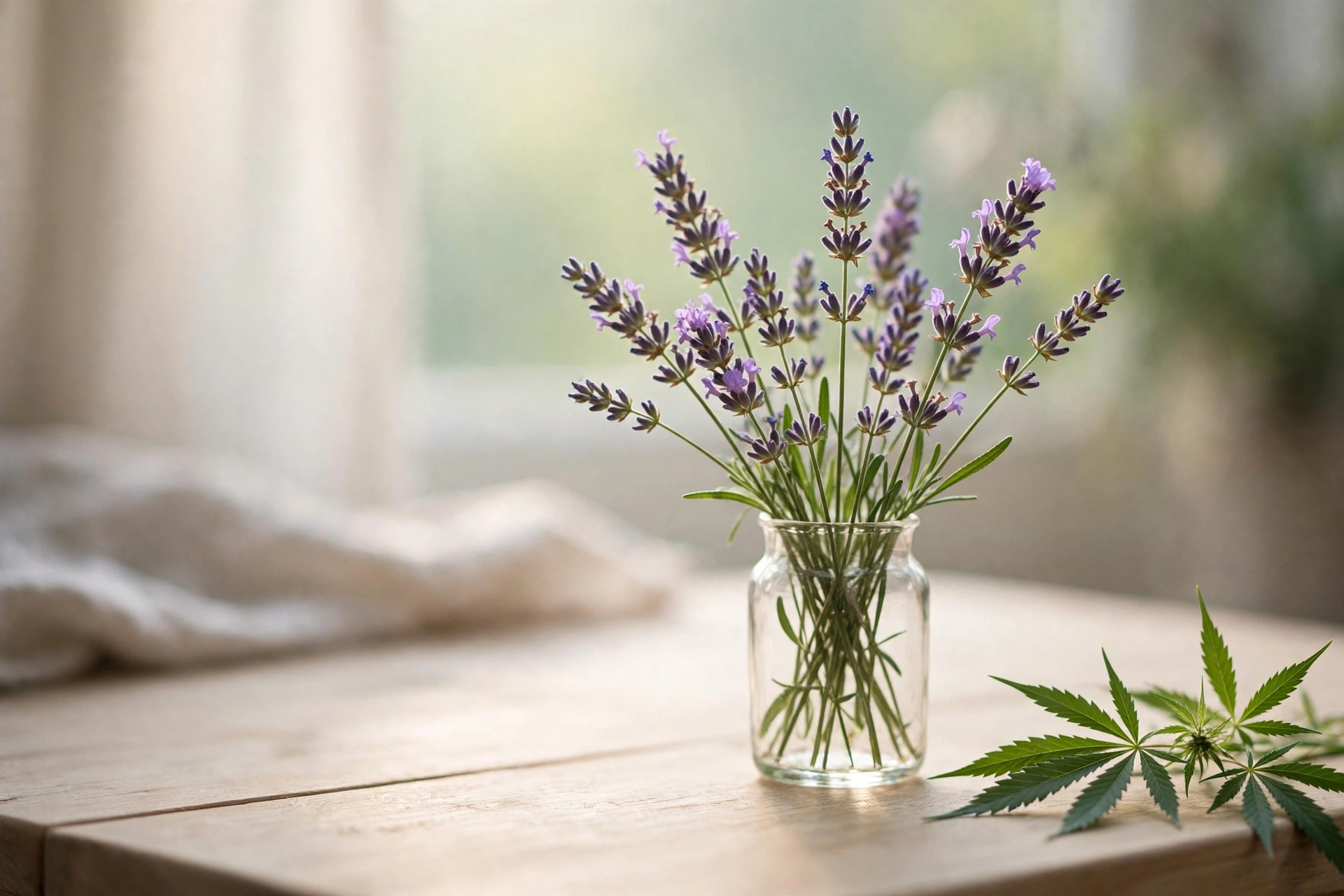
What makes linalool stand out is how widely it shows up. It occurs in more than 200 plant species, with lavender and basil the best-known sources, and it is also found in coriander, mint, bergamot, and rose. You have almost certainly met it outside cannabis: it is used in perfumes, soaps, candles, and food flavourings.
In cannabis, linalool is made in the same resin glands as the cannabinoids, and it is usually a minor player by weight — a background floral note behind bigger terpenes rather than the dominant scent. A little goes a long way with aroma: even a small amount can soften a strain’s smell and add a perfumed, lavender-like edge.
What does linalool smell and taste like?
Think of fresh lavender, then soften it. Linalool smells floral and gently sweet, with a light citrus-peel edge and a warm hint of spice underneath. It is the smell of a linen cupboard with a dried lavender sachet tucked in the corner — clean, calm, and a little old-fashioned in the best way.
In cannabis, that lavender note rarely arrives on its own. It usually reads as a soft floral layer behind stronger scents, so a linalool-rich flower smells perfumed and smooth rather than sharp or gassy. On the palate, the same character carries through: a smooth, slightly sweet and spicy, lavender-tinged taste.
Where does linalool show up?
Lavender is the classic source. An analysis of lavender essential oil samples found linalool made up roughly 27% to 57% of the oil — a wide range, but linalool was the main ingredient in every one. Lavender oil is a blend, though: linalool is just its biggest single part, alongside a close cousin called linalyl acetate.
Beyond lavender, linalool is easy to find. Sweet basil carries a lot of it, as do coriander seed, mint, bergamot, and rose. It turns up in thyme and jasmine too, so if you cook with fresh basil or dab lavender oil on a pillow, you have already spent time with linalool.
In cannabis, linalool is common but rarely dominant, usually one of the smaller numbers in the terpene panel. Some indica-leaning varieties tend to test higher, but levels swing a lot from batch to batch, and a strain name is a poor guarantee. If linalool content matters to you, the certificate of analysis (COA) for that exact batch is the only number worth trusting — not the name on the jar.
Does linalool help with sleep or anxiety?
This is where we need to slow down, because the honest answer is less exciting than the marketing. Most of what we know about linalool and calm comes from animal studies and lavender-oil trials — not trials of linalool on its own in people. That gap is why no one can fairly call linalool a proven sleep aid or anxiety treatment.
The animal work is genuinely interesting. In a 2018 mouse study, simply smelling linalool reduced anxiety-like behaviour without making the mice sluggish, and the effect disappeared in mice that could not smell — which points to the nose-to-brain route. The effect was also blocked by a drug that counters benzodiazepines, suggesting the brain’s GABA system, the same system many anti-anxiety medicines act on, is involved. A 2021 review of linalool research summarises similar findings: anxiolytic, sedative, and anticonvulsant activity in laboratory and animal models.
But mice are not people, and a whiff in a lab cage is not a cannabis product. Doses in animal studies are often far higher than anything you would get from smelling a flower, and effects in rodents regularly fail to show up in humans. The animal evidence is a reason to keep studying linalool, not a reason to promise anyone a calmer night.
The human evidence is thinner and comes with a catch: it mostly tests lavender oil, not isolated linalool. The strongest trials used a standardised oral lavender-oil preparation called Silexan, which contains linalool plus other compounds, tested in people with generalised anxiety disorder. Those trials found a real anxiety signal, and a 2017 review concluded that lavender oil’s two main constituents, linalool and linalyl acetate, may work together to produce the effect. But a trial of lavender oil is a trial of the whole blend — evidence that lavender oil does something, not proof that linalool did it alone.
For sleep specifically, the picture is even weaker. Sleep support for linalool shows up mainly as a secondary outcome in lavender-oil trials, with no established dose or timing, and no trial has tested isolated linalool as a sleep aid in people. If a product promises its linalool will help you sleep, that is a sales claim, not a scientific one. Some studies suggest linalool may support relaxation, and research is still early.
How is linalool different from myrcene?
If linalool is the floral note, myrcene is the earthy, musky one — the terpene behind the smell of hops, bay leaves, and the classic “skunky” cannabis aroma. The two are often mentioned together because they are both linked in popular lore with relaxing strains, but they smell nothing alike.
Myrcene is usually the dominant terpene in cannabis, present in far larger amounts than linalool, and it is the one most often credited — fairly or not — with the heavy, couch-lock feel of some indica-leaning strains. Linalool, by contrast, adds a perfumed top note. Think of myrcene as the bass line and linalool as a flute over it: you notice the bass first, but the flute changes the mood.
Neither has proven sedative effects in humans — most of what we know comes from animal and laboratory work. The practical difference is simpler: earthy and musky means myrcene is probably leading; floral and lavender-like means linalool is doing the talking. Our guide to cannabis terpenes, their types, definitions, and effects compares the common ones side by side.
What about the entourage effect?
You will often read that terpenes like linalool “boost” THC or shape the high through the entourage effect — the idea that cannabis compounds work better together than alone. It is a popular idea, and it sounds right, but the evidence for it is mixed at best, and for linalool specifically it is thin.
One well-known laboratory study tested six of the most common cannabis terpenes, linalool included, against human CB1 and CB2 receptors — the receptors THC acts on — and found none of them activated those receptors or changed how THC acted on them. The paper was published under the blunt title Absence of Entourage, a serious check on claims that linalool directly changes THC’s effects.
That does not mean terpenes do nothing. Linalool may still influence the experience — through smell, through its own effects on the nervous system, or through interactions nobody has fully mapped yet. But “may influence” is a long way from “proven to enhance,” and any product selling a guaranteed entourage benefit from its linalool is getting ahead of the science.
How do I find linalool on a label?
Start with the certificate of analysis, not the strain name. A COA lists the terpene panel for the exact batch you are buying, and linalool will appear there as a percentage by weight, usually a small one — often well under 1% of the flower. If a product has no COA, or the COA shows no terpene panel, you are guessing, however floral the marketing sounds.
A flower with linalool in its top three terpenes will smell noticeably more floral than one where it sits near the bottom. Smell the product if you can: a soft, perfumed note is linalool doing its job. Keep your expectations modest — the terpene panel tells you about aroma, and aroma is what linalool is proven to shape.
Frequently asked questions
Does linalool get you high?
No. Linalool is a terpene, not a cannabinoid, and it does not activate the brain receptors that THC acts on. It shapes how cannabis smells and may influence the overall feel, but on its own it is non-intoxicating, and no amount of linalool will produce a high.
Does linalool help you sleep?
Not proven. Sleep support for linalool comes mostly from animal studies and from lavender-oil trials where sleep was a secondary outcome, with no established dose or timing. It may support relaxation, but no trial has tested isolated linalool as a sleep aid in people, so treat sleep claims as unproven.
Is linalool the same as lavender oil?
No, and the difference matters. Linalool is the single biggest ingredient in lavender oil, but the oil is a blend that also contains linalyl acetate and other compounds. Human trials that found an anxiety signal tested the whole lavender-oil blend, not linalool alone, so their results cannot be credited to linalool by itself.
Which cannabis has the most linalool?
There is no reliable answer by strain name, because linalool levels vary from batch to batch. Some indica-leaning varieties tend to test higher, but the only trustworthy check is the certificate of analysis for the exact batch, showing linalool in the terpene panel. A name on a jar is a hint, not a lab result.
Can I pick a strain just for its linalool?
You can use it as one clue, but not as the whole decision. Check the COA for linalool in the top three terpenes, smell the flower for a soft floral note, and remember that THC, dose, and your own response matter far more to the experience. A terpene panel describes aroma best, not guaranteed effects.
This article is general information, not medical advice. Linalool is not a proven treatment for anxiety, sleep problems, or any other condition. If you take prescription medicines or have a health condition, talk to your doctor before using any cannabinoid product. See our medical disclaimer.
For a broader overview of cannabinoid guides on this site, see our THC and cannabinoids hub.
Affiliate Disclosure
The CakeHeights Editorial Team is committed to providing accurate, research-backed information about cannabis and hemp products. Some links on this page are affiliate links, meaning we may earn a commission at no extra cost to you if you make a purchase through them. Our recommendations are based on independent research, testing, and analysis. We only promote products we believe offer genuine value to our readers. Learn more →

Related Articles
 THC & Cannabinoids
What Is Limonene? The Citrus Terpene, Explained
 THC & Cannabinoids
How to Buy Delta-9 Online Safely: Lab Reports, Labels, and Shipping
 THC & Cannabinoids