
Table of Contents
Related CakeHeights guides: main hub, Can You Overdose on Delta 9 Gummies? Understand Risks, Flying Monkey Delta 8: Is This THC Product Safe to Use?.
Delta-8 THC and Delta-9 THC are closely related intoxicating cannabinoids, but they are not interchangeable. They differ by the position of one double bond, and research generally finds Delta-8 less potent per equivalent amount than Delta-9. The experience still depends on the product, amount, route, tolerance, and individual response. Neither cannabinoid is presented here as a medical treatment or as universally safe.
Delta-8 vs Delta-9 THC: Quick Comparison
| Topic | Delta-8 THC | Delta-9 THC |
|---|---|---|
| Source | Occurs naturally in small amounts; concentrated products are often made by converting hemp-derived CBD. | Occurs naturally in cannabis and is the main cannabinoid associated with the traditional cannabis high. |
| Relative psychoactive intensity | Generally less potent per equivalent amount in the available comparative literature, but it is still psychoactive. | Generally produces stronger effects per equivalent amount, although response varies. |
| Onset and duration | Depend mainly on route, formulation, amount, and the person. User reports of shorter effects are not a universal rule. | Also depend on route, formulation, amount, and the person. |
| Drug testing | Can cross-react with some initial urine or oral-fluid cannabinoid immunoassays; do not assume a Delta-8 product is test-safe. | Can be relevant to tests that look for THC or its metabolites. |
| Legal variability | Federal and state treatment is time-sensitive and product-specific. | Federal and state treatment is time-sensitive and product-specific. |
| Evidence limits | Human evidence and product-quality data are more limited than many marketing claims suggest. | It has a larger research base, but product effects and risks still vary. |
This table is a starting point, not a prediction of how a particular product will feel or how a particular test will be reported. The linked sources explain the limits behind each comparison.
What Delta-8 THC Is
Delta-8 THC is a psychoactive cannabinoid that occurs naturally in the cannabis plant in small amounts. The FDA explains that concentrated Delta-8 products are typically manufactured from hemp-derived CBD because the natural amount is low. That production route can introduce questions about conversion chemicals, by-products, contaminants, labeling, and actual cannabinoid concentrations.
Delta-8 can produce psychoactive and intoxicating effects. Calling it a milder form of THC does not mean that it is non-intoxicating, predictable, or safe for every person.
What Delta-9 THC Is
Delta-9 THC is the cannabinoid most commonly associated with the traditional cannabis high. It is also psychoactive and can impair memory, attention, decision-making, and reaction-related activities. The CDC notes that THC-containing cannabis products can create health risks regardless of the route of use.
Delta-9 is not automatically stronger in every product comparison. The actual result depends on the amount, formulation, route, tolerance, other ingredients, and the accuracy of the label.
Chemical and Source Differences
Delta-8 and Delta-9 THC are chemical isomers: they have the same molecular formula but differ in the location of a double bond. The difference is small in a structural diagram, but it can affect receptor interactions, metabolism, and observed effects.
A peer-reviewed pharmacology review found broadly similar pharmacokinetic and pharmacodynamic profiles while reporting reduced Delta-8 potency in clinical studies. A newer controlled vaporized-cannabinoid trial also found that dose, route, and puffing behavior can materially change the comparison. See the comparative pharmacology review and the controlled 2025 trial.
Potency and Psychoactive Effects
Research generally supports a relative potency difference: Delta-8 tends to be less potent than Delta-9 per equivalent amount, but it remains psychoactive. This is a comparison of observed effects under particular study conditions, not a fixed conversion rule for retail products.
In the controlled vaporized trial, 20 mg of Delta-9 produced stronger ratings than 10 mg of Delta-8 for some measures, while higher Delta-8 doses produced comparable subjective effects in that study. The result illustrates why product labels, route, inhalation behavior, and amount matter. It does not establish a safe dose or a universal ratio.
People may describe Delta-8 as less intense, clearer, or more relaxing and Delta-9 as stronger or more euphoric. These descriptions are not guaranteed outcomes. A self-report survey found lower average ratings for several unwanted effects with Delta-8, but its participants were self-selected and the authors called for more controlled research. Read the survey study for those limitations.
Onset and Duration
Onset and duration are driven more by route and formulation than by the name Delta-8 or Delta-9 alone. Inhaled products can be felt sooner than edible products, while edible effects can be delayed and unpredictable. The CDC says cannabis-infused foods can take up to two hours to produce effects and may increase the chance of consuming too much.
Some survey participants reported that Delta-8 effects lasted a shorter time than Delta-9 effects, but that result came from self-report data and should not be treated as a product-by-product rule. Read the label, do not rapidly repeat an edible because effects have not appeared, and avoid driving or operating machinery while impaired.
Commonly Reported Effects
Both cannabinoids can alter mood, perception, attention, memory, and coordination. Delta-9 is commonly associated with a stronger intoxicating effect; Delta-8 is often described as less intense, but it can still cause impairment or an unwanted reaction.
Reported experiences can include euphoria, relaxation, drowsiness, altered time perception, anxiety, paranoia, dizziness, confusion, or nausea. These reports do not prove that either cannabinoid treats a condition. The FDA’s Delta-8 safety update describes adverse-event reports and warns that those reports do not establish a complete incidence rate.
Side Effects and Safety Considerations
- Do not drive, operate machinery, or make safety-critical decisions while impaired.
- Keep intoxicating cannabinoid products away from children and pets.
- Do not assume that hemp labeling means a product is non-intoxicating or free of Delta-9 THC.
- Product labels and concentrations can be inaccurate, and Delta-8 conversion processes may create contaminants or by-products.
- Talk with a qualified healthcare professional about medication, pregnancy, breastfeeding, or a health condition rather than using this comparison as medical advice.
The FDA has not evaluated or approved Delta-8 products for safe use in any context and has raised concerns about adverse events, labeling, manufacturing contaminants, and child-appealing packaging. The CDC likewise says that health effects of Delta-8 are not yet well understood. These statements are safety cautions, not a claim that every product or user will experience the same outcome.
Drug-Testing Considerations
A Delta-8 product should not be treated as a way to avoid a THC drug test. The 2025 SAMHSA Medical Review Officer Guidance Manual states that Delta-8 THC and its metabolite can cross-react with oral-fluid and urine initial-test immunoassays, respectively. Test panels, confirmation methods, workplace rules, and reporting procedures vary.
Delta-9 THC and its metabolites are also relevant to tests designed to detect cannabis exposure. No article can guarantee a negative result based on a product name, label, route, or time since use. If testing affects employment, sport, treatment, probation, or another formal decision, check the applicable testing policy directly.
Product Types
Delta-8 and Delta-9 may appear in products such as flower, concentrates, vapes, tinctures, capsules, gummies, other edibles, and beverages. The product form changes how the cannabinoid is absorbed and how quickly effects may appear. A familiar format does not prove that the product is accurately labeled or safe.
For consumer literacy, check the complete ingredient list, cannabinoid amounts, batch-specific testing, manufacturer information, and warnings. Avoid products making cure, guaranteed-relief, or universally safe claims. This article does not recommend a brand, product, or dose.
Legal Considerations and Variability
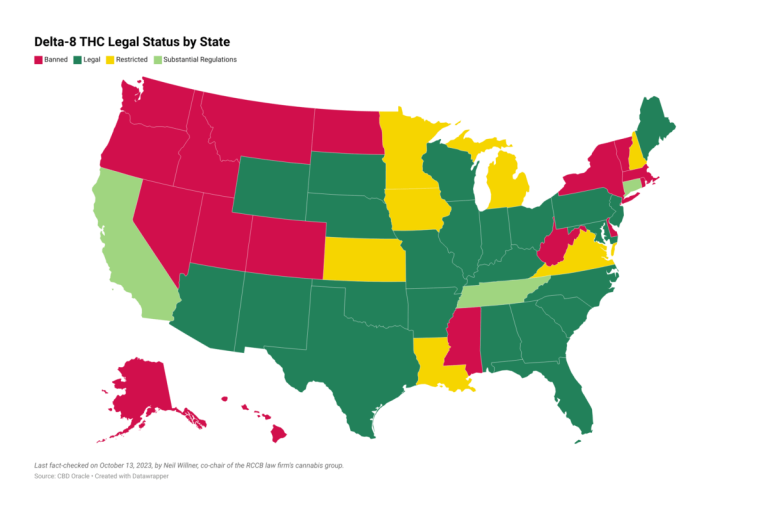
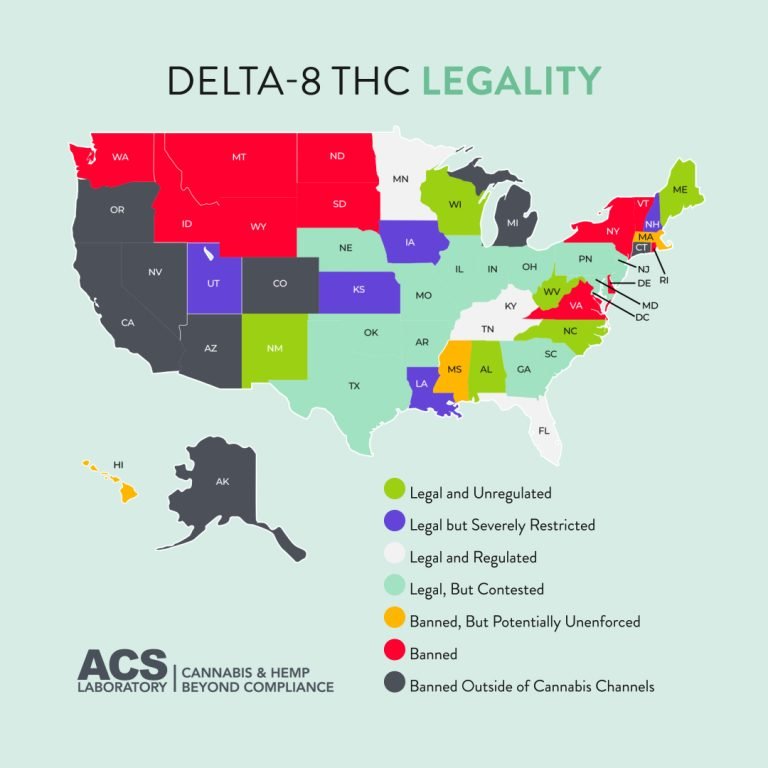
Legal status is time-sensitive, product-specific, and different across federal, state, territorial, and tribal systems. The 2018 Farm Bill used a 0.3% dry-weight Delta-9 THC threshold in the federal definition of hemp, but the Congressional Research Service reported that a November 2025 law narrows the definition to total THC and includes additional exclusions. CRS reports that this amendment takes effect one year after enactment, so the legal position can change during the life of this article.
Some Delta-8 and Delta-9 products may be permitted, restricted, or prohibited depending on the jurisdiction, product composition, source, intended use, age rules, and current regulations. Do not rely on a statement that either cannabinoid is universally legal. Check current official federal and state sources for the place where the product will be made, sold, carried, or used. Last reviewed: August 2, 2026. This is general information, not legal advice.
Delta-8 vs Delta-9 FAQs
Is Delta-8 THC the same as Delta-9 THC?
No. They are closely related THC isomers with the same molecular formula but a different double-bond position. Both can be psychoactive, and Delta-8 is not a non-intoxicating substitute for CBD.
Which is stronger, Delta-8 or Delta-9?
Delta-9 is generally more potent per equivalent amount in comparative research, but the answer depends on amount, route, formulation, tolerance, and product accuracy. There is no universal retail conversion ratio.
Can Delta-8 THC get you high?
Yes. Delta-8 is psychoactive and can cause a high or other impairment. A milder average effect does not mean no effect.
Does Delta-8 show up on a drug test?
It can affect initial cannabinoid immunoassays, and a product may contain Delta-9 or other cannabinoids. Do not assume Delta-8 will produce a negative result.
Is Delta-8 safer than Delta-9?
That conclusion is not established for all products or people. Delta-8 may be less potent in some studies, but the FDA has raised product-quality and adverse-event concerns, and both cannabinoids can impair you.
Is Delta-8 legal everywhere?
No. Laws vary and change. The federal hemp definition and state rules are separate questions, so check current official sources rather than relying on a general internet claim.
Conclusion
Delta-8 and Delta-9 THC are related psychoactive cannabinoids with different chemistry, generally different potency, and overlapping risks. Route, product quality, amount, tolerance, testing rules, and local law can matter as much as the cannabinoid name. Use current authoritative sources for legal and testing questions, avoid treatment or dosage assumptions, and remember that Delta-8 is not automatically mild, safe, or test-free.
Affiliate Disclosure
The CakeHeights Editorial Team is committed to providing accurate, research-backed information about cannabis and hemp products. Some links on this page are affiliate links, meaning we may earn a commission at no extra cost to you if you make a purchase through them. Our recommendations are based on independent research, testing, and analysis. We only promote products we believe offer genuine value to our readers. Learn more →

Related Articles
CBD and CBG: Key Differences and Unique Benefits Explained
 THC & Cannabinoids
Mississippi Banned Delta-8 THC: Confusion in Stores
 THC & Cannabinoids