
Table of Contents
Store CBD gummies in a cool, dark, airtight container, below about 77°F (25°C), and they will hold their potency far longer than a jar left on a sunny shelf. Heat, light, and air slowly break CBD down, so the whole trick is keeping those three away from your gummies.
Why do CBD gummies lose potency over time?
CBD is a fairly stable molecule, but it is not indestructible. Given enough time and the wrong conditions, it breaks down into other compounds that do not do the same job. That is why a gummy eaten six months after you bought it may feel weaker than the same gummy eaten in the first week, even though nothing about the label changed.
Three forces do most of the damage: heat, light, and oxygen. Heat speeds up the chemical reactions that degrade cannabinoids. Ultraviolet light breaks CBD apart through a process called photolysis. And oxygen, every time you open the jar, drives slow oxidation. The PureCraft CBD storage guide puts it plainly: CBD is sensitive to all three, and exposure to any of them speeds up the loss of potency before the date printed on the label.
The gummy itself adds a second problem. Gummies are food, not just a delivery system for CBD. The gelatin or pectin that gives them their chew can dry out, go sticky, or grow mould if moisture and warmth get in. So good storage protects two things at once: the CBD inside and the sweet itself. Our guide to whether CBD gummies expire covers the shelf-life side of this in more detail.
What are the three enemies: heat, light, and air?
Heat is the biggest one. According to PureCraft’s guide, meaningful potency loss begins above about 77°F (25°C) with sustained exposure, and it speeds up sharply above 90°F (32°C). A hot car, a sunny windowsill, or a shelf above the oven can do real damage within days, not months. Gummies also start to melt at around 90°F (32°C), according to CBD Oracle’s guide to melted edibles, so heat does not just weaken them — it can turn the whole jar into one sticky lump.
Light comes next, and sunlight is the worst of it. UV radiation degrades CBD directly, which is why good brands pack gummies in amber or opaque containers. A clear jar on a bright kitchen counter is working against you every day it sits there. Even ordinary room light adds up over months, so the dark matters as much as the cool.
Air is the quiet one. Every time you unscrew the lid, fresh oxygen flows in and oxidation ticks forward. A half-empty jar has more air sitting above the gummies than a full one, so it ages faster.
Where is the best place to keep them?
For most people, the answer is a kitchen cabinet or pantry shelf, away from the oven, dishwasher, and any window. That spot is usually cool, dark when the door is shut, and steady in temperature — which is exactly what you want. A bedroom drawer works just as well. The key is a place that stays below about 77°F (25°C) most of the time and does not swing hot and cold through the day.
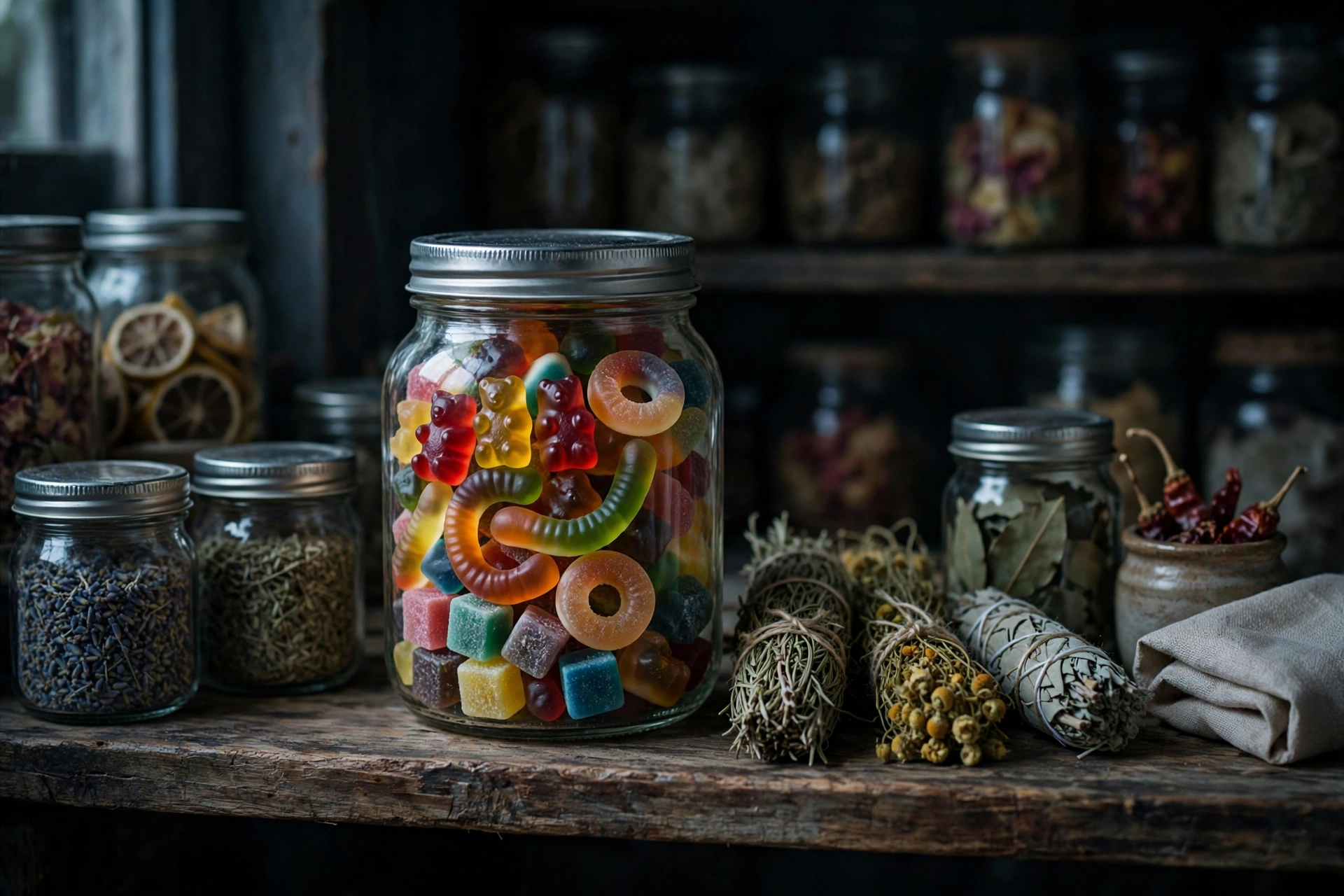
Keep them in their original container if you can. That packaging was usually designed to block light, and the seal is made for the product. If you do move them to another jar, pick one that is airtight and opaque — amber glass with a tight lid is a good choice — and label it with the product name and the date you opened it.
Two places to avoid: the bathroom, where steam from the shower brings heat and humidity, and anywhere near a heat source. A cabinet above the stove may look tidy, but it warms up every time you cook.
And one safety point that matters more than potency: keep gummies locked away from children and pets. They look and smell like sweets, and a child cannot tell the difference. A high shelf or a locked box is worth the small inconvenience.
Should you keep CBD gummies in the fridge?
The fridge is a good option, and for many people it is the best one — with one catch. A refrigerator is cool, dark, and steady. HowToEdibles’ storage guide notes that gummies and hard candy generally keep for 6 to 12 months, and refrigeration is one of the simplest ways to stay at the long end of that range.
The catch is condensation. When you pull a cold jar out of the fridge and open it straight away, warm room air meets the cold surface and moisture forms inside. Over time that moisture can make gummies sticky or invite mould. The fix is simple: let the closed jar come back to room temperature before you open it. That one habit removes most of the fridge’s downside.
So, fridge or pantry? If your home stays cool and steady, the pantry is fine and simpler. If your kitchen runs warm, you live somewhere hot, or you bought in bulk and want the jar to last months, the fridge wins. Just remember the warm-up rule, and keep the lid shut tight.
What about the freezer? Freezing can stretch storage further — HowToEdibles suggests gummies keep well frozen — but it changes the texture, and repeated freezing and thawing is worse than either one alone. For a jar you dip into every day, the freezer is more hassle than it is worth. Save it for a sealed backup supply you will not touch for months.
What should you do with melted gummies?
First, do not panic about the CBD itself. A short spell in the heat is unlikely to destroy much of it. CBD Oracle notes that melting is very unlikely to change the strength unless the gummies sit in high temperatures for a very long time, like weeks or months. The boiling point of CBD is far above anything a hot car can produce. What melting really wrecks is the dose.
When gummies fuse into one blob, you can no longer tell how much CBD is in any one piece. The total amount in the jar has not changed, but it is no longer divided into equal servings. Cutting off a chunk and guessing is exactly how people end up taking far more — or far less — than they meant to. CBD Oracle’s advice is blunt: if several gummies have melted together, you cannot be sure about the dose, and the safest choice is often to throw them away.
If the gummies only softened a little and firmed up again in the fridge, with each piece still separate and recognisable, they are probably fine to use. But if they have fused into one mass, smell off, or sat melted for days, let them go — a replacement jar costs less than the guesswork. Our guide to proper storage of Delta-9 and Delta-8 edibles covers the same problem for THC edibles, where a wrong guess matters even more.
To stop it happening again, think about the journey, not just the shelf. Most melting happens in transit — a mailbox in the sun, a parcel left on a porch, a bag forgotten in a car. On hot days, bring deliveries inside quickly and do not leave gummies in the car, even for a short errand.
How can you tell gummies have gone bad?
Trust your senses before the calendar. A gummy that smells sour, sharp, or just wrong is telling you something. Visible mould, white or green fuzz, or dark spots mean the jar is done — do not pick around the bad ones. A texture that has gone rock hard, slimy, or oddly grainy is another sign the food part has turned, even if the CBD inside is still there.
The expiry date on the label is your other guide, but treat it as a promise about storage done right. A jar stored in a hot car for a month has aged faster than its date suggests. When the date and your senses disagree, your senses win.
If you are unsure how much to take after a long gap, our guide to how many CBD gummies to take is a useful refresher. It does not tell you a dose — nobody can do that for you — but it walks through the factors that shape the decision, and why starting low matters after any break.
Frequently asked questions
Do CBD gummies need to be refrigerated?
No, refrigeration is helpful but not required. A cool, dark pantry below about 77°F (25°C) works well for everyday storage. The fridge is the better choice if your home runs warm or you want a jar to last many months. If you do refrigerate, let the closed jar warm to room temperature before opening it to avoid condensation inside.
How long do CBD gummies last?
As a general guide, gummies keep for about 6 to 12 months when stored cool, dark, and sealed, according to HowToEdibles. The exact shelf life depends on the product, so the date on your label is the best guide. Opened jars age faster than sealed ones, and heat or light can shorten the window.
Can heat destroy CBD in gummies?
Heat speeds up CBD breakdown, with meaningful loss starting above about 77°F (25°C) over time, according to PureCraft. A brief warm spell is unlikely to ruin a jar, but days in a hot car or on a sunny shelf can weaken it. Gummies also melt at around 90°F (32°C), which wrecks the dose even when the CBD itself mostly survives.
Are melted CBD gummies safe to eat?
Melted gummies often still hold their CBD, but the dose is no longer reliable once pieces fuse together. CBD Oracle advises that you cannot be sure how much is in any cut-off chunk, so throwing a fused jar away is usually the safest call. If pieces only softened, stayed separate, and smell and look normal, they are probably fine.
What is the best container for CBD gummies?
The original packaging is usually best, since it is made to block light and seal tightly. If you transfer gummies, use an airtight, opaque container such as amber glass with a snug lid, and label it with the product name and opening date. Avoid clear jars on open shelves, and keep it cool, dark, and out of reach of children.
This article is general information, not medical advice. If you take prescription medicines or have a health condition, talk to your doctor before using any CBD product. See our medical disclaimer.
For more CBD guides, see our CBD guides hub.
Affiliate Disclosure
The CakeHeights Editorial Team is committed to providing accurate, research-backed information about cannabis and hemp products. Some links on this page are affiliate links, meaning we may earn a commission at no extra cost to you if you make a purchase through them. Our recommendations are based on independent research, testing, and analysis. We only promote products we believe offer genuine value to our readers. Learn more →

Related Articles
 CBD Guides
CBD Gummies vs Capsules vs Vapes: Which Is Right for You?
 CBD Guides
Topical vs Edible CBD: Which Works Better for You?
 CBD Guides