
Table of Contents
Terpinolene is a terpene — one of the aromatic compounds that give plants their scent — with a fresh, piney smell layered with floral, herbal, and light citrus notes. It’s found in pine, apples, lilac, and some cannabis strains, and early lab and animal research hints at sedative and antioxidant activity, though no human trials have tested it.
What Is Terpinolene?
Terpinolene, also called alpha-terpinolene, is a monoterpene — a small, volatile molecule plants make to produce aroma. Its chemical formula is C10H16, the same formula shared by many other terpenes, just arranged differently — and that difference in shape is what gives it its own smell.
If you’ve followed our terpene series, you already know the pattern: each terpene is a scent molecule first, and any talk of effects comes second. Terpinolene fits that pattern well — it’s one of the less common dominant terpenes in cannabis, which is part of why it took a while to get its own moment in the spotlight. You can get the bigger picture in our guide to cannabis terpenes, their types, definitions, and effects, and the THC and Cannabinoids hub pulls the whole series together.
Outside cannabis, terpinolene is everywhere in the plant world. It’s a regular part of the scent of conifer trees, sage, rosemary, tea tree, nutmeg, cumin, lilac, and apples — and a common fragrance ingredient in soaps and perfumes.
What Does Terpinolene Smell Like?
Ask three people and you’ll get three answers — and they’d all be partly right. Terpinolene smells fresh and piney first, then floral, then herbal, with a faint citrus or apple edge. Testing lab SC Labs describes it as woody and herbaceous yet floral, and that’s a fair summary: it’s a layered scent rather than a single note.
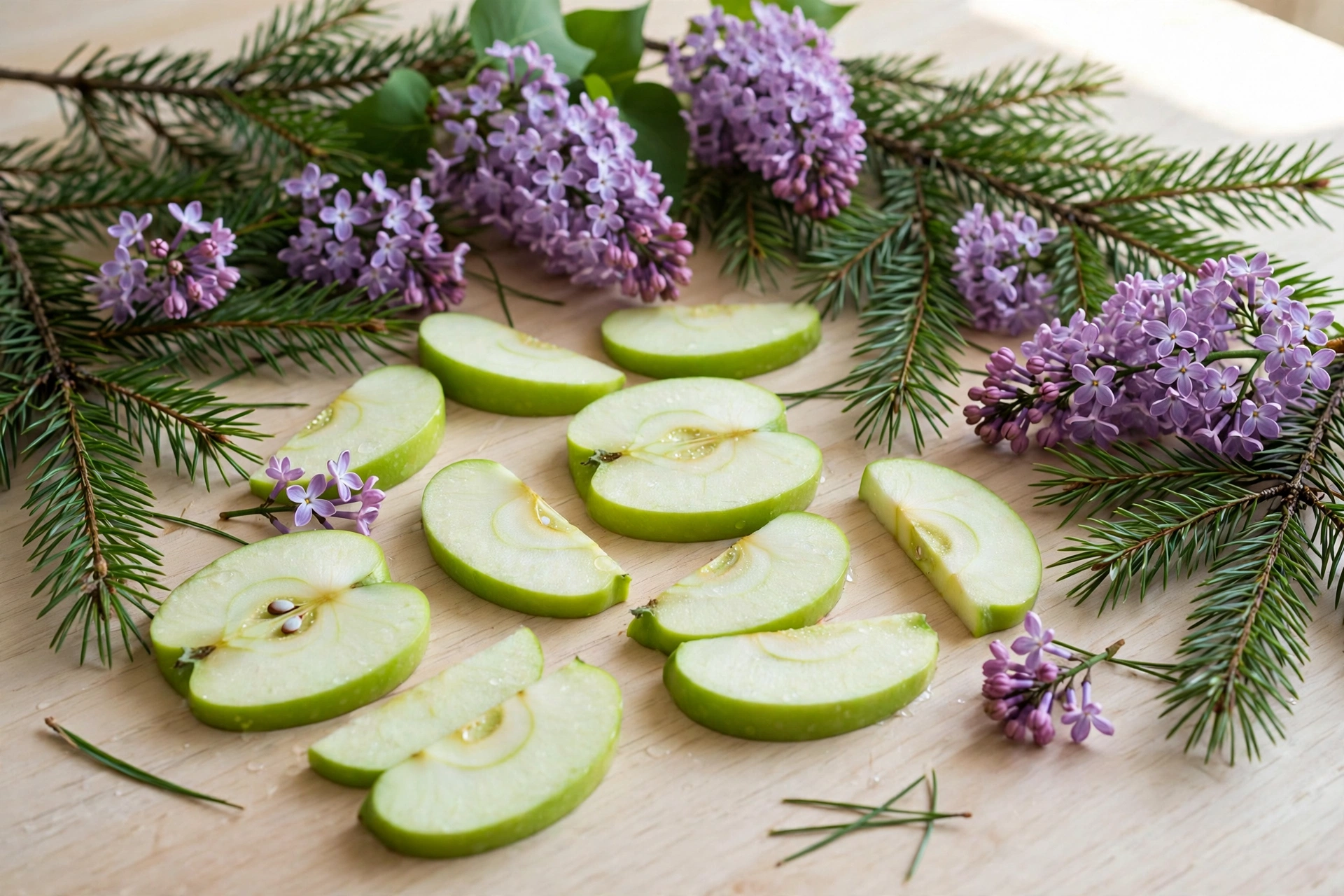
Think of it this way: crush a pine needle and you get the woody side; sniff a lilac bloom and you get the floral side; bite a green apple and you catch the crisp finish. Compared with myrcene, the earthy, musky terpene that dominates many strains, terpinolene-led flower tends to smell brighter and less skunky.
Where Is Terpinolene Found?
In the wider plant world, terpinolene is common. Pine and fir trees, apple trees, lilac bushes, sage, rosemary, tea tree, nutmeg, and cumin all contain it.
In cannabis, it’s a different story. Terpinolene shows up in trace amounts in lots of cultivars, but it leads the terpene profile in only about 1 in 10 strains, according to several terpene guides — genuinely uncommon as a dominant terpene, even though it’s a well-known name.
Strains reported to be terpinolene-dominant include Jack Herer, Durban Poison, Ghost Train Haze, and Dutch Treat. A quick caution: strain terpene profiles vary from batch to batch and grower to grower, so a strain name is a hint, not a guarantee. The only way to know what’s in a jar is the lab report, which we’ll get to below.
Terpinolene vs. Terpineol: Don’t Mix Them Up
These two sound almost identical, and they get confused all the time — but they’re different compounds. Terpinolene is a monoterpene hydrocarbon, made only of carbon and hydrogen. Terpineol is a terpene alcohol: it carries an oxygen atom, smells more softly of lilac and pine sap, and is usually linked with relaxing, floral-scented strains.
If a label or a blog post talks about “terpinolene” but describes a heavy, lilac-and-pine-sap scent with a relaxing bent, it may actually be describing terpineol. When in doubt, check the spelling on the lab report — the two names differ by a single letter, and that letter matters.
What Does the Research Actually Say?
Here’s the honest version: terpinolene research is still early, and almost all of it comes from lab dishes and animals. There are no human clinical trials testing terpinolene as a treatment, so anything you read about its benefits is a research lead, not a proven effect.
A 2021 systematic review in the journal Phytomedicine pulled together the evidence so far. The authors searched four databases, found 2,449 articles, and kept 57 that met their criteria. Their conclusion: terpinolene shows a range of biological activity, with antioxidant, larvicidal, and insecticidal effects standing out — and most of the underlying studies were done in test tubes, computer models, or animals rather than people. The review also noted that how well terpinolene works, and how safe it is inside a living body, has been poorly evaluated so far. You can read the abstract on PubMed.
A few individual studies come up in nearly every article about this terpene:
- Sedation in mice. In a 2013 study in the Journal of Natural Medicines, mice that inhaled terpinolene moved around less — a sedative-like effect the researchers traced to absorption through the nose. The study is on PubMed, and the dose was tiny (0.1 mg in the test cage), so it tells us about the compound in mice, not about what a person feels from a strain that contains it.
- Antioxidant and antiproliferative effects in rat brain cells. A 2013 study by Aydin and colleagues tested terpinolene on cultured rat neurons and rat neuroblastoma cells. At low concentrations (10–50 mg/L), it raised the antioxidant capacity of healthy neurons; at higher doses, it slowed the tumor cells’ growth but also raised oxidative stress. The abstract is on PubMed.
- Antibacterial and antifungal activity. Lab studies have found terpinolene active against some bacteria and fungi, often as part of essential oils such as tea tree oil rather than on its own. Again, these are dish-level results, and they say nothing about whether a cannabis product containing terpinolene would do the same in a person.
Notice the pattern: antioxidant, sedative, antimicrobial, antiproliferative — all interesting, all preclinical.
Is Terpinolene Sedating or Energizing? The Honest Puzzle
This is the strangest contradiction in the terpinolene story. On its own, in mice, inhaled terpinolene acts like a sedative — the animals slow down. But the strains famous for leading with terpinolene, like Jack Herer and Durban Poison, are usually described by users as uplifting, creative, and energizing. So which is it?
We don’t really know, and that’s the honest answer. A strain’s effect comes from THC plus dozens of terpenes and other compounds working together, so you can’t pin what a person feels on one molecule. The mouse study tested isolated terpinolene; nobody has tested whether that sedative signal survives — or flips — inside a whole plant with THC and other terpenes alongside it.
That also means you shouldn’t shop for terpinolene expecting a specific feeling. If a terpinolene-led strain sounds appealing, the scent is the reliable part — fresh, piney, floral. The feeling is a guess until you’ve tried that particular batch yourself.
Terpinolene and the Entourage Effect
You’ve probably heard the term “entourage effect” — the idea that cannabis compounds may work differently together than any one of them does alone. Terpinolene is a good test case for why that idea is both appealing and hard to prove.
On paper, the pieces fit: terpinolene has shown sedative activity by itself in animals, yet it shows up in strains people describe as energizing, and it almost always appears alongside other terpenes such as pinene, the pine-scented terpene, myrcene, and limonene. But as NuggMD’s terpinolene guide notes, the levels in commercial strains are far lower than the amounts used in the early studies, and more research is needed before anyone can say how much it shapes a strain’s effects.
How to Spot Terpinolene on a Lab Report
If you want to find terpinolene in real life rather than in a strain name, the certificate of analysis (COA) is your friend. Look for the terpene panel — usually a small table listing each terpene as a percentage of the flower or product.
When terpinolene leads the panel, that’s the sign of a genuinely terpinolene-dominant batch. When it sits in third or fourth place behind myrcene or caryophyllene, it’s a supporting player, and the scent of that batch will mostly follow the terpenes ahead of it.
Two practical tips: match the batch number on your jar to the report, since terpene levels shift between harvests. And remember that terpinolene is fragile and volatile — heat, light, and long storage wear it down faster than some hardier terpenes, so a fresh, well-stored batch is more likely to still show it.
Is Terpinolene Safe?
There’s no established human safety profile for terpinolene at supplement or therapeutic doses — the 2021 systematic review says so plainly, noting that its safety in living bodies has been poorly evaluated. That doesn’t mean the trace amounts in food, fragrance, and cannabis are dangerous; terpinolene has a long history as a flavoring and fragrance ingredient.
What it does mean is that concentrated terpinolene isolates deserve respect. Undiluted essential-oil ingredients can irritate skin, and nobody has established a safe dose for taking isolated terpinolene on purpose. Don’t buy a bottle of it and experiment.
This is general information, not medical advice — if you’re considering a cannabis product for a health reason, talk to your doctor first, and you can read our full medical disclaimer.
Frequently Asked Questions
What is terpinolene?
Terpinolene is a monoterpene (C10H16) found in pine, apples, lilac, sage, rosemary, tea tree, nutmeg, and cumin, as well as in some cannabis strains. It smells fresh and piney with floral, herbal, and light citrus notes, and it’s used in soaps and perfumes as a fragrance ingredient.
What does terpinolene smell like?
Terpinolene smells like fresh pine first, then lilac-like florals, fresh herbs, and a faint citrus or green-apple finish. It’s a layered, bright scent rather than a single note, and terpinolene-led cannabis tends to smell fresher and less earthy than strains dominated by myrcene.
Is terpinolene sedating or energizing?
Both claims exist, and the evidence doesn’t settle it. Isolated terpinolene made mice move less in a 2013 inhalation study, a sedative-like effect. Yet strains reported to lead with terpinolene, like Jack Herer and Durban Poison, are usually described as uplifting. Whole-plant effects involve many compounds, so one terpene can’t explain the feeling.
Which strains are high in terpinolene?
Strains reported to be terpinolene-dominant include Jack Herer, Durban Poison, Ghost Train Haze, and Dutch Treat. Terpinolene leads the terpene profile in only about 1 in 10 strains, and levels vary by batch and grower, so check the lab report rather than trusting the strain name alone.
Is terpinolene safe?
No human safety profile exists for terpinolene at supplement or therapeutic doses, and a 2021 systematic review found its safety in living bodies poorly evaluated. Trace amounts in food and fragrance have a long history of use, but concentrated isolates can irritate skin and should not be taken without medical guidance.
Affiliate Disclosure
The CakeHeights Editorial Team is committed to providing accurate, research-backed information about cannabis and hemp products. Some links on this page are affiliate links, meaning we may earn a commission at no extra cost to you if you make a purchase through them. Our recommendations are based on independent research, testing, and analysis. We only promote products we believe offer genuine value to our readers. Learn more →

Related Articles
 THC & Cannabinoids
What Is RSO? Rick Simpson Oil, Explained
 THC & Cannabinoids
How to Use a Dab Rig: A Beginner’s Guide
 THC & Cannabinoids