
Table of Contents
Farnesene is a sesquiterpene — a scent molecule built from 15 carbon atoms — best known for the smell of green apple skin. It shows up in apples, ginger, chamomile, and hops, and in small amounts in cannabis, where it adds a fruity, woody top note. Research on its effects is still early, with no human trials so far.
What Is Farnesene?
Farnesene is one of the aromatic compounds plants make to smell the way they do, and it follows the pattern of our terpene series: each terpene is a scent molecule first, and any talk of effects comes a distant second. Farnesene is a minor player in cannabis, rarely leading a profile, but it has one of the most recognizable smells in the family.
Chemically, farnesene is a sesquiterpene, which just means it is a bigger molecule than the familiar monoterpenes. The light, well-known terpenes such as limonene and pinene are built from 10 carbon atoms. Farnesene is built from 15, with the formula C15H24, and it evaporates more slowly as a result. That slower evaporation is part of why its scent lingers in a way that lighter terpenes do not.
It is also not a single compound. Farnesene is a small group of six closely related isomers — versions of the same molecule with their atoms arranged slightly differently. The two you will see named most often are alpha-farnesene and beta-farnesene, and they do not smell quite the same, which we will get to below. A recent review of cannabis aroma in the journal Molecules lists farnesene as a sesquiterpene with a green apple and woody aroma and a mild, sweet flavor, and you can see that entry in the review’s terpene table on PubMed Central.
For the bigger picture, our guide to cannabis terpenes, their types, definitions, and effects explains how these scent molecules are grouped, and the THC and Cannabinoids hub pulls the whole series together.
Alpha-Farnesene vs. Beta-Farnesene: Two Versions of One Molecule
The two main forms of farnesene are worth telling apart, because they smell different and they do different jobs in nature.
Alpha-farnesene is the one in green apple skin. It leans woody and spicy, with a dry, slightly earthy edge, and it is the form most tied to that sharp green-apple smell. Beta-farnesene is fresher and brighter, reading more fruity and tropical, sometimes with a soft citrus or floral touch.
Beta-farnesene also has the stranger job. In nature, (E)-beta-farnesene is the alarm pheromone aphids release when a predator attacks, sending nearby aphids scattering. Some plants copy that signal, releasing beta-farnesene to drive aphids away and attract the insects that prey on them. Plants did not evolve these compounds for us — they evolved them to survive.
What Does Farnesene Smell Like?
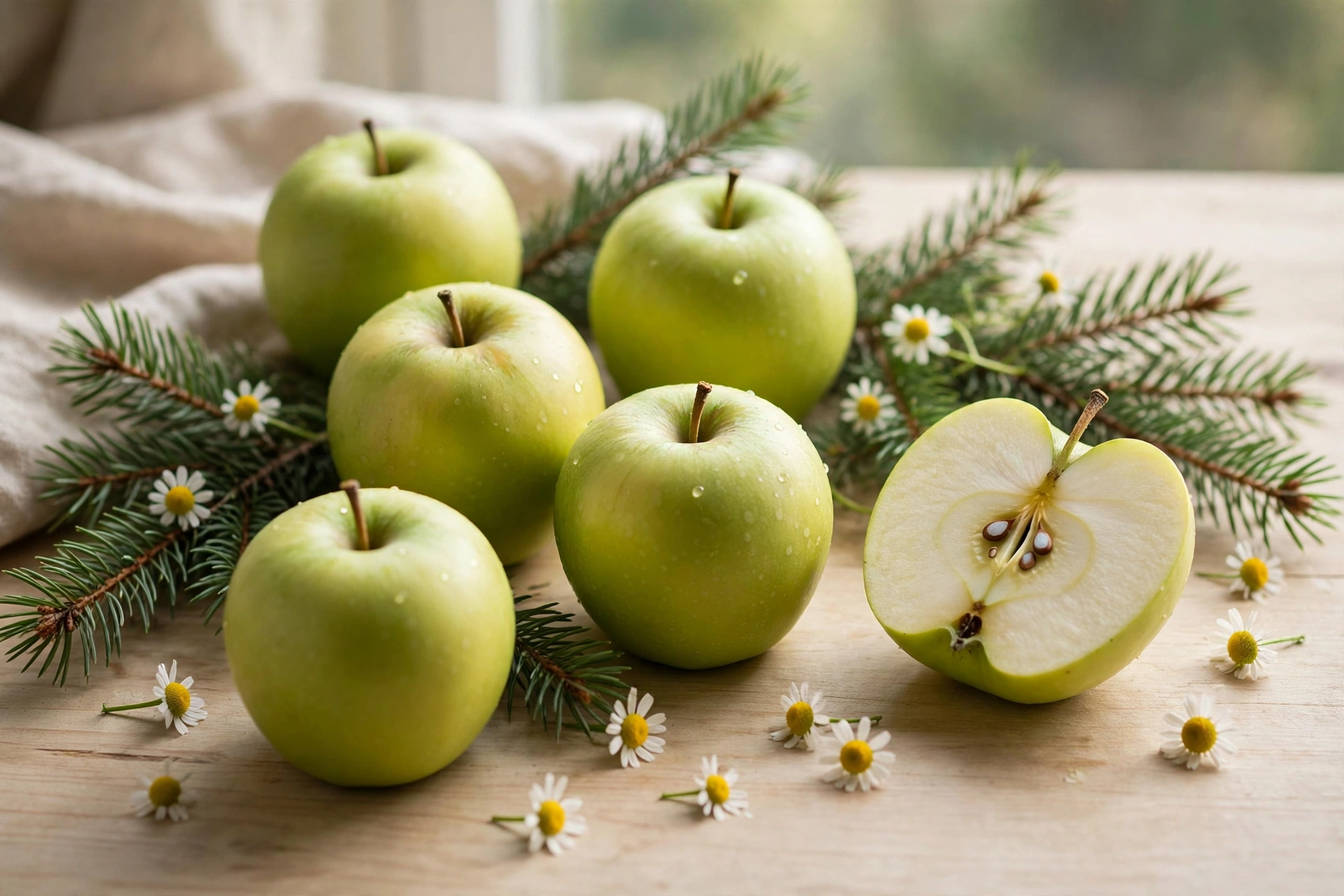
Think of a green apple, but not the flesh — the skin. Pick one up, rub the skin, and breathe in. That bright, slightly tart, unmistakably green smell is largely alpha-farnesene at work. It is the anchor for the whole terpene, and the easiest way to recognize it.
Beyond the apple, the scent layers up. Alpha-farnesene brings wood and spice, while beta-farnesene brings fresh fruit, a tropical edge, and sometimes a hint of citrus. Some people also catch an earthy or faintly floral note underneath. Farnesene is not a loud terpene that punches you in the nose the way limonene or pinene can. It sits in the middle of a profile, adding a green, fruity dimension rather than taking over.
Compared with myrcene, the earthy, musky terpene that dominates many strains, farnesene-led flower tends to smell brighter and crisper. Compared with terpinolene, the fresh, herbal terpene, farnesene is fruitier and less piney. If a jar smells distinctly of green apple, farnesene is a strong candidate for why.
Where Is Farnesene Found?
Farnesene turns up all over the plant world. Green apples carry it in high amounts, especially in the skin. It is also found in ginger, turmeric, hops, chamomile, cedarwood, sandalwood, grapefruit, and the flowers of roses and gardenias. In food and fragrance, it has a long history as a flavoring and scent ingredient, which is why the smell feels familiar even before you know its name.
In cannabis, it is a different story. Farnesene is a minor, trace-level terpene in most flower, showing up in small amounts in lots of cultivars but almost never leading the profile. A strain can smell faintly of green apple without farnesene being anywhere near the top of its terpene list.
That also means strain names are a poor way to shop for farnesene. Terpene levels shift from batch to batch and grower to grower, and the only way to know what is in a particular jar is the lab report, which we will get to below.
What Does the Research Actually Say?
Now for the honest part: farnesene research is still early, and almost all of it comes from lab dishes and animal cells. There are no human clinical trials testing farnesene as a treatment, so anything you read about its benefits is a research lead, not a proven effect. If a product or a blog post tells you farnesene will calm you down, ease pain, or protect your brain, it is getting ahead of the evidence.
What the early work does show is interesting, as long as you keep the scale in mind. A 2014 study by Turkez and colleagues tested farnesene on newborn rat brain cells exposed to hydrogen peroxide, a standard way to model oxidative stress in a dish. Pretreatment with farnesene reduced cell damage and DNA damage, and raised the cells’ antioxidant capacity, with beta-farnesene working best, then a mix of the two forms, then alpha-farnesene. The full paper is on PubMed Central. It is a cell-culture result, not a finding about people, and the doses in a dish do not translate to a dose from a plant.
A 2021 study on human nerve-like cells grown in a dish reported that farnesene protected them against damage from beta-amyloid protein and reduced cell death. Again, that is a dish-level result — a reason to study the compound further, not a finding about people who use cannabis.
Other early work points to antimicrobial and antifungal activity in the lab. Its role as an insect signal is well established in agricultural research, though that says nothing about human health.
Farnesene and the Entourage Effect
You have probably heard the term “entourage effect” — the idea that cannabis compounds may work differently together than any one of them does alone. Farnesene is a good test case for why that idea is both appealing and hard to prove.
On paper, the pieces fit: farnesene has shown antioxidant activity by itself in cells, yet it shows up in flower alongside THC and dozens of other terpenes, in amounts far smaller than the doses used in lab studies. But as the Royal Queen Seeds farnesene guide notes, no studies so far have tested how farnesene interacts with other cannabinoids, terpenes, and cannabis compounds together. You can read that assessment in their farnesene guide.
Until someone runs that study, any claim that farnesene boosts or softens the effects of THC is a guess dressed up as science. The scent is the reliable part. The feeling is not something one terpene can explain on its own.
How to Spot Farnesene on a Lab Report
If you want to find farnesene in real life rather than in a strain name, the certificate of analysis (COA) is your friend. Look for the terpene panel — usually a small table listing each terpene as a percentage of the flower or product.
Farnesene will usually sit well down the list, behind myrcene, caryophyllene, limonene, or pinene. That is normal. A batch where farnesene appears at all is already a batch with a fruitier nose than most. If it ever leads the panel, that is a genuinely unusual batch, and the apple note should be easy to smell.
Two practical tips: match the batch number on your jar to the report, since terpene levels shift between harvests, and keep in mind that heat, light, and long storage wear terpenes down. Also note that some reports list alpha- and beta-farnesene separately, while others lump them together, so the same batch can look different on two reports.
Is Farnesene Safe?
There is no established human safety profile for farnesene at supplement or therapeutic doses, because no human trials have tested it that way. That does not mean the trace amounts in food, fragrance, and cannabis are dangerous — farnesene has a long history in apples and other everyday foods.
What it does mean is that concentrated farnesene isolates deserve respect. Undiluted essential-oil ingredients can irritate skin, and nobody has established a safe dose for taking isolated farnesene on purpose. Do not buy a bottle of it and experiment.
This is general information, not medical advice — if you are considering a cannabis product for a health reason, talk to your doctor first, and you can read our full medical disclaimer.
Frequently Asked Questions
What is farnesene?
Farnesene is a sesquiterpene (C15H24) found in green apple skin, ginger, chamomile, hops, and some cannabis. It smells of crisp green apple with woody, fruity, and sometimes citrus notes, and it is used as a flavoring and fragrance ingredient. It is a minor terpene in cannabis and rarely leads a terpene profile.
What does farnesene smell like?
Farnesene smells mainly of green apple skin — bright, slightly tart, and fresh. Alpha-farnesene leans woody and spicy, while beta-farnesene is fruitier and more tropical, sometimes with a citrus or floral touch. It adds a green, fruity layer to a scent profile rather than dominating it.
Is farnesene calming or sedating?
That claim is not proven. Farnesene shows up in chamomile, a classic bedtime tea, which feeds its calming reputation, but no human trials have tested whether farnesene itself calms anyone. Early lab work points to antioxidant activity in cells, not to a sedative effect in people, so treat the calm association as folklore for now.
Which plants contain farnesene?
Farnesene is found in green apples, especially the skin, as well as ginger, turmeric, hops, chamomile, cedarwood, sandalwood, grapefruit, roses, and gardenias. In cannabis it appears only in small, trace amounts in most flower, so it is far more common in the wider plant world than in any one strain.
Is farnesene safe?
No human safety profile exists for farnesene at supplement or therapeutic doses, since no human trials have tested it that way. Trace amounts in food and fragrance have a long history of use, but concentrated isolates can irritate skin and should not be taken without medical guidance. Talk to your doctor before using any isolated terpene product.
Affiliate Disclosure
The CakeHeights Editorial Team is committed to providing accurate, research-backed information about cannabis and hemp products. Some links on this page are affiliate links, meaning we may earn a commission at no extra cost to you if you make a purchase through them. Our recommendations are based on independent research, testing, and analysis. We only promote products we believe offer genuine value to our readers. Learn more →

Related Articles
 THC & Cannabinoids
Fast-Acting Edibles: How They Work and What to Expect
 THC & Cannabinoids
List of Cannabinoids in Cannabis
 THC & Cannabinoids