
Table of Contents
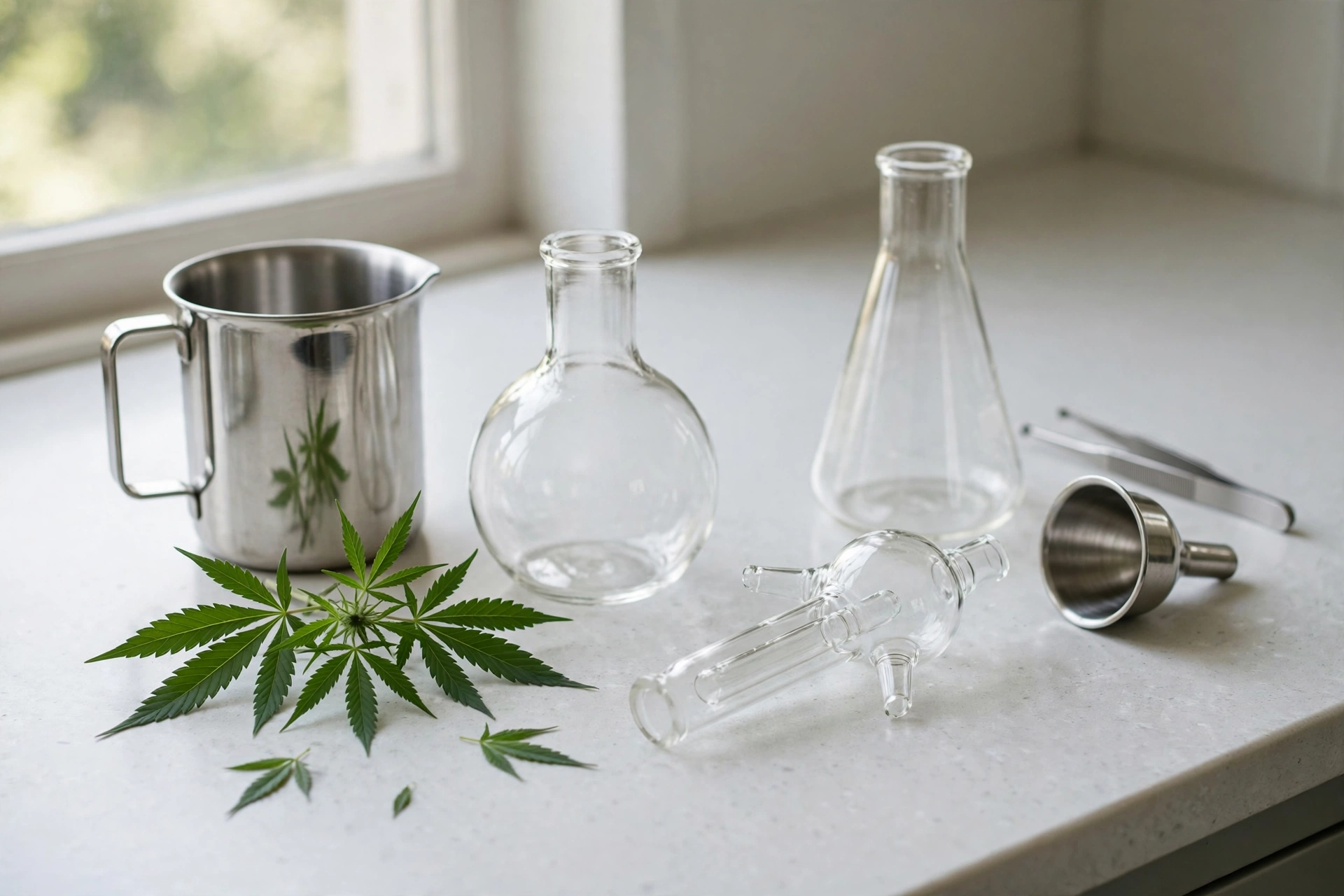
CBD oil starts as dried hemp flower. Producers pull the cannabinoids out of that flower with pressurized carbon dioxide, alcohol, hydrocarbons, or plain oil, then clean up the extract, blend it into a carrier oil at a set strength, and send the finished batch to an independent lab before bottling it for sale.
Where it starts: hemp plants, harvest, and drying
CBD lives mostly in the resin glands — the trichomes — on hemp flowers and, to a lesser degree, the leaves. So growers start with hemp varieties bred to be rich in CBD and low in THC, and they time the harvest for when the flowers’ cannabinoid content peaks. Cut too early or too late, and the balance of compounds in the plant shifts.
Harvested plants then need drying, and this step matters more than it sounds. Fresh cannabis is mostly water, and damp plant material can grow mold during storage. A 2021 narrative review in the Journal of Cannabis Research, which screened 93 papers on cannabis processing, found that hang-drying — plants hung in a cool, ventilated room — is the most convenient drying method, with freeze-drying gaining ground because it can preserve more of the plant’s volatile compounds. Once dry, the flower is usually milled into a coarse, even material often called biomass. Grinding exposes more surface area, which helps whatever solvent comes next reach the cannabinoids inside.
The extraction step: four ways to pull CBD out of the plant
Extraction is where CBD actually leaves the plant. Something has to dissolve the cannabinoids and terpenes out of the dried material, and producers have four main ways of doing it. That same Journal of Cannabis Research review notes that solvent extraction is the most common approach overall. Each method below has real strengths and real trade-offs.
Supercritical CO2 extraction
With supercritical CO2 extraction, carbon dioxide is pressurized and heated until it sits between a gas and a liquid. In that state it flows through the ground hemp and dissolves cannabinoids and terpenes. When the pressure is released, the CO2 turns back into gas and leaves the extract behind. A 2022 review in Frontiers in Natural Products points out that, used without co-solvents, CO2 leaves no solvent residue in the final product. The trade-offs are cost and complexity: the equipment is expensive, runs take skilled operators, and the high-pressure conditions can be hard on delicate terpenes, though gentler subcritical runs preserve more of them.
Ethanol extraction
Ethanol extraction soaks the hemp in food-grade alcohol. Ethanol is a strong, efficient solvent for cannabinoids, and it scales well, which is why so many large producers use it. Because ethanol is polar, though, it also pulls chlorophyll, waxes, and other plant material along for the ride, so ethanol extracts usually need more cleanup afterward. The alcohol is evaporated off and typically recovered for reuse, and a finished product can be lab-tested for any residual ethanol.
Hydrocarbon extraction
Hydrocarbon extraction uses liquefied butane or propane, washed through the plant material in a closed-loop system. These solvents are non-polar, so they pick up less chlorophyll and water than ethanol does, and they evaporate at low temperatures, which can be kind to terpenes. The catch is safety and residue: butane and propane are flammable, so this belongs in licensed facilities with proper equipment, and the finished extract needs purging and residual-solvent testing to confirm nothing unwanted stayed behind.
Oil infusion
The simplest method skips industrial solvents entirely: ground, heated hemp is steeped directly in a food oil such as olive oil, and the fat-soluble cannabinoids migrate into the oil. It’s gentle, inexpensive, and keeps terpenes reasonably well, since they have nowhere to evaporate to. But an infused oil can’t be concentrated afterward, so it’s weaker and less consistent batch to batch. You’ll mostly see it in small-scale or homemade-style products rather than commercial oils.
Refining the crude: winterization, decarboxylation, and distillation
What comes out of any extractor is crude extract: a dark, sticky mix of cannabinoids, terpenes, plant waxes, fats, and pigments. Refining turns that into something you’d actually want in a bottle.
Winterization tackles the waxes and fats. The crude is dissolved in ethanol, chilled well below freezing, and held there until the fats and waxes solidify and drop out of solution. Then it’s filtered, and the ethanol is recovered. Skip this step and the finished oil can look cloudy and taste harsh.
Somewhere in the chain, heat does another job: decarboxylation. Raw hemp holds most of its CBD as CBDA, an acidic form, and gentle heating converts CBDA into CBD. Producers decarboxylate either the ground flower before extraction or the extract afterward — both routes work.
Distillation is the deepest clean. Under a strong vacuum, compounds boil at much lower temperatures than normal, so the extract can be separated by boiling point: light compounds come off first, the cannabinoid fraction is collected as the main body, and heavier material stays behind. Short-path stills suit smaller batches; wiped-film systems spread the oil in a thin layer for faster, higher-volume runs. Producers who want pure CBD can take distillate one step further and crystallize it into isolate.
From extract to bottle: carrier oils, testing, and bottling
Concentrated extract on its own is thick, strong, and hard to measure out in drops, so producers blend it into a carrier oil. The two you’ll see most are MCT oil — a refined coconut-derived oil that’s thin, mild-tasting, and mixes evenly — and hemp seed oil, which has a nuttier flavor. One mix-up worth knowing: hemp seed oil on its own contains no meaningful CBD, because the seeds carry no cannabinoids. In a finished CBD oil, it’s the extract that brings the CBD; the seed oil is just the vehicle.
Before bottling, a responsible producer sends the batch to an independent, third-party laboratory. The lab checks potency — does the CBD content match the label? — and screens for things like residual solvents, pesticides, heavy metals, and microbes. The results land in a certificate of analysis, or COA, tied to that batch. Our walkthrough on how to read a CBD lab report shows what each panel on that document actually means. Only after testing does the oil get bottled, labeled with its batch number, and shipped.
So which extraction method should you look for?
Honestly? There isn’t one winner, and any label implying a single method is automatically superior is mostly marketing. CO2 is clean but pricey. Ethanol is efficient but needs more refining. Hydrocarbons can preserve aroma but demand strict safety controls. Oil infusion is simple but weak and variable. What protects you far more than the method is the paperwork: a current, batch-matched lab report from an independent lab. It also helps to know the warning signs covered in our guide to fake CBD products and common scams, since a slick label can hide a sloppy process. For the bigger picture, our CBD guides hub collects our explainers on labels, testing, and product types in one place.
One last note: this article explains how CBD oil is manufactured, in general terms. It’s general information, not medical advice — please see our medical disclaimer and talk to your doctor with health questions.
Frequently asked questions
Is CO2 extraction better than ethanol extraction?
Neither is automatically better. CO2 leaves no solvent residue and allows fine control, but the equipment is expensive and high-pressure runs can cost some terpenes. Ethanol is cheaper, efficient, and scales well, but it pulls extra chlorophyll and waxes that need refining out. The finished oil’s lab report tells you more than the method name does.
What is winterization in CBD oil making?
Winterization is the cleanup step that removes plant fats and waxes from crude extract. Producers dissolve the extract in ethanol, chill it well below freezing until the fats and waxes solidify, then filter them out. Without it, the finished oil can turn cloudy, separate in the bottle, and carry a harsher, greasier taste.
Does the extraction method affect how strong a CBD oil is?
Only partly. Extraction influences which compounds come out of the plant, but the strength in your bottle is set later, when the producer blends the extract into carrier oil at a chosen concentration. Two oils made by the same method can differ widely in strength, which is why the label and lab report matter.
What does decarboxylation do in the process?
Raw hemp stores most of its CBD as CBDA, an acidic precursor form. Decarboxylation is the heating step that converts CBDA into CBD, and it can happen before extraction, on the ground flower, or afterward, on the extract itself. Too little heat leaves more CBDA behind; too much can break down cannabinoids and drive off terpenes.
Is homemade oil infusion the same as commercial CBD oil?
Not quite. Steeping heated hemp in olive or coconut oil is a gentle, low-cost method, and it does transfer cannabinoids into the oil. But the result can’t be concentrated, standardized, or easily tested, so strength varies from batch to batch. Commercial oils add refining, measured blending, and independent lab testing on top of extraction.
Affiliate Disclosure
The CakeHeights Editorial Team is committed to providing accurate, research-backed information about cannabis and hemp products. Some links on this page are affiliate links, meaning we may earn a commission at no extra cost to you if you make a purchase through them. Our recommendations are based on independent research, testing, and analysis. We only promote products we believe offer genuine value to our readers. Learn more →

Related Articles
 CBD Guides
Nano CBD: What It Is and Whether It Works Better
 CBD Guides
Can You Be Allergic to CBD or THC? Signs to Know
 CBD Guides