
Table of Contents
Live resin is a cannabis concentrate made from fresh, flash-frozen flower instead of dried flower — a difference that preserves the plant’s volatile terpenes and produces the fullest flavor of any concentrate format. It is also very potent, typically 60–90%+ THC as labeled, which makes dosing discipline essential. This guide covers what live resin is, how it is made, how it compares to other concentrates, and how to use it without overdoing it.
What live resin is
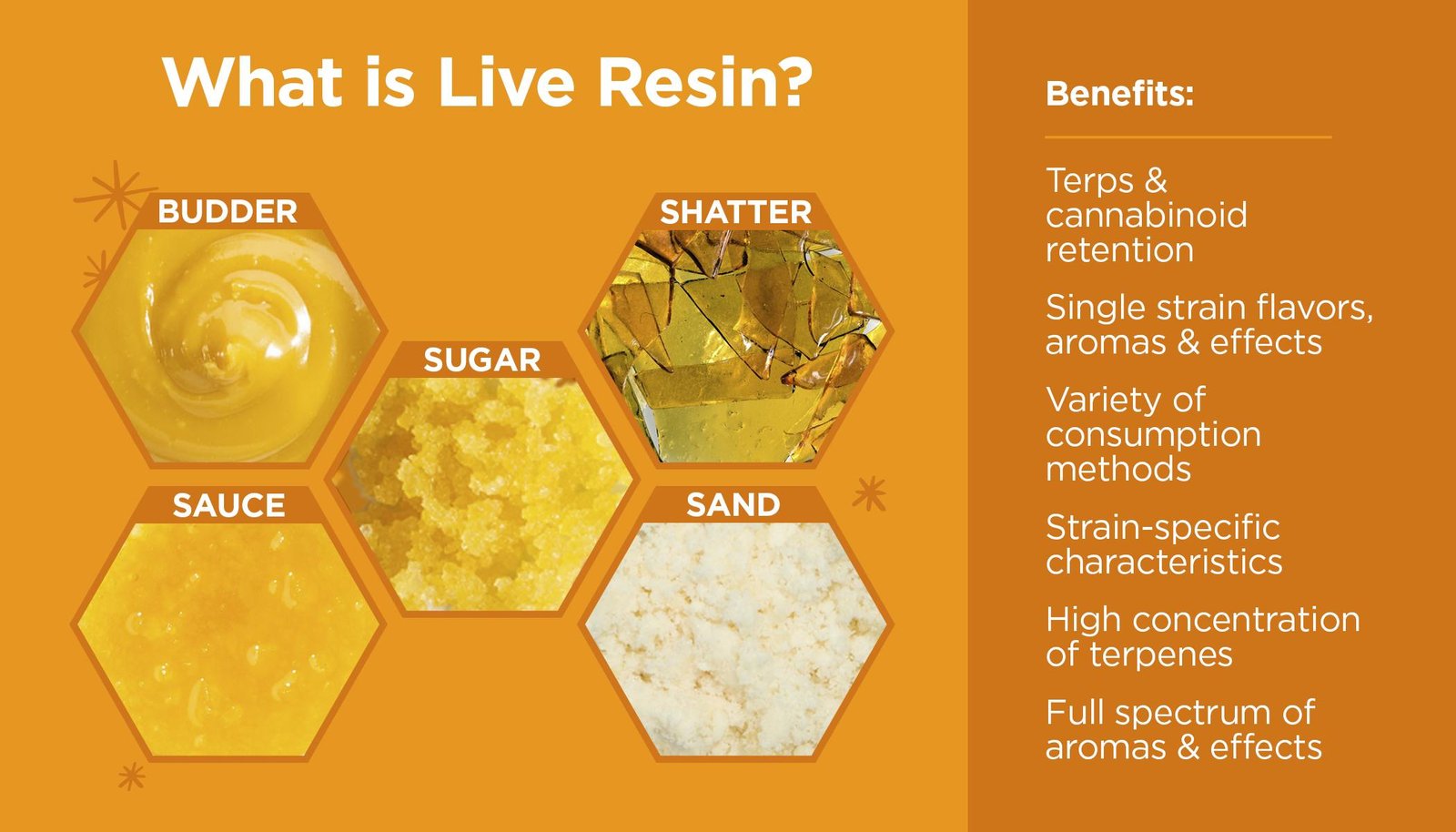
Live resin appeared in the early 2010s, developed by extractors in Colorado. The process: harvest fresh cannabis, freeze it immediately, then extract with a solvent (butane or CO2). Freezing skips the drying and curing stages where many terpenes evaporate — so the concentrate keeps more of the living plant’s aroma and flavor. The result is typically sticky and viscous, amber to golden, with an intense aroma that closely matches the source strain. It is sold as dabbable concentrate, in vape cartridges, and sometimes as infused products. See live resin vs shatter, wax, and budder for the head-to-head comparison.
Live resin vs other concentrates
| Type of concentrate | Extraction method | Flavor profile | Terpene preservation |
|---|---|---|---|
| Live resin | Fresh, flash-frozen extraction | Rich and diverse | High |
| Shatter | Butane extraction of dried plant | Clean and crisp | Moderate |
| Wax | Butane extraction of dried plant | Sweet and smooth | Moderate |
| Distillate | Refined extraction process | Neutral flavor | Low |
The table’s lesson: every concentrate trades something. Live resin maximizes flavor and terpene preservation; distillate maximizes purity and consistency at the cost of flavor; shatter and wax sit between. None is objectively superior — the choice depends on whether you prioritize taste, potency, consistency, or price.
How it is made — and why quality control matters
After freezing, extraction dissolves cannabinoids and terpenes from the plant material; the solvent is then purged, and the extract is tested. Butane extraction captures a wide flavor range but demands careful handling (flammable solvent, ventilation, protective gear); CO2 extraction is cleaner but costlier. Either way, the safety question for buyers is the same: does the product have a batch-specific lab report (COA) testing for potency, residual solvents, pesticides, and heavy metals? Reputable manufacturers document each step and publish results. Untested live resin can carry exactly the contaminants the premium price is supposed to exclude. See best live resin strains for strain options — and judge any product by its COA, not its strain name.
Potency, effects, and honest expectations
Live resin typically tests at 60% to over 90% THC — three to five times flower potency. Some products also contain notable CBD, which may moderate the experience, but most are THC-dominant. Users report rich flavor, fast onset, and strong effects; some report help with pain, anxiety, or stress — but these are user reports, not clinical evidence, and no concentrate is approved to treat any condition. The US National Center for Complementary and Integrative Health notes that evidence for cannabis benefits is early-stage for most conditions, with documented risks including impaired driving and dependence. Read the NCCIH summary of cannabis and cannabinoids.
How to consume live resin — dosing warning
Common methods: dabbing (heated nail/banger + rig, fastest and strongest), vaporizing in a concentrate-compatible device (discreet, adjustable), topping a bowl or joint (adds flavor and potency), and edibles (infused into food — slowest onset, longest duration, easiest to overdo).
Dosing: start with a tiny amount — literally rice-grain-sized — and wait to assess before taking more. At 80% THC, even 0.1 grams of concentrate contains about 80mg of THC, many times a standard edible dose. Beginners who follow gram-based dosage charts routinely overconsume. There is no universal “beginner dose” in grams: tolerance, method, and product potency vary too much. Start minimal, go slow, and never drive after use. See dabbing: how to get started and the dab wax guide for technique.
Legal and ethical considerations
Live resin’s legality follows cannabis law where you live — legal in some jurisdictions for medical and/or recreational use, illegal in others, with rules changing often. Buy only from licensed dispensaries where the market is regulated; unlicensed products skip the testing that makes concentrates safe. Use responsibly: understand your limits, start slow, avoid mixing with alcohol or other substances, and keep concentrates locked away from children and pets.
The FDA’s Delta-8 warning covers the federal safety position on unapproved cannabinoid products.
Frequently asked questions
What is live resin made of?
Fresh, flash-frozen cannabis plants, extracted to preserve the plant’s natural terpenes and cannabinoids.
How is live resin different from other extracts?
It uses fresh-frozen rather than dried flower, preserving more terpenes — which gives it a fuller flavor and aroma than shatter, wax, or distillate.
What are the benefits of using live resin?
Rich taste and full-spectrum effects as reported by users. No therapeutic benefit is clinically proven for live resin specifically.
How should I consume live resin?
Most commonly dabbed or vaporized; also used to top flower. Start with a rice-grain-sized amount — potency is 3–5x flower.
How do I know a live resin product is safe?
Require a batch-specific COA from an independent lab testing potency, residual solvents, pesticides, and heavy metals. Buy from licensed sellers only.
Conclusion
Live resin is the flavor king of concentrates — and a potency heavyweight that demands respect. Choose lab-tested products, dose minimally, and enjoy the terpene experience without the overconsumption lesson. More in our Cannabis Basics & Wellness guides.
Affiliate Disclosure
The CakeHeights Editorial Team is committed to providing accurate, research-backed information about cannabis and hemp products. Some links on this page are affiliate links, meaning we may earn a commission at no extra cost to you if you make a purchase through them. Our recommendations are based on independent research, testing, and analysis. We only promote products we believe offer genuine value to our readers. Learn more →

Related Articles
 Cannabis Basics & Wellness
Why You Keep Waking Up at 3 a.m. — and What Actually Helps You Fall Back Asleep
 Cannabis Basics & Wellness
Set and Setting: Why Your Mindset and Surroundings Change Your High
 Cannabis Basics & Wellness
Leave a Reply