
Table of Contents
Traveling with CBD is legal in some places, restricted in others, and a serious offense in a few — and the rules changed again in November 2026, when a new US federal hemp law took effect. This guide covers the current US air-travel rules, state-to-state driving, international borders, and cruise lines, with the honest caveat that runs through all of it: the law at your destination decides, and it can differ sharply from the law at home. It is general information, not legal advice.
Flying in the US: the TSA rules
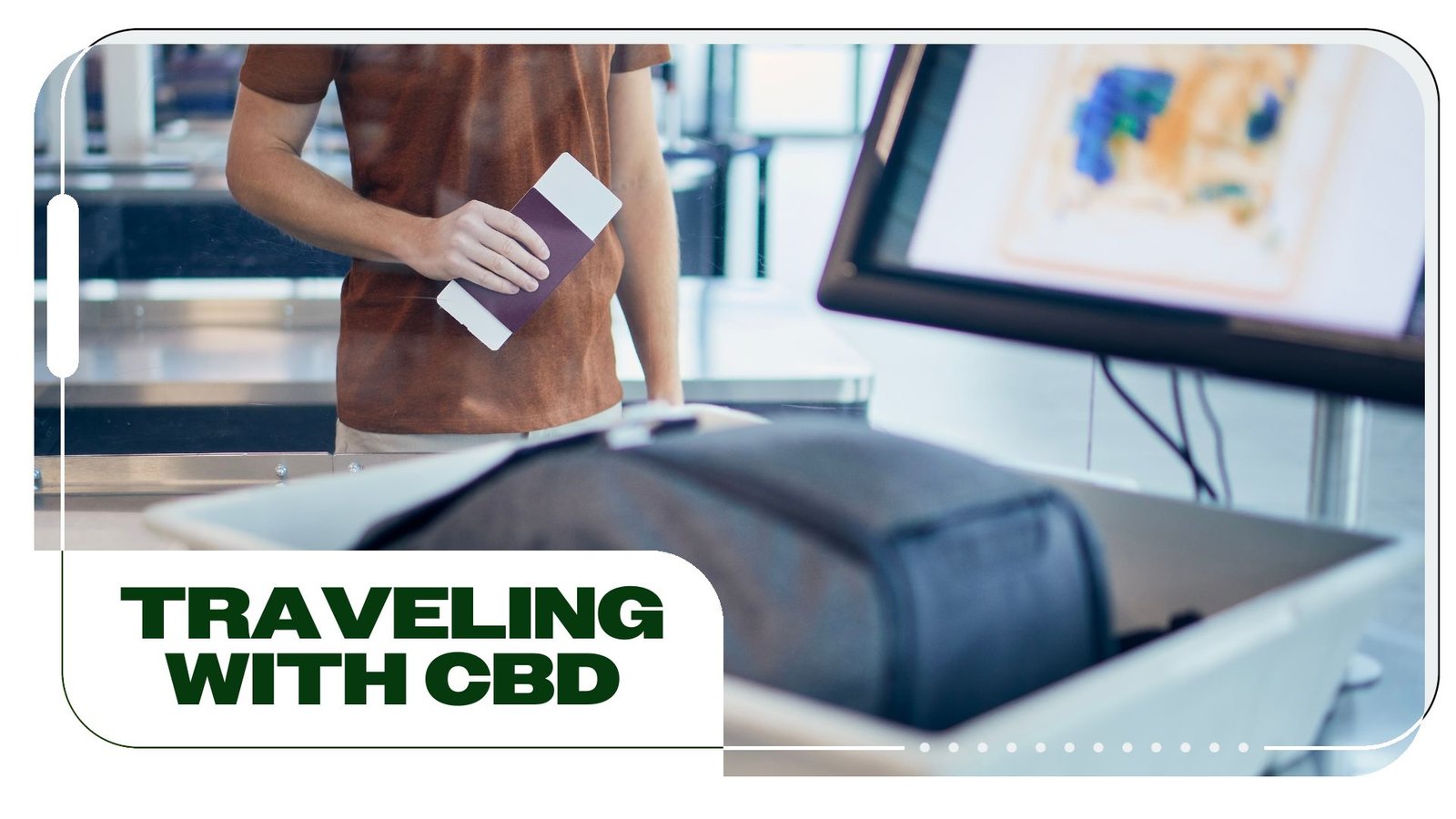
The Transportation Security Administration’s published policy allows products containing no more than 0.3% THC on a dry weight basis (or FDA-approved products) in both carry-on and checked bags. TSA officers screen for aviation security threats — they state plainly that they do not search for marijuana or other drugs — but if they discover a substance that appears illegal, they must refer it to law enforcement, and the final decision at a checkpoint rests with the individual officer. Practical rules: keep products in original packaging with the label showing CBD and THC content; carry the product’s batch-specific certificate of analysis (COA) showing THC at or below the limit; liquid oils and tinctures follow the standard liquids rule (containers 3.4 oz / 100 ml or less in a quart-sized bag); solids like gummies and capsules are not subject to the liquids rule. See the TSA’s Medical Marijuana page for the current wording.
Warning: federal hemp rules changed November 12, 2026
A new federal law (P.L. 119-37, passed November 2025) rewrote the definition of hemp in two steps: from November 12, 2026, cannabinoids the cannabis plant cannot naturally produce lost hemp status; from December 11, 2026, the rest applies — THC measured as total THC rather than delta-9 THC only, and finished hemp-derived cannabinoid products capped at 0.4 milligrams of THC per container (delayed in part by P.L. 119-103). Products that were compliant under the old 0.3% rule may no longer qualify as hemp. Verify current TSA and destination rules before every trip, because guidance and enforcement are still catching up.
Driving between states
Hemp-derived CBD’s federal status does not make it legal everywhere: states set their own rules on sale, possession, and product forms, and a few states restrict even hemp-derived CBD. Crossing a state line with CBD means the destination state’s law applies from the moment you arrive — and some states treat certain CBD products (notably smokable hemp or high-THC hemp derivatives) differently from oils and gummies. Before a road trip, check each state’s current rules on official state government sites, keep products in original packaging with the COA, and do not assume that legality in your home state travels with you. See CBD oil vs hemp oil for why the product type matters to the law.
International travel: assume nothing
International CBD rules range from fully legal (Canada regulates CBD) to severely punished (Saudi Arabia bans all cannabis derivatives including CBD; Singapore, Japan, South Korea, and the UAE all prohibit CBD with serious penalties — see the toughest cannabis laws). The UK allows CBD only within strict THC limits. Customs officers may confiscate products, and in strict jurisdictions a positive drug test alone can lead to arrest. Rules for CBD differ from rules for medical cannabis, and a prescription from home generally does not protect you abroad. The safe default for international travel: do not carry CBD unless you have verified, from the destination country’s official sources, that your exact product type and THC level are permitted — and carry documentation (COA, receipt) if you do. See CBD edibles and international shipping for the mailing side.
Cruise lines: CBD is banned on board
Every major cruise line prohibits CBD products on board, regardless of THC content or home-state legality — because ships operate under federal jurisdiction and visit ports with their own laws. Consequences can include confiscation, removal from the ship, or a lifetime ban.
| Cruise line | CBD policy |
|---|---|
| Carnival | Bans marijuana, cannabis, and derivatives “such as Cannabidiol (CBD) items” by name |
| Norwegian | Bans “all products containing CBD, oils, candies, and gummies or any product containing THC” |
| Disney | Bars products containing THC and/or CBD, including medically prescribed marijuana |
| Virgin Voyages | Lists medically prescribed marijuana and CBD products among prohibited items |
| Royal Caribbean | Bans marijuana “regardless of medical authorization or local legality”; check its current prohibited-items list for CBD wording |
Do not try to work around these policies: do not bring CBD on a cruise, and do not buy cannabis products in port and bring them back on board. If you use CBD for a health reason, talk to your healthcare provider about alternatives for the trip — deep breathing, mindfulness, and other non-drug strategies help some travelers with travel anxiety.
Packing checklist
Before you go: verify destination law from official sources; confirm the product’s THC content and COA; check airline and (for cruises) cruise-line policies. Packing: original packaging, labels intact, COA with the batch number; liquids under 3.4 oz in the quart bag for carry-on; larger bottles in checked luggage. At the border: answer questions honestly; present documentation if asked; never carry CBD into a country whose rules you have not verified. If in doubt: leave it home. A missed dose is a minor inconvenience; a drug charge abroad is not.
The FAA’s battery rules cover flying with vaping devices and spare batteries.
Frequently asked questions
Can I bring CBD oil on a flight?
On US domestic flights, yes, if it is hemp-derived and within the federal THC limit — but the November 2026 law changed how that limit is measured, so verify current TSA guidance before flying.
Do I need to declare CBD at airport security?
TSA does not require declaration of CBD products. Officers screen for security threats, not drugs — but they must report apparent violations to law enforcement.
Are CBD laws the same in every state?
No. States differ on sale, possession, and product forms. Check each destination state’s current rules.
Can I take CBD on a cruise?
No. Every major cruise line prohibits CBD products on board, including medical marijuana and THC-free products.
Can I travel internationally with CBD?
Only where the destination country permits your exact product. Several countries ban CBD entirely with severe penalties — verify from official sources, and when in doubt, leave it home. See Florida’s law for how one US state handles cannabis, and our Legal & Safety guides for more.
Conclusion
CBD travel rules reward one habit above all: checking the destination’s current law from official sources before every trip. The November 2026 federal change makes that habit more important, not less. When verification is impossible, the answer is simple — leave it home.
Affiliate Disclosure
The CakeHeights Editorial Team is committed to providing accurate, research-backed information about cannabis and hemp products. Some links on this page are affiliate links, meaning we may earn a commission at no extra cost to you if you make a purchase through them. Our recommendations are based on independent research, testing, and analysis. We only promote products we believe offer genuine value to our readers. Learn more →

Related Articles
Hemp Associations Answer Congress Questions: Key Insights
 Legal & Safety