
Table of Contents
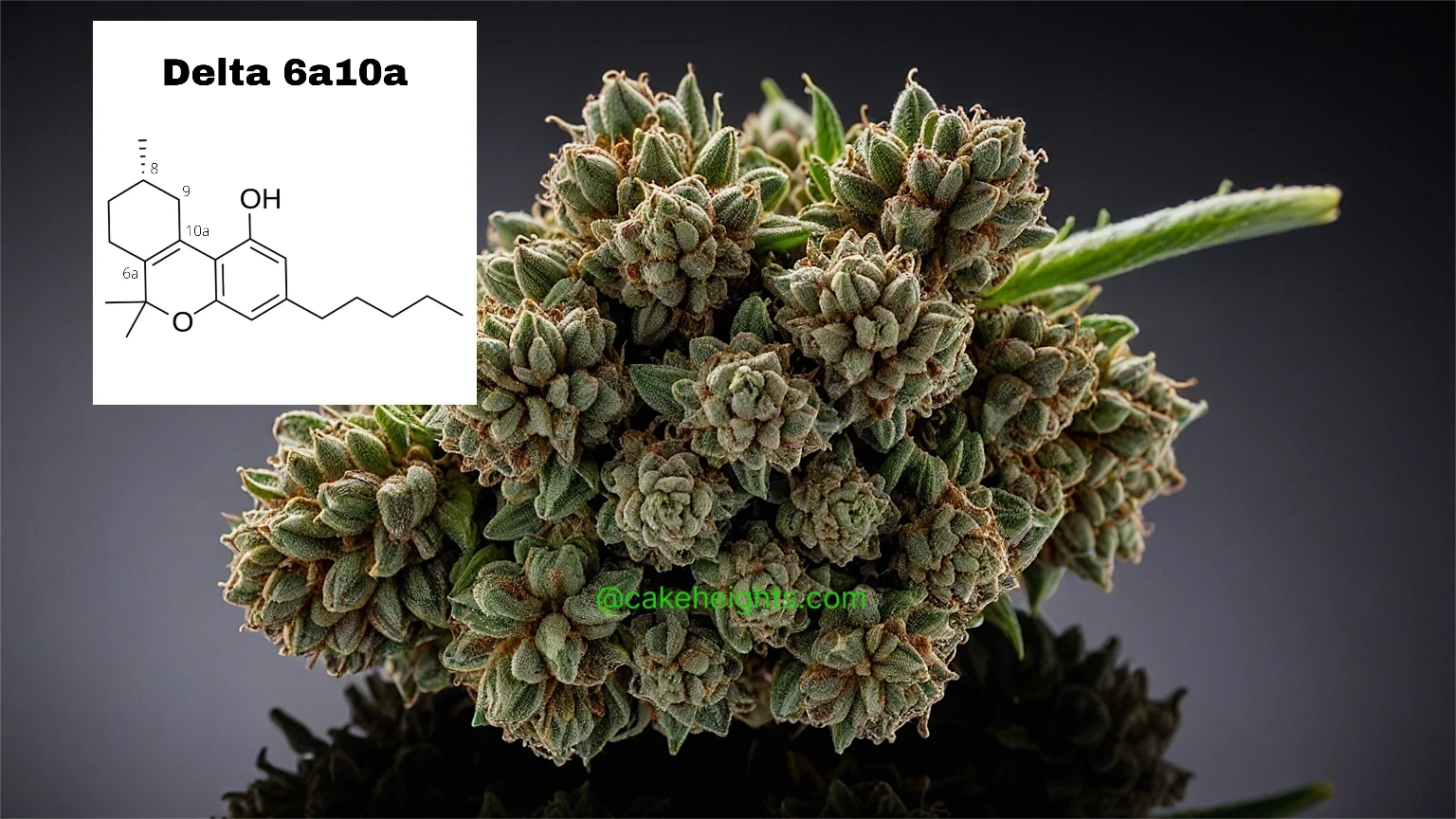
Delta-6a,10a-THC — also called Delta-3-THC — is a THC isomer with double bonds at the 6a and 10a positions instead of the 9 position. It is not a new discovery: it was synthesized by Roger Adams’ group in the 1940s, decades before THC’s own structure was fully characterized. It is, however, one of the least-studied THC isomers: no human trials, no modern pharmacology, and only scattered animal data from the mid-20th century suggesting it is less potent than Delta-9 THC. Commercial products sold as “Delta-6a10a” are synthesized, unregulated, and unverified. This guide states the honest position: almost nothing is known.
Delta-6a,10a-THC vs Delta-9 THC
| Delta-6a,10a-THC (Delta-3) | Delta-9 THC | |
|---|---|---|
| Double bond(s) | 6a and 10a positions | 9 position |
| Formula | C21H30O2 (same — isomer) | C21H30O2 |
| First synthesized | 1940s (Adams) | 1964 (Mechoulam) |
| Human studies | None | Extensive |
| Potency (animal data) | Lower than Delta-9 (thin data) | Reference standard |
What is actually known
Very little. The compound’s chemistry is established (it is a structural isomer of THC). Early animal work suggested psychoactive effects weaker than Delta-9 THC, but the data is old, sparse, and never followed up with modern methods. There are no human pharmacokinetic studies, no safety data, no drug-interaction data, and no clinical trials. Claims of “analgesic and anti-inflammatory properties,” “anxiety reduction,” and “neuroprotection” are extrapolations from THC’s profile — not findings about this compound. The NCCIH cannabis overview covers the evidence standards that Delta-6a10a claims fail to meet.
Safety
Unknown. No dose is established, no side-effect profile exists, and no frequency table can honestly be constructed. Products sold as Delta-6a10a are synthesized in unregulated labs; the FDA’s warnings on unregulated converted cannabinoids apply: unknown byproducts, no testing requirements, mislabeling. Assume it is psychoactive, assume it impairs driving, and assume it causes a positive drug test. See our THC effects guide and our drug test guide.
Legality (as of late 2026)
Commercial Delta-6a10a is synthesized — a cannabinoid the plant cannot produce in meaningful quantities. Under P.L. 119-37 (November–December 2026), such cannabinoids lost hemp status. Verify current federal and state law. See our Delta-8 guide and our Delta-9P guide.
Frequently asked questions
What is Delta-6a10a THC?
A THC isomer (also called Delta-3-THC) with double bonds at the 6a and 10a positions. Synthesized in the 1940s, essentially unstudied in humans.
How does Delta-6a10a THC affect the body?
Unknown in humans. Old animal data suggests weaker psychoactive effects than Delta-9 THC. No human pharmacology exists.
Can Delta-6a10a THC get you high?
Probably, mildly — based on thin animal data. No human potency data exists.
Is Delta-6a10a THC legal?
Depends on jurisdiction; synthesized cannabinoids lost hemp status under P.L. 119-37 in late 2026. Verify current law.
What are the potential benefits of Delta-6a10a THC?
None established. Pain, anxiety, and neuroprotection claims are extrapolations from THC, not findings about this compound.
Browse the THC & Cannabinoids hub.
Affiliate Disclosure
The CakeHeights Editorial Team is committed to providing accurate, research-backed information about cannabis and hemp products. Some links on this page are affiliate links, meaning we may earn a commission at no extra cost to you if you make a purchase through them. Our recommendations are based on independent research, testing, and analysis. We only promote products we believe offer genuine value to our readers. Learn more →

Related Articles
 THC & Cannabinoids
Delta-8 THC Legal in North Carolina? Key Facts & Insights
 THC & Cannabinoids
Delta-8 THC Legal Status: A Comprehensive 2023 Analysis
 THC & Cannabinoids