
Table of Contents
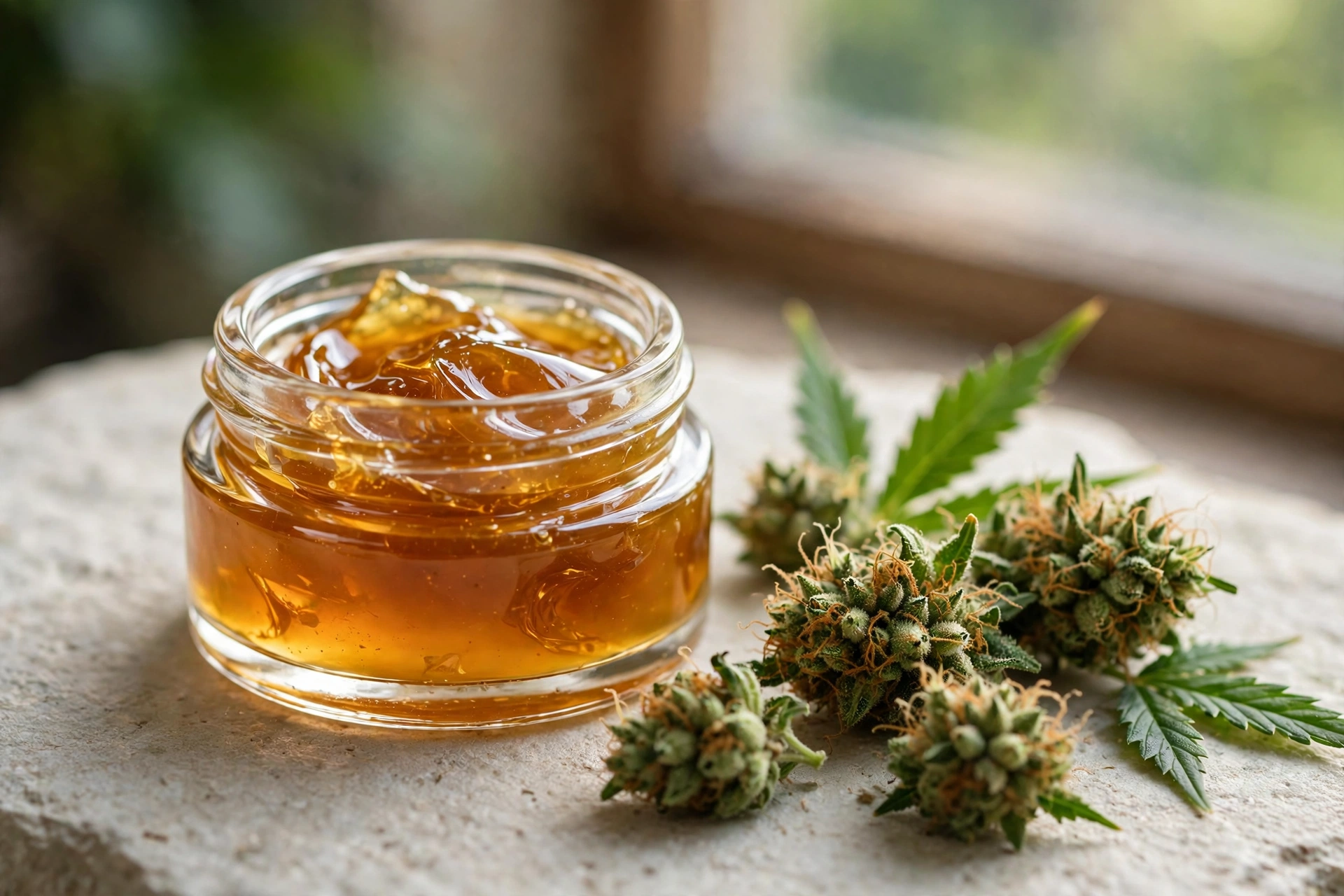
Live resin is a cannabis concentrate made from fresh-frozen plants, and its reputation rests on flavour: freezing the harvest immediately preserves the terpenes that drying and curing lose. No strain is objectively “best” for live resin. What makes a strain work well is a rich, distinctive terpene profile and a grower and extractor who preserve it — and what makes a product worth buying is independent lab testing, not a famous name. This guide explains how live resin is made, profiles three widely used strains by flavour and aroma only, and gives you the honest version of the strain-effects question that most guides answer with fiction.
What live resin is, and why starting material matters
Most concentrates are made from dried, cured flower. Live resin starts from plants frozen within hours of harvest, before drying. The frozen material is typically extracted with a hydrocarbon solvent (usually butane or propane) in a closed-loop system at low temperature, then purged of residual solvent and lab-tested. The cold, sealed process preserves volatile terpenes that evaporate during drying, which is why live resin usually smells and tastes closer to the living plant than other concentrates. The same process also concentrates THC: live resin is typically far more potent than flower, so dose matters — start with a rice-grain-sized amount if you are new to concentrates, and wait to gauge the effect before taking more. For the concentrate family as a whole, see live resin vs shatter, wax, and budder and the live resin guide.
Three widely used strains, by flavour and aroma
| Strain | Typical aroma and flavour | Terpenes commonly reported | What to know |
|---|---|---|---|
| OG Kush | Earthy, pine, citrus, with a fuel-like edge | Myrcene, limonene, caryophyllene | One of the most widely grown strains; huge variation between growers and batches |
| GSC (formerly Girl Scout Cookies) | Sweet, dessert-like, mint and chocolate notes | Caryophyllene, limonene, humulene | The name was shortened to GSC over trademark concerns; quality varies widely by producer |
| Sour Diesel | Pungent, diesel-like, tangy citrus | Caryophyllene, myrcene, limonene | A classic sativa-leaning line; the pungent profile survives extraction well |
Other names you will see on live resin menus include Wedding Cake, Gelato, Blue Dream, and Lemon Haze. Treat every strain name as a starting point, not a guarantee: two products labelled with the same strain from different growers can have very different terpene profiles, and the label alone tells you nothing about how the material was grown, frozen, or extracted. The batch-specific lab report tells you far more than the strain name ever will.
The honest truth about strain effects
Most strain guides promise specific effects: this one relaxes, that one energises, this terpene uplifts, that one sedates. The evidence does not support that precision. The indica/sativa distinction describes plant morphology and lineage, not pharmacology — it does not reliably predict how a product will affect you. Terpene-effect claims (limonene is uplifting, myrcene is sedating) come largely from animal studies, aromatherapy traditions, and user anecdotes, not from controlled human trials of cannabis products. What does predict your experience, far more reliably, is dose, your own tolerance and biology, the product’s actual cannabinoid and terpene content, and the setting. The US National Center for Complementary and Integrative Health states that research on cannabis for most conditions is in its early stages, that cannabis use can impair driving and coordination, and that some users develop cannabis use disorder; read the NCCIH summary. If a guide tells you exactly how a strain will make you feel, it is selling certainty it does not have.
How to judge a live resin product
Require a batch-specific certificate of analysis (COA) from an independent lab, matched to the batch number on your product, showing cannabinoid content, terpene profile, and screening for residual solvents, pesticides, and heavy metals. Buy from licensed retailers, where testing is mandatory — unregulated products have repeatedly been found mislabelled or contaminated. Ignore colour as a quality signal: golden or amber resin is not inherently better than darker resin, and colour varies with strain, age, and processing. A strong, clean aroma true to the strain is a better sign than appearance, and any chemical or solvent smell is a reason to return the product. Check packaging integrity and storage: live resin degrades with heat, light, and air, so reputable producers use sealed, light-resistant containers and cold storage. Price that looks too good for the category usually means corners were cut somewhere in growing, extraction, or testing.
Potency and safety
Live resin concentrates are strong — commonly several times the THC concentration of flower — and overconsumption is the most common bad experience: anxiety, dizziness, nausea, and a longer, more intense effect than expected. Start small, wait at least an hour before redosing with edibles-style patience (inhaled effects arrive faster but still build), and never drive after use: THC impairs driving even when you feel fine. See cannabis and driving for the evidence, and the Cannabis Basics & Wellness hub for the full guide set. If you use cannabis regularly and find yourself needing more to feel the same effect, or using despite negative consequences, that is worth discussing with a clinician.
The FDA’s Delta-8 warning covers the federal safety position on unapproved cannabinoid products.
Frequently asked questions
What types of cannabis strains are best for making live resin?
Strains with rich, distinctive terpene profiles — OG Kush, GSC, and Sour Diesel are among the most widely used. But grower, harvest timing, freezing, and extraction matter more than the strain name.
How is live resin different from other cannabis concentrates?
It is made from fresh-frozen plants rather than dried flower, which preserves more terpenes and produces a flavour closer to the living plant. Other concentrates start from cured material.
Why is live resin considered high quality?
Because the fresh-frozen process preserves terpenes that drying loses. Quality still depends on the grower, the extraction, solvent purging, and lab testing — the word “live” on a label guarantees none of that by itself.
What are the best ways to consume live resin?
With a dab rig or a concentrate-compatible vaporizer, starting with a rice-grain-sized amount. It can also be added to flower, which makes dosing harder to control.
Does the colour of live resin indicate quality?
No. Colour varies with strain, age, and processing and is not a reliable quality signal. Lab reports, licensed retail, and aroma are far better guides.
Affiliate Disclosure
The CakeHeights Editorial Team is committed to providing accurate, research-backed information about cannabis and hemp products. Some links on this page are affiliate links, meaning we may earn a commission at no extra cost to you if you make a purchase through them. Our recommendations are based on independent research, testing, and analysis. We only promote products we believe offer genuine value to our readers. Learn more →

Related Articles
Survey: Dispensary Customers Would Buy Less If Weed Prices Rise
University Course in Cannabis: Explore 5 Exciting Options
 Cannabis Basics & Wellness