
Table of Contents
Pinene is the terpene behind the smell of a pine forest, and it is one of the most common terpenes in nature and in cannabis. It comes in two forms, alpha-pinene and beta-pinene, and both are being studied for possible effects on breathing, inflammation, and memory. The research is early, and none of it makes pinene a treatment for anything.
What exactly is pinene?
Pinene is a terpene, one of the aromatic compounds that give plants their smell. Chemically it is a bicyclic monoterpene, built from two isoprene units, with the formula C10H16 — a ten-carbon molecule folded into two fused rings. It is the compound that makes pine resin smell like pine, and it is a main component of turpentine, the solvent distilled from that resin.
Pinene comes in two forms, alpha-pinene and beta-pinene. They are the same molecule with one small difference: the position of a single double bond. In alpha-pinene the double bond sits inside the ring; in beta-pinene it points out of the ring. That tiny shift changes the smell and how the molecule behaves, which is why the two forms are worth telling apart. Alpha-pinene is the more common of the two, and it is described as the most abundant terpenoid found in nature.
Terpenes are everywhere in the plant world, and cannabis is no exception — researchers have identified more than 150 different terpenes in the cannabis plant. Pinene is one of the handful that shows up most often, which is why it keeps turning up in conversations about how a strain smells and what it might do.
What does pinene smell and taste like?
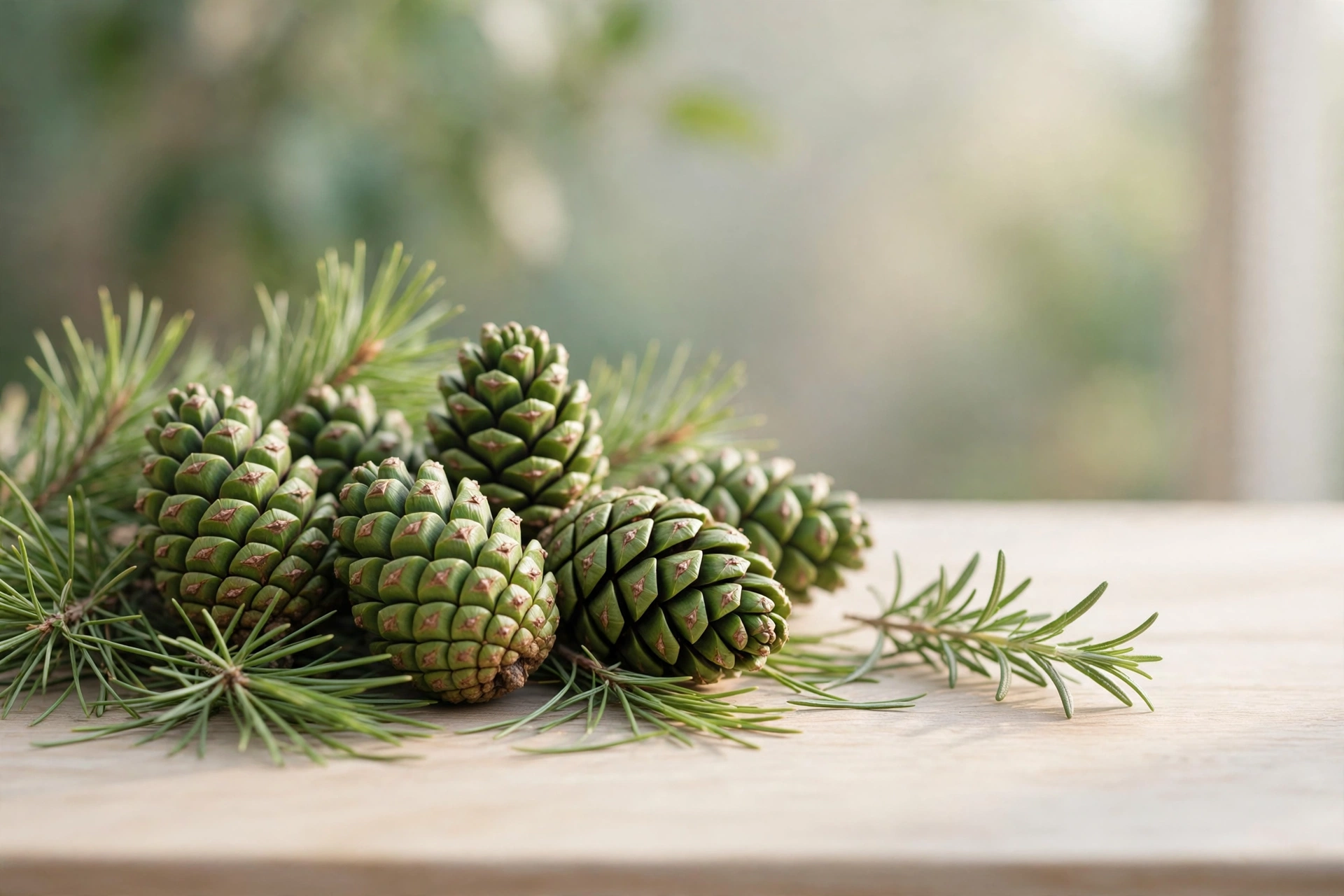
Fresh pine needles, basically. Alpha-pinene smells sharp and clean, like a pine forest after rain or a Christmas tree brought indoors, with a woody, resinous edge. Beta-pinene is woodier and more herbal, with a softer, spicier character. Together they give that unmistakable “forest” note you recognise the moment you step into a stand of conifers.
Depending on what else is around, you may also catch hints of herbs such as sage, thyme, and basil, or a faint citrus sharpness like lemon zest. In cannabis, a pinene-rich strain tends to smell piney and fresh rather than sweet or skunky, and the scent is often the first thing people notice when they open the jar.
Where does pinene come from?
Conifers, first and foremost. Pine, fir, spruce, cypress, and juniper all carry pinene in their needles and resin, which is why a walk through a pine forest smells the way it does. But pinene is far from a pine-only compound. It also turns up in rosemary, basil, dill, parsley, and sage, and you have probably eaten it without knowing: pine nuts contain pinene oil, as do lime and orange peel.
In cannabis, pinene is one of the most abundant terpenes, and its levels vary a lot from plant to plant. Strain names such as Blue Dream, OG Kush, and Strawberry Cough are often described as pinene-rich, but a name on a label is only a rough guide — the actual terpene profile depends on the plant, how it was grown, and how it was cured. Our guide to cannabis terpenes explains how these compounds are measured and what a lab report actually tells you.
Does pinene get you high?
No. The cannabis high works through CB1 receptors in the brain, and pinene does not act at CB1 or CB2 receptors in receptor tests. That is an important difference from its cousin caryophyllene, the peppery terpene that does interact with CB2. Pinene is an aroma compound, not a cannabinoid, and no amount of pine needles or rosemary has ever made anyone high.
That also means pinene on its own cannot explain the strength of a cannabis high. It may shape the smell and possibly the character of the experience, but the high itself comes from THC. If a product promises a “pine-powered high” from pinene alone, that is marketing, not science. The same goes for myrcene, the earthy terpene behind the classic cannabis smell — people credit it with effects the human evidence does not support either.
What does the research actually say?
Pinene is one of the better-studied terpenes outside cannabis, mostly because it is so common in forests and essential oils. The honest summary is that the lab and animal work is interesting, and the human work is thin.
On breathing, alpha-pinene acts as a bronchodilator — it opens the airways — in animal studies and in a small human volunteer study from 1990, where even low exposure widened the airways. That has made researchers curious about whether it could help with respiratory conditions, but it is not an approved or guideline-recommended treatment for asthma or any breathing condition, and nobody should use a pinene product in place of prescribed medicine.
On inflammation, a 2015 study in the American Journal of Chinese Medicine found that alpha-pinene reduced pro-inflammatory signals such as TNF-alpha, interleukin-6, and nitric oxide in cell models, by dampening the NF-kappaB and MAPK signalling pathways. That is a real mechanism in a dish, not a result in people, and it is a long way from a claim that pinene “fights inflammation” in your body.
On memory, the story is the most talked-about and the least proven. Lab studies show that alpha-pinene inhibits acetylcholinesterase, the enzyme that breaks down acetylcholine, a neurotransmitter involved in learning and memory. In his widely cited 2011 review “Taming THC,” neurologist Ethan Russo proposed that this could partly offset THC’s effect on short-term memory, since THC dampens the same signalling. It is a plausible mechanism — but no human trial has confirmed that pinene protects memory in people who use cannabis. Treat it as a reasonable hypothesis, not a fact.
Pinene has also shown antimicrobial activity in cell models, and researchers have looked at it in the context of forest bathing — the Japanese practice of spending time among trees — where breathing in forest terpenes is associated with feeling calmer and more restored. Those associations are real, but they come from whole forests and whole experiences, not from pinene alone, and they do not turn a pine-scented product into a health treatment.
How can you spot pinene in cannabis?
Two ways: your nose and a lab report. A fresh, piney, resinous smell is a decent clue, and many dispensaries and brands now print terpene profiles on the label or the certificate of analysis. Look for “alpha-pinene” or “beta-pinene” among the top two or three terpenes — if pinene sits near the top of the list, the strain is usually described as pinene-dominant.
A word of caution, though: do not shop by terpene alone. Terpene profiles vary from batch to batch, labels are not always accurate, and — as we have seen — there is no human evidence that a pinene-rich strain will feel a particular way. Treat the terpene profile as a flavour guide, which is what it is good at, and let the cannabinoid content and your own experience do the rest.
Frequently asked questions
What is pinene?
Pinene is a terpene — a scent compound — best known for the smell of pine trees. It comes in two forms, alpha-pinene and beta-pinene, and it is found in conifers, rosemary, basil, dill, parsley, and cannabis. It is one of the most common terpenes in nature, and it gives pine-scented plants their fresh, woody aroma.
Does pinene get you high?
No. The cannabis high works through CB1 receptors in the brain, and pinene does not act at CB1 or CB2 receptors in laboratory tests. It is an aroma compound, not a cannabinoid. A pinene-rich strain is not automatically stronger than any other, and eating pine nuts or rosemary has never made anyone high.
What does pinene smell like?
Alpha-pinene smells like fresh pine needles — sharp, clean, and resinous, like a pine forest after rain. Beta-pinene is woodier and more herbal, with a softer, spicier edge. Depending on the other terpenes present, you may also notice hints of sage, thyme, basil, or a faint citrus sharpness.
Can pinene help with memory or breathing?
Possibly, but the evidence is early. Lab studies show alpha-pinene inhibits an enzyme that breaks down acetylcholine, a memory-related neurotransmitter, and it opens airways in animal and small human studies. No human trial has confirmed a memory or breathing benefit, so do not use pinene products as treatment — talk to your doctor about options with evidence behind them.
Is pinene safe?
Pinene is a normal part of foods and plants — pine nuts, herbs, and citrus peel all contain it — and it is widely used as a flavouring and fragrance ingredient. That safety record covers food and everyday exposure, not concentrated extracts or supplements. If you use a pinene product, talk to your doctor, especially if you take prescription medicines.
This article is general information, not medical advice. Pinene is an interesting molecule, but the human evidence is thin, and no terpene product should replace advice from your doctor. If you take prescription medicines or have a health condition, talk to your doctor before using any cannabinoid or terpene product. See our medical disclaimer.
For a broader overview of cannabinoid guides on this site, see our THC and cannabinoids hub.
Affiliate Disclosure
The CakeHeights Editorial Team is committed to providing accurate, research-backed information about cannabis and hemp products. Some links on this page are affiliate links, meaning we may earn a commission at no extra cost to you if you make a purchase through them. Our recommendations are based on independent research, testing, and analysis. We only promote products we believe offer genuine value to our readers. Learn more →

Related Articles
 THC & Cannabinoids
What Is CBDV? The Rare Cannabinoid, Explained
Live Resin vs Live Rosin: Key Differences and Which to Choose
 THC & Cannabinoids