
Table of Contents
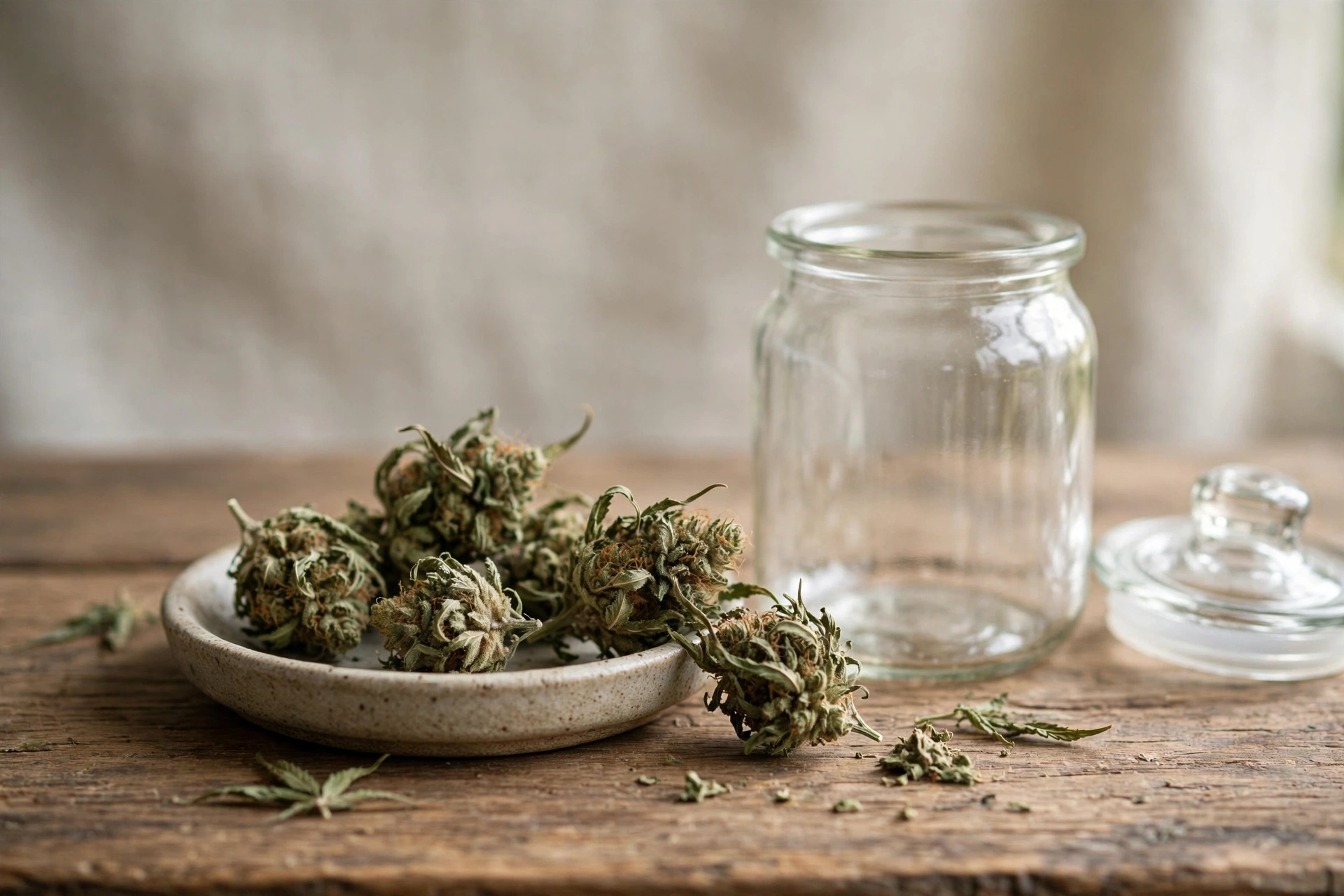
Smoking THCA flower is not the same as using raw THCA, because heat turns THCA into THC before you inhale it. That means smoking it carries the same lung risks and the same intoxicating effects as smoking regular cannabis. It is not risk-free, and whether it is legal where you live depends on your state.
What is THCA, and what happens when you light it?
THCA stands for tetrahydrocannabinolic acid. It is the main cannabinoid the cannabis plant actually grows, and on its own it does not cause a high. Raw flower is mostly THCA, with only small amounts of ready-made THC. That changes the moment heat enters the picture.
When you light flower, a chemical reaction called decarboxylation strips a carboxyl group off the THCA molecule and turns it into delta-9 THC, the compound that causes intoxication. Project CBD explains that smoking or vaping cannabis readily converts THCA into THC, and that the rate of conversion depends on heat and time. In plain terms, the flame does the chemistry for you, in seconds.
The conversion is not perfectly efficient. Some THCA never converts, and some of the THC that forms is lost to the flame or breaks down under high heat. Weedmaps notes that smoking is fast and intense but less controlled than vaping, because high temperatures can burn through cannabinoids and terpenes quickly.
Is all weed THCA before it is heated?
Mostly, yes. Fresh, cured cannabis flower is dominated by THCA, not THC. Weedmaps explains that most cannabis plants do not produce THC directly. They produce THCA inside the sticky trichomes that coat the buds, and heat is what converts it into delta-9 THC.
That is why eating raw flower does very little. Without heat, the THCA stays in its acid form, and THCA binds only weakly to the CB1 receptors that drive intoxication. Cooking, baking, smoking, or vaping all supply the heat that flips the switch. Our guide to whether delta-9 THCA gets you high walks through the same chemistry from the effects side.
Time and storage matter too. THCA slowly converts on its own when flower sits in warm light or air for months, which is one reason old flower can feel different from fresh flower. Cool, dark, dry storage slows that drift, but it does not stop it forever. A lab report tells you the THCA number; the “total THC” figure on the label is the estimate of what you would get after full conversion, using the standard formula of THC plus THCA times 0.877.
Does THCA smell like weed?
Yes, and there is no way around it. THCA flower smells like cannabis because it is cannabis, grown the same way, with the same aromatic compounds. The smell does not come from THCA or THC at all. Cannabinoids are essentially odorless. The scent comes from terpenes, the volatile oils made in the same resin glands as the cannabinoids.
That is why two jars can smell so different. Myrcene leans earthy and musky, limonene brings citrus, pinene smells like fresh pine, and caryophyllene adds a spicy, peppery edge. A THCA-rich flower with a full terpene profile can smell just as strong as any high-THC flower, and heating it makes the smell stronger still, because the heat releases those volatile oils into the air. Our guide to terpinolene, the fresh herbal terpene, shows how one terpene can shape the whole scent of a flower.
Anyone nearby will recognize the smell, and the smell alone says nothing about the legal status of the flower.
What are the risks of smoking THCA flower?
Once you light it, you are smoking cannabis, and the risks follow the smoke, not the label on the jar. The CDC states that smoked cannabis, regardless of how it is smoked, can harm lung tissue and cause scarring and damage to small blood vessels. Cannabis smoke carries many of the same toxins, irritants, and cancer-causing chemicals as tobacco smoke, and smoking it can raise the risk of bronchitis, cough, and mucus production. The good news is that those symptoms generally improve after people stop smoking.
Then there is the THC itself. Because the THCA converts, the effects are the effects of THC: impaired memory and attention, slower reactions, anxiety or paranoia in some people, and a faster heartbeat. The CDC also notes that about 3 in 10 people who use cannabis develop cannabis use disorder, with higher risk for people who start young and use often.
Contamination is a separate worry. Cannabis plants pull heavy metals from soil, and unregulated flower may carry pesticides, mold, or leftover solvents that no one tested for. Lab-tested flower from a licensed source is not a guarantee of safety, but untested flower adds an unknown on top of the known risks of smoke. If a seller cannot show you a lab report for the batch, that is a reason to walk away.
Is smoking safer than vaping THCA flower?
Neither is safe, and scientists do not have enough evidence to call one clearly safer than the other. The CDC puts it plainly: health and safety risks exist for every way of using cannabis, and there is not enough evidence to say one method is safer than another. That said, the two methods differ in what they expose your lungs to.
Smoking burns the plant. Combustion creates tar, carbon monoxide, and a long list of byproducts that have nothing to do with cannabinoids. Vaping heats flower below the point of combustion, so it releases cannabinoids and terpenes without burning the plant material, and some studies suggest it lowers exposure to carbon monoxide and some toxins. But vaping is not risk-free either. Vaping products have been linked to serious lung injury, and poorly made cartridges can release heavy metals or other volatile compounds.
For flower specifically, a dry-herb vaporizer avoids combustion while still converting THCA to THC. It does not remove the THC-related risks, and it does not make the product legal where it is not. If your lungs are the concern, the lowest-risk choice is not to inhale anything at all.
Is THCA flower legal?
As of November 2026, the honest answer is that it depends on where you live, and the rules are shifting. Federally, hemp was removed from the definition of marijuana in 2018 when it holds no more than 0.3 percent delta-9 THC. THCA flower is often sold under that hemp definition, because the raw flower itself tests low in delta-9 THC even though it converts to THC when heated. That gap between the test and the flame is exactly what lawmakers have been arguing about.
The Congressional Research Service states that recreational marijuana remains a Schedule I controlled substance under federal law, and that hemp is defined by its delta-9 THC content. An April 2026 Justice Department order moved FDA-approved marijuana drugs and state-licensed medical marijuana to Schedule III, but that change did not legalize recreational cannabis. Some states have closed the THCA gap with their own laws, treating total THC — THCA included — as the legal line, while others still follow the federal hemp definition. A change to the federal hemp definition was also scheduled to take effect in December 2026, which could narrow the gap further.
This is general information, not legal advice. Before buying or using THCA flower, check your state’s official cannabis agency or attorney general page, not a seller’s website. Our guide to whether THCA flower can really be legal hemp explains the hemp definition in more detail, and our guide to THCA benefits and potential uses covers what research has and has not shown about THCA itself.
How can you lower the risk if you smoke anyway?
There is no way to make smoking risk-free, but a few habits reduce the obvious dangers. Start with a small amount and wait before taking more, because smoked THC hits fast and high-potency flower can overshoot quickly. Do not drive after smoking, and do not smoke around children, pregnant people, or anyone with asthma or heart trouble.
Buy only lab-tested flower from a licensed source, and read the report for the batch you are holding, not a generic example on the website. Check the total THC figure, not just the THCA number, so you know what you are actually inhaling. Store flower sealed, cool, and dark, and keep it far from kids and pets. If you develop a lasting cough, wheezing, chest pain, or shortness of breath, stop smoking and talk to a doctor.
And if you are smoking THCA flower for a health reason, pause and reconsider. The research on THCA itself is still early, and smoking is the roughest way to take any cannabinoid. Our THC and cannabinoids hub gathers our other guides, including non-smoked options worth reading first.
This article is general information only, not medical advice. Talk to your doctor before using any cannabis product, especially if you take other medicines or have a lung or heart condition. Read our medical disclaimer for the full details.
Frequently asked questions
Is THCA safe to smoke?
Not really. Once lit, THCA converts into THC, so smoking THCA flower carries the same lung risks and intoxicating effects as smoking regular cannabis. The CDC warns that cannabis smoke can harm lung tissue and raise the risk of bronchitis and cough. Lab-tested flower lowers the contamination risk, but nothing removes the risk of the smoke itself.
Does smoking THCA get you high?
Yes. Raw THCA does not cause a high, but the heat of smoking converts it into delta-9 THC through decarboxylation, and THC is the compound that causes intoxication. The strength depends on the flower’s total THC after conversion, not on the THCA number alone. High-potency flower can feel very strong, very fast.
Does THCA smell like weed?
Yes. The smell comes from terpenes, not from THCA or THC, and THCA flower carries the same terpenes as regular cannabis. Myrcene, limonene, pinene, and caryophyllene give it the familiar earthy, citrus, pine, or spicy scent. Heating the flower releases more of those oils, so smoked THCA smells even stronger than the raw buds.
Is all weed THCA before it is heated?
Mostly, yes. Fresh cannabis flower is dominated by THCA, with only small amounts of ready-made THC. Heat from smoking, vaping, or cooking converts THCA into THC. That is why raw flower does little when eaten, and why the same flower feels completely different once it is lit.
Is THCA flower legal?
It depends on your state, as of November 2026. Federal hemp law turns on delta-9 THC content of no more than 0.3 percent, and raw THCA flower often fits that test even though it becomes THC when heated. Some states use total THC instead, which closes that gap. Check your state’s official sources before buying or using it.
Affiliate Disclosure
The CakeHeights Editorial Team is committed to providing accurate, research-backed information about cannabis and hemp products. Some links on this page are affiliate links, meaning we may earn a commission at no extra cost to you if you make a purchase through them. Our recommendations are based on independent research, testing, and analysis. We only promote products we believe offer genuine value to our readers. Learn more →

Related Articles
 THC & Cannabinoids
Low-Dose Edibles: A Beginner’s Guide to Microdosing
 THC & Cannabinoids
Fast-Acting Edibles: How They Work and What to Expect
 THC & Cannabinoids