
Table of Contents
The battery is the one part of a vape that can hurt you if you get it wrong. Fires and explosions are uncommon, but when they happen they cause serious injuries — and nearly all of them trace back to damaged, counterfeit, mismatched, or mishandled cells, not to vaping itself. This guide covers the sizes, the two numbers that actually matter, the well-known cells with their real specifications, and the handling rules that prevent incidents. It names cells, not rankings: a battery is a safety component, not a flavour choice.
The sizes: 18650, 20700, 21700
| Size | Dimensions | Typical use | Notes |
|---|---|---|---|
| 18650 | 18 × 65 mm | Most single- and dual-battery mods | The most common size; the widest choice of tested cells |
| 20700 | 20 × 70 mm | Some single-battery mods | More capacity than 18650; fewer cell options |
| 21700 | 21 × 70 mm | Newer high-power single-battery mods | The current capacity leader; only fits devices designed for it |
Use only the size your device specifies. A smaller cell rattling in a larger compartment, or a cell forced into a compartment it does not fit, is a damaged cell waiting to happen. Adapters exist for some combinations; if your device did not ship with one, do not improvise. See the complete vape battery guide for device-specific detail.
The two numbers that matter: capacity and CDR
Capacity, in milliamp-hours (mAh), tells you how long a cell lasts between charges — higher mAh means longer runtime. Continuous discharge rating (CDR), in amps, tells you the maximum current the cell can deliver continuously without overheating or being damaged. CDR is the safety number: a cell asked to deliver more current than its CDR overheats, degrades, and in extreme cases vents or catches fire. The two numbers trade against each other — higher-capacity cells generally have lower CDRs, and high-CDR cells hold less charge. Match the CDR to your wattage: for a single-battery regulated mod, divide your wattage by 3 (a rough rule for a nearly-depleted cell) to estimate the amps drawn, and keep that figure below the cell’s CDR with margin. If the maths feels uncertain, use lower wattage or a higher-CDR cell — never the reverse.
Named cells, honestly
The cells below are the ones experienced vapers and independent testers reference most often. Their specifications come from the manufacturers’ datasheets. One honest caveat first: Samsung, Sony/Murata, and LG sell these as bare industrial cells for battery packs — they do not market them for vaping, and their datasheets say so. Vapers use them because regulated mods are built around these standard sizes, but that use is outside the manufacturers’ intended application, which is one more reason to buy authentic cells and handle them carefully.
| Cell | Capacity | Continuous discharge | Suited to |
|---|---|---|---|
| Samsung INR18650-30Q | 3,000 mAh | 15 A (30 A only with an 80 °C temperature cut-off) | Moderate wattage, up to roughly 45 W per cell |
| Sony/Murata US18650VTC6 | 3,000 mAh | 15 A (30 A only with an 80 °C cut-off) | Moderate wattage, up to roughly 45 W per cell |
| LG 18650HG2 | 3,000 mAh | 20 A | Higher wattage, up to roughly 60 W per cell |
| Samsung INR18650-25R | 2,500 mAh | 20 A | Higher wattage with shorter runtime |
Be sceptical of printed ratings. Rewrap companies buy cells, put their own branded wrapper on them, and often print inflated ratings — a “40A” label on a rewrapped 15A cell is common. Counterfeits are common too. Buy from reputable battery vendors (not marketplaces or gas stations), check that the wrapper, printing, and QR codes match the manufacturer’s genuine product, and treat any deal that looks too cheap as a warning. If a cell’s origin is uncertain, do not use it.
Safety rules that prevent fires
The US Food and Drug Administration publishes tips to help avoid vape battery explosions. The core rules, in full:
- Use only the batteries recommended for your device. Do not mix brands, charge levels, or old and new batteries in the same device.
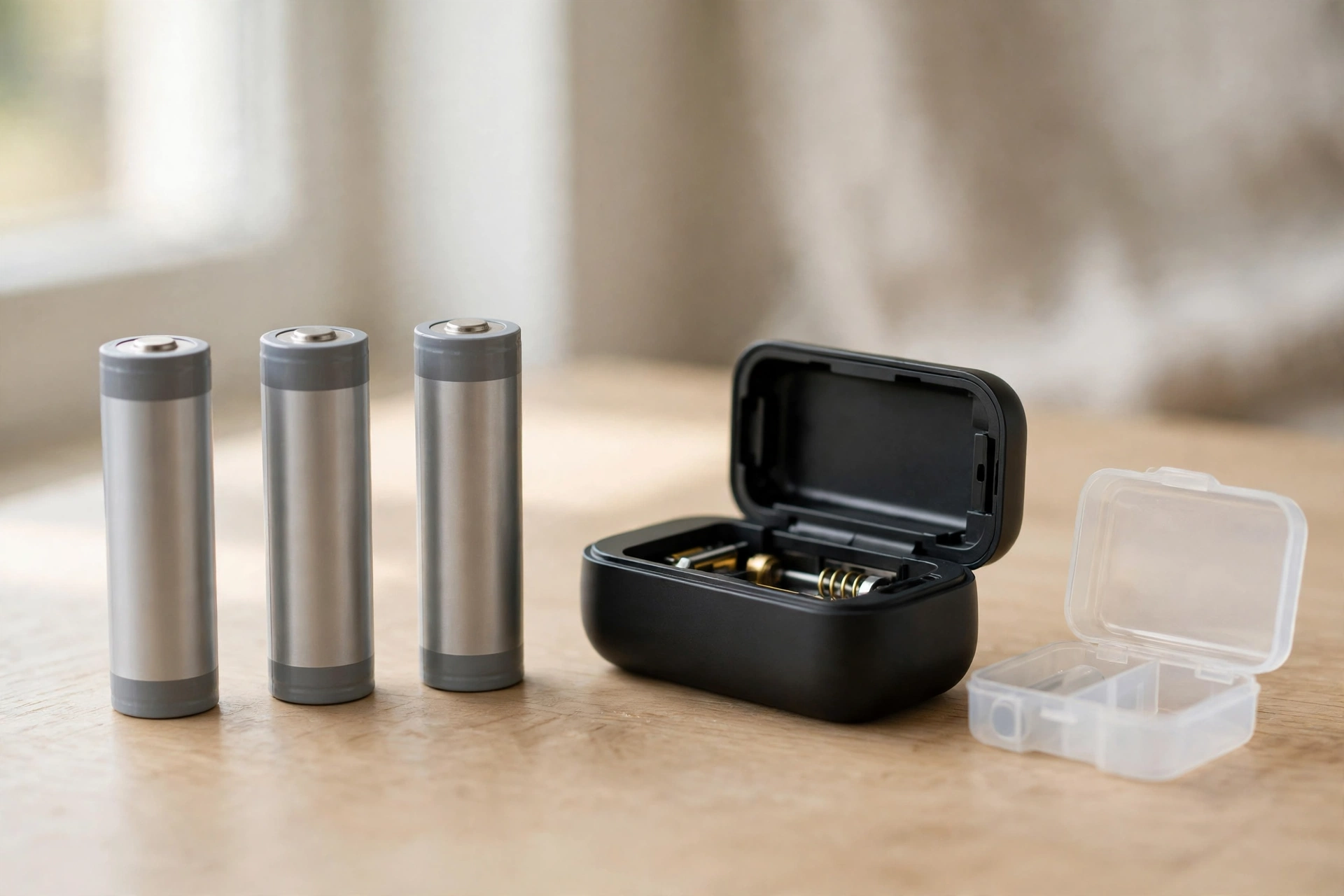
- Keep loose batteries in a case. Never carry a bare cell in a pocket or bag with coins, keys, or other metal objects — contact across the terminals can short-circuit the cell.
- Charge on a clean, flat surface, away from anything flammable, where you can see the device. Do not charge on a couch or pillow, and do not charge overnight.
- Never charge with a phone or tablet charger. Use the charger supplied with the device or a charger rated for the cell.
- Replace batteries that are damaged or wet. Stop using a device immediately if it makes strange noises, smells unusual, leaks, becomes unusually hot, or smokes or sparks.
- Do not remove or disable safety features such as firing-button locks and vent holes.
- Protect devices from extreme temperatures — no direct sun, no hot cars, no freezing nights.
Two more rules from practice: in dual-battery mods, use “married” pairs — two identical cells, bought together, always charged and used together, so they age evenly. And inspect wraps regularly: a torn wrapper exposing the metal can is a short-circuit risk. Rewrap the cell or retire it; never vape on a damaged wrap.
Charging, storage, and end of life
An external charger designed for lithium-ion cells is safer and gentler than charging through most mods, and it lets you inspect each cell as you handle it. Store spare cells in cases, in a cool, dry place, at partial charge if they will sit for weeks. Most 18650 cells are rated for a few hundred full charge cycles; capacity fades gradually, and a cell that no longer holds a useful charge, runs hot, or shows swelling should be retired. Dispose of lithium-ion cells through a battery recycling programme — never in household waste, and tape the terminals before drop-off. For device and coil context, see box mods for beginners, vape coils, and the vaping and e-liquids hub.
The FAA’s battery rules cover flying with vaping devices and spare batteries.
Frequently asked questions
What are the best replaceable vape batteries?
Authentic, datasheet-verified cells matched to your device and wattage — such as the Samsung 30Q, Sony/Murata VTC6, or LG HG2 for 18650 devices. “Best” means the right CDR with margin, bought from a reputable vendor, not the highest printed number.
How do I choose vape batteries?
Check your device’s required size, estimate your amp draw from your wattage, pick a cell whose continuous discharge rating exceeds it with margin, and buy authentic cells from a reputable vendor.
How long do replaceable vape batteries last?
Typically a few hundred full charge cycles, depending on how hard they are pushed and how they are stored. Retire cells that run hot, swell, lose capacity sharply, or have damaged wraps.
Can I use any battery in my vape?
No. Use only the size and type your device specifies, with an adequate discharge rating. Incompatible or counterfeit cells are a genuine fire risk.
Can I carry spare batteries in my pocket?
Only in a battery case. A bare cell contacting keys or coins can short-circuit, overheat, and vent. This is one of the most common causes of battery incidents.
Affiliate Disclosure
The CakeHeights Editorial Team is committed to providing accurate, research-backed information about cannabis and hemp products. Some links on this page are affiliate links, meaning we may earn a commission at no extra cost to you if you make a purchase through them. Our recommendations are based on independent research, testing, and analysis. We only promote products we believe offer genuine value to our readers. Learn more →

Related Articles
 Vaping & E-Liquids
MTL vs DTL Vaping: What’s the Difference?
 Vaping & E-Liquids
How to Quit Vaping: A Realistic Plan That Works
 Vaping & E-Liquids
Leave a Reply