
Table of Contents
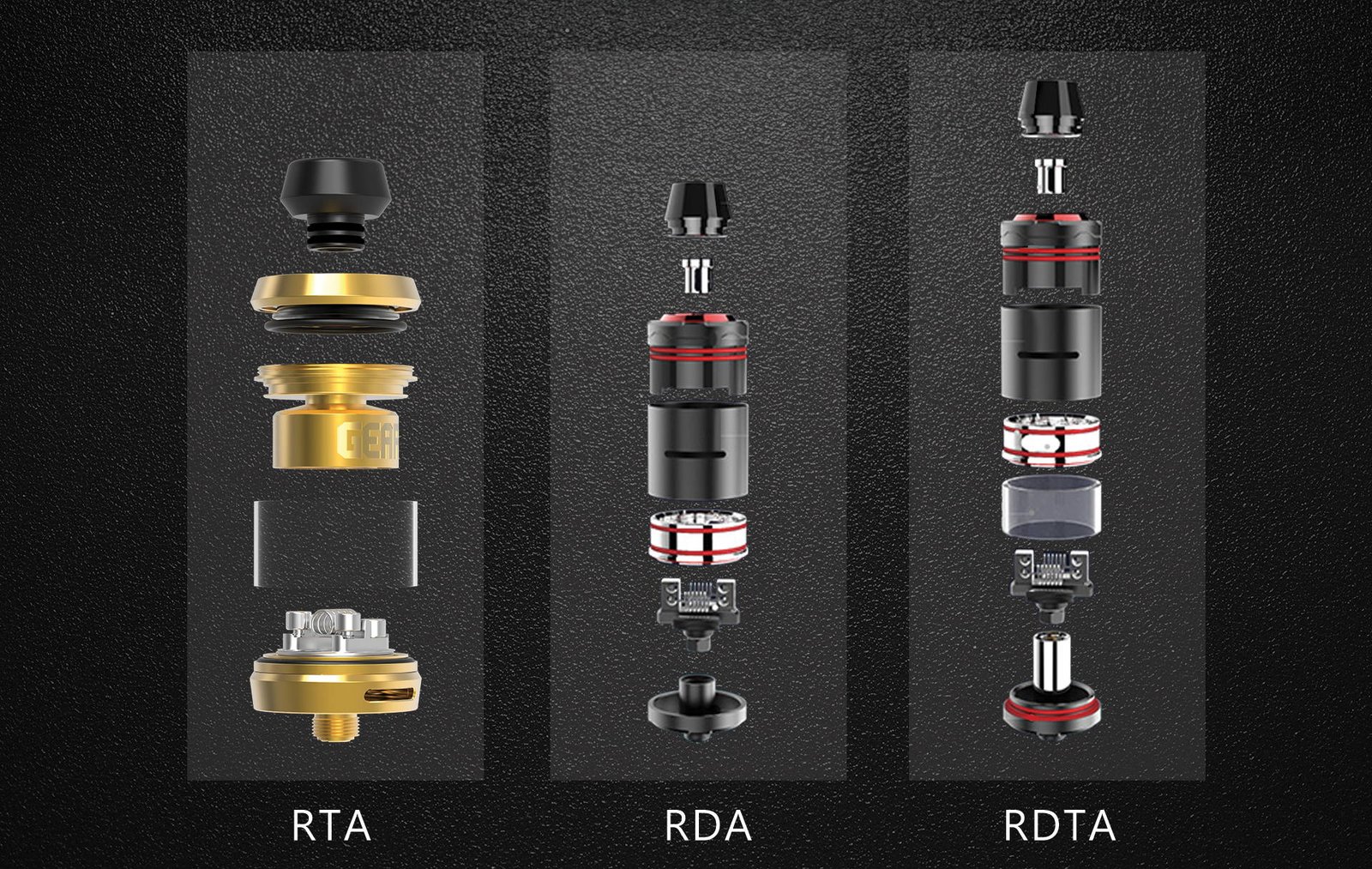
An RDA — a Rebuildable Dripping Atomizer — is a type of vape atomizer with no tank. Instead of filling a reservoir, you drip e-liquid directly onto the coils and wick, a few drops at a time, and vape until the wick runs dry. That direct contact is why RDAs are famous for flavor. It is also why they are strictly for experienced vapers: you build your own coils, you wick them yourself, and you re-drip every few puffs. If any of that sounds like a chore, it is — and that is the point of this guide.
How an RDA works
An RDA has a small number of parts, and every one of them is in your hands:
| Part | What it does |
|---|---|
| Deck | The base plate with posts or clamps that hold your coil or coils |
| Coil | Wire you wrap yourself; it heats up and vaporizes the liquid |
| Wick | Cotton threaded through the coil; it carries liquid to the wire |
| Juice well | A shallow reservoir in the deck that holds a few drops of excess liquid |
| Cap | Covers the deck and holds the airflow slots |
| Drip tip | The mouthpiece; often removable so you can drip through it |
There is no glass and no tank — that is the whole idea, and it is what separates an RDA from every other atomizer. Bodies are usually stainless steel, sometimes aluminum, brass, or copper; drip tips and insulators are commonly Delrin or PEEK because they resist heat. Airflow is adjustable on most RDAs: more air means cooler, bigger clouds; less air means warmer, more concentrated flavor.
RDA vs RTA vs sub-ohm tank vs pod system
| RDA | RTA | Sub-ohm tank | Pod system | |
|---|---|---|---|---|
| Liquid storage | None — you drip | Tank, 2–6 ml | Tank, 2–8 ml | Pod, 2 ml typical |
| Coils | You build them | You build them | Pre-made, screw-in | Pre-made or built-in |
| Flavor | Best, generally | Very good | Good | Good for its size |
| Convenience | Lowest | Medium | High | Highest |
| Skill needed | High | High | Low | None |
If you want the flavor of a rebuildable without the constant dripping, an RTA is the middle ground. If you want no building at all, a sub-ohm tank on a regulated mod is the honest recommendation. And if you are new to vaping entirely, start with a pod or a vape pen — an RDA is not a beginner device, and no amount of enthusiasm changes that.
Building your first coil, safely
This is the part that makes an RDA an advanced device. Do it on a regulated mod or an ohm reader, never on a mechanical mod, and do it in this order:
- Gather the tools: wire, cotton, wire cutters, a coil jig or screwdriver of known diameter, small scissors, tweezers, and an ohm reader or regulated mod that reads resistance.
- Wrap the coil. Wrap the wire around the jig in even, touching turns — 5 to 8 wraps is a normal starting point. Keep the coil tight and straight.
- Mount it. Fit the coil legs into the deck posts, tighten the screws, and position the coil so it sits centered over the airflow and does not touch the deck, the posts, or the cap.
- Check the resistance before firing. Read it on the ohm reader or mod. It should be close to what you expected for your wire and wrap count. A reading far lower than expected — or a short-circuit warning — means something is touching something it should not. Fix it before you fire.
- Pulse and strum — Kanthal and stainless steel only. Fire in short pulses at low wattage and gently strum the coil with ceramic tweezers to work out hot spots until it glows evenly from the center out. Never dry-fire or glow nickel (Ni200) or titanium wire — they must only ever be used in temperature control mode, and titanium forms titanium dioxide at around 1,200°F. See our temperature control guide for the wire rules.
- Check the battery math. Divide 4.2 volts by your coil’s resistance to get the current draw, and confirm it is below your battery’s continuous discharge rating. Our battery guide has the real CDR ratings for the common cells.
- Wick it. Thread cotton through the coil with slight resistance — snug, not stuffed — trim the tails, and tuck them into the juice well without packing them tight. Prime with e-liquid before the first puff.
Dripping and squonking
Dripping is simple: remove the cap (or drip through the drip tip), put a few drops directly on the coil and wick, replace the cap, vape. The skill is in the timing — drip too late and you get a dry hit; drip too much and it leaks out of the airflow slots. Most people re-drip every 5 to 10 puffs. You will learn the rhythm of your own build quickly, and the flavor reward is real: fresh liquid on a fresh wick, every time.
Squonking is the lazy person’s answer to dripping. A squonk mod has a soft bottle of e-liquid inside it; squeeze the bottle and liquid feeds up through a hollow 510 pin into the RDA’s deck. It keeps the flavor advantage of an RDA and removes most of the fuss, at the cost of a bulkier mod and an RDA with a squonk-compatible pin.
Maintenance and care
- Rewick often. Cotton is cheap. When flavor dulls or tastes off, pull the old wick, dry-burn the bare coil gently (Kanthal or stainless steel only) to clean off gunk, rinse, and rewick. Most vapers rewick every few days to a week depending on the liquid — sweetened liquids gunk coils fastest.
- Replace coils when they stop performing. A coil that tastes metallic, heats unevenly after cleaning, or shows visible corrosion is done. Our coil lifespan guide covers the signs in detail.
- Clean the deck and cap regularly. Disassemble, rinse the metal parts under warm water, dry fully before reassembly. Keep water away from the mod itself and never soak a coil you intend to reuse while it is still wicked.
- Check the 510 pin and insulators. A cracked insulator or a loose pin can short. If the resistance reading jumps around, stop and inspect before firing again.
Who RDAs are — and are not — for
RDAs are for vapers who enjoy the craft: building, wicking, tuning airflow, and tasting the difference a build makes. They are the cheapest way to vape long-term (wire and cotton cost almost nothing) and the most flavorful way to try a new liquid, since you can drip a few drops without committing a whole tank. They are not for beginners, not for anyone who wants to vape while driving, and not for anyone who does not want to learn Ohm’s law. The FDA’s battery safety guidance applies with full force here — an RDA on a mechanical mod with a bad build is the highest-risk combination in vaping, and it is exactly what the rules are written to prevent.
One last note on the health side: the NHS position is that nicotine vaping is less harmful than smoking, but vaping is not risk-free, and nicotine is addictive. An RDA does not change that equation — it changes the flavor, not the risk profile.
Frequently asked questions
What is an RDA vape?
An RDA (Rebuildable Dripping Atomizer) is an atomizer with no tank. You build your own coil, wick it with cotton, and drip e-liquid directly onto the coil. It offers the best flavor of any atomizer type, at the cost of constant attention.
Is an RDA suitable for beginners?
No. RDAs require coil building, wicking, resistance checking, and battery safety knowledge. Beginners should start with a pod system or a pen, and move to a sub-ohm tank before ever considering a rebuildable.
How often do I need to drip?
Typically every 5 to 10 puffs, depending on your build, wattage, and juice-well depth. When flavor drops or the hit starts to feel dry, it is time to drip. Squonking automates this if you find it tedious.
What is the difference between an RDA and an RTA?
An RDA has no tank — you drip liquid onto the coil. An RTA (Rebuildable Tank Atomizer) has a tank that feeds the coil automatically. RTAs are more convenient; RDAs usually taste slightly better and are easier to build on.
How long does an RDA coil last?
The wire coil itself can last weeks to months with regular cleaning and rewicking. The cotton wick needs replacing every few days to a week. Replace the coil when it heats unevenly, tastes metallic, or shows corrosion.
For more on devices and e-liquids, browse the Vaping & E-Liquids hub.
Affiliate Disclosure
The CakeHeights Editorial Team is committed to providing accurate, research-backed information about cannabis and hemp products. Some links on this page are affiliate links, meaning we may earn a commission at no extra cost to you if you make a purchase through them. Our recommendations are based on independent research, testing, and analysis. We only promote products we believe offer genuine value to our readers. Learn more →

Related Articles
 Vaping & E-Liquids
MTL vs DTL Vaping: What’s the Difference?
 Vaping & E-Liquids
How to Quit Vaping: A Realistic Plan That Works
 Vaping & E-Liquids
Leave a Reply