

Table of Contents
There are two ways to inhale from a vape: mouth-to-lung (MTL), where vapor sits in your mouth briefly before you breathe it in — like a cigarette — and direct-to-lung (DTL), where you breathe vapor straight into your lungs for bigger clouds. MTL suits beginners, higher nicotine, and smaller devices; DTL suits experienced vapers, lower nicotine, and powerful devices. This guide teaches both, plus the device basics, e-liquid choices, and mistakes that cause coughing and burnt hits.
This guide is for adults. Non-smokers and under-18s should not vape — the NHS is explicit on that point, and nicotine is addictive.
Device basics in 60 seconds
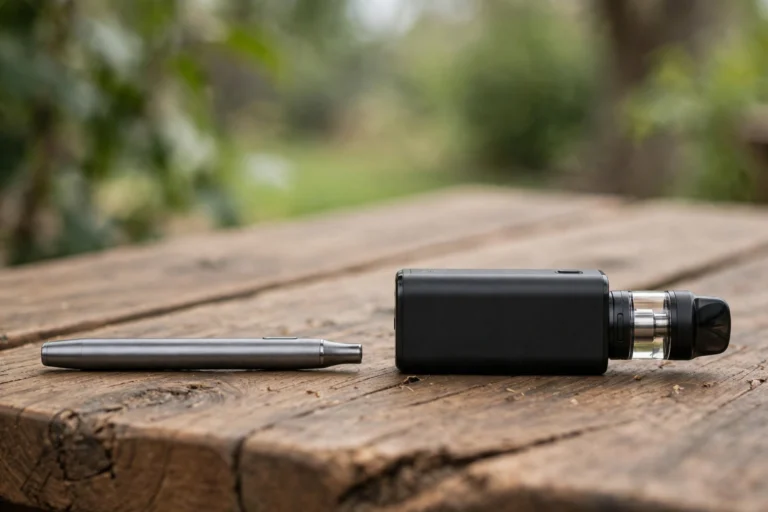
Every vape has the same core parts: a battery (power), an atomizer/coil (heats the liquid), a tank or pod (holds the liquid), and a mouthpiece (where you inhale). Device types: pod systems (compact, beginner-friendly), vape pens (slim, portable), box mods (larger, adjustable, advanced), and disposables (ready to use, no refilling, more waste). Start simple — a pod system or pen — and upgrade only if you find yourself wanting more control. See how vape types compare for the full breakdown.
E-liquid and nicotine levels
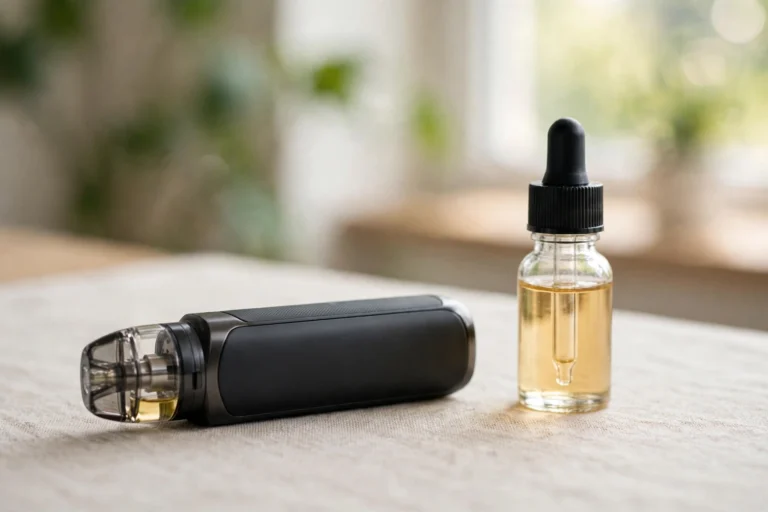
E-liquid (vape juice) is usually propylene glycol (PG), vegetable glycerin (VG), flavorings, and optional nicotine. PG is thin, carries flavor, and gives throat hit; VG is thick and produces more vapor. Nicotine is the addictive component — choose your level deliberately, not by default.
| Nicotine level | Description | Typical use |
|---|---|---|
| 0 mg | No nicotine | Flavor-only vaping |
| 3 mg | Low nicotine | Light use, DTL devices |
| 6 mg | Medium nicotine | Moderate use |
| 12 mg | High nicotine | MTL devices, ex-smokers |
| 18 mg | Very high nicotine | Heavy smokers switching (MTL only) |
Start low if you are unsure, and adjust based on experience — too much nicotine causes harsh throat hit, dizziness, and nausea. For the risks of overdoing it, read how much nicotine is too much.
Mouth-to-lung (MTL): the beginner technique
MTL mimics smoking and works best with higher-nicotine liquids and lower-power devices.
- Take a slow, gentle puff and let the vapor fill your mouth.
- Hold the vapor in your mouth for a moment.
- Breathe it gently into your lungs.
- Exhale slowly through your mouth or nose.
MTL gives a stronger throat hit and uses less liquid. If you cough, slow down further and check your nicotine level — harshness usually means too much nicotine, too much power, or too fast a draw.
Direct-to-lung (DTL): the cloud technique
DTL skips the mouth stage: one deep breath pulls vapor straight into the lungs. It produces bigger clouds and a softer throat hit, and works best with low-nicotine liquids and higher-power devices.
- Take a quick, deep breath in through the device, straight to the lungs.
- Hold briefly.
- Exhale slowly and steadily.
Do not use high-nicotine liquid with DTL — the larger volume of vapor delivers far more nicotine per puff and will feel harsh and unpleasant.
| Technique | Throat hit | Nicotine level | Vapor production |
|---|---|---|---|
| Mouth-to-lung | Stronger | Higher | Less |
| Direct-to-lung | Softer | Lower | More |
Common mistakes that ruin the experience
| Mistake | Effect | Fix |
|---|---|---|
| Inhaling too fast | Coughing and discomfort | Slow, gentle draws |
| Nicotine level too high | Harsh throat hit, dizziness | Drop a level and retry |
| Not letting vapor settle (MTL) | Reduced flavor | Pause in the mouth before inhaling |
| Dirty device / old coil | Poor taste, burnt hits | Clean regularly, replace coils — see what causes a burnt vape taste |
| Chain vaping without breaks | Overheating, dry wick | Pause between puffs, let the wick re-soak |
Health considerations, honestly
Vaping is not harmless. The aerosol can irritate the lungs, nicotine is addictive and makes quitting harder, and long-term effects are still unknown. Young people face particular risks because their brains are still developing, which is one reason age restrictions exist. On the other side, for adult smokers, the NHS states that nicotine vaping is less harmful than smoking and one of the most effective tools for quitting — while stressing that vaping is not risk-free. If you smoke and want to quit, vaping plus professional support gives you the best odds; read the NHS guidance on vaping to quit smoking for the evidence-based picture. If you do not smoke, do not start vaping.
Maintenance and battery safety
Clean your device every few weeks: disassemble carefully, wipe the exterior, rinse tanks with warm water, swab hard-to-reach areas, and let everything dry completely before reassembling. For batteries: use the correct charger, inspect for damage before use, store spares in a protective case, keep them away from extreme temperatures, and replace damaged batteries immediately. Never overcharge — it damages the battery and, rarely, can cause fires. See how vape coils work for the coil side of maintenance.
Laws vary — check yours
Vaping laws cover age limits, product standards, advertising, flavors, and where you can vape — and they differ by country and, in the US, by state, and keep changing. As of November 2026, assume nothing carries over from another jurisdiction: check current rules from an official source where you live before buying or vaping in public.
The National Academies’ 2018 e-cigarettes report reviewed more than 800 studies on the health effects of e-cigarettes.
Frequently asked questions
What is vaping and how does it work?
Vaping means inhaling aerosol from an electronic device that heats e-liquid. The liquid usually contains PG, VG, flavorings, and optional nicotine; the heated coil turns it into vapor you inhale.
How do I inhale properly while vaping?
For MTL: slow puff into the mouth, pause, breathe in gently, exhale smoothly. For DTL: one deep breath straight to the lungs with low-nicotine liquid. Start slow either way and let your body tell you what works.
Is vaping less harmful than smoking?
According to the NHS, nicotine vaping is less harmful than smoking and reduces exposure to toxins linked to serious diseases — but vaping is not risk-free, and long-term effects are unknown. The comparison applies to adult smokers switching, not to non-smokers starting.
Is vaping safe for beginners?
“Safer than smoking” is not “safe.” Beginners who are adult smokers should start with low nicotine, a simple device, and gentle technique, and pay attention to how they feel. Non-smokers and under-18s should not vape at all.
What devices are best for new vapers?
Pod systems and vape pens: simple, portable, and easy to use, with no complex settings. They pair well with MTL technique and higher-nicotine liquids for ex-smokers.
Conclusion
Good technique is mostly patience: slow draws, the right nicotine level, a clean device, and breaks between puffs. Master MTL first, try DTL only with low nicotine, and keep your expectations honest about health — vaping is a less harmful alternative for adult smokers, not a harmless hobby. More in our Vaping & E-Liquids guides.
Affiliate Disclosure
The CakeHeights Editorial Team is committed to providing accurate, research-backed information about cannabis and hemp products. Some links on this page are affiliate links, meaning we may earn a commission at no extra cost to you if you make a purchase through them. Our recommendations are based on independent research, testing, and analysis. We only promote products we believe offer genuine value to our readers. Learn more →

Related Articles
 Vaping & E-Liquids
MTL vs DTL Vaping: What’s the Difference?
 Vaping & E-Liquids
How to Quit Vaping: A Realistic Plan That Works
 Vaping & E-Liquids
Leave a Reply