
Table of Contents
A vape pen is the simplest refillable vaping device: a slim battery, a small tank, and a coil, with few or no settings to adjust. That simplicity is the point. If you are switching from smoking, a vape pen with the right nicotine strength is the easiest way to start, and most of what can go wrong with one comes down to three things: a dry coil, the wrong liquid, or a dead battery. This guide walks through setup, first use, inhaling technique, maintenance, and troubleshooting, in the order you will actually need them.
What are the parts of a vape pen?
Every vape pen has the same four parts, whatever the brand. The battery is the body of the pen: it stores power and usually charges over USB. The tank (sometimes called a clearomizer) holds the e-liquid and screws onto the battery. The coil sits inside the tank: a small heating element wrapped in cotton that vaporizes the liquid. The mouthpiece (drip tip) is what you inhale through. Some pens have a single button; some are draw-activated (no button, they fire when you inhale); some have a small wattage adjustment. None of them has temperature control: that is a feature of larger box mods, covered in our temperature control guide. For the wider device landscape, see what vaping is and our guide to pod systems, the closest alternative to a pen.
| Type | How it works | Best for |
|---|---|---|
| Disposable pen | Pre-filled, pre-charged, thrown away when empty | Trying vaping once; banned in the UK since June 2025 |
| Refillable pen | Refillable tank, replaceable coil, rechargeable battery | Daily use on a budget; the type this guide covers |
| Pod system | Compact battery + pod (refillable or prefilled) | Smokers switching; simpler than a pen, no coil changes on prefilled pods |
How do I set up a vape pen for the first time?
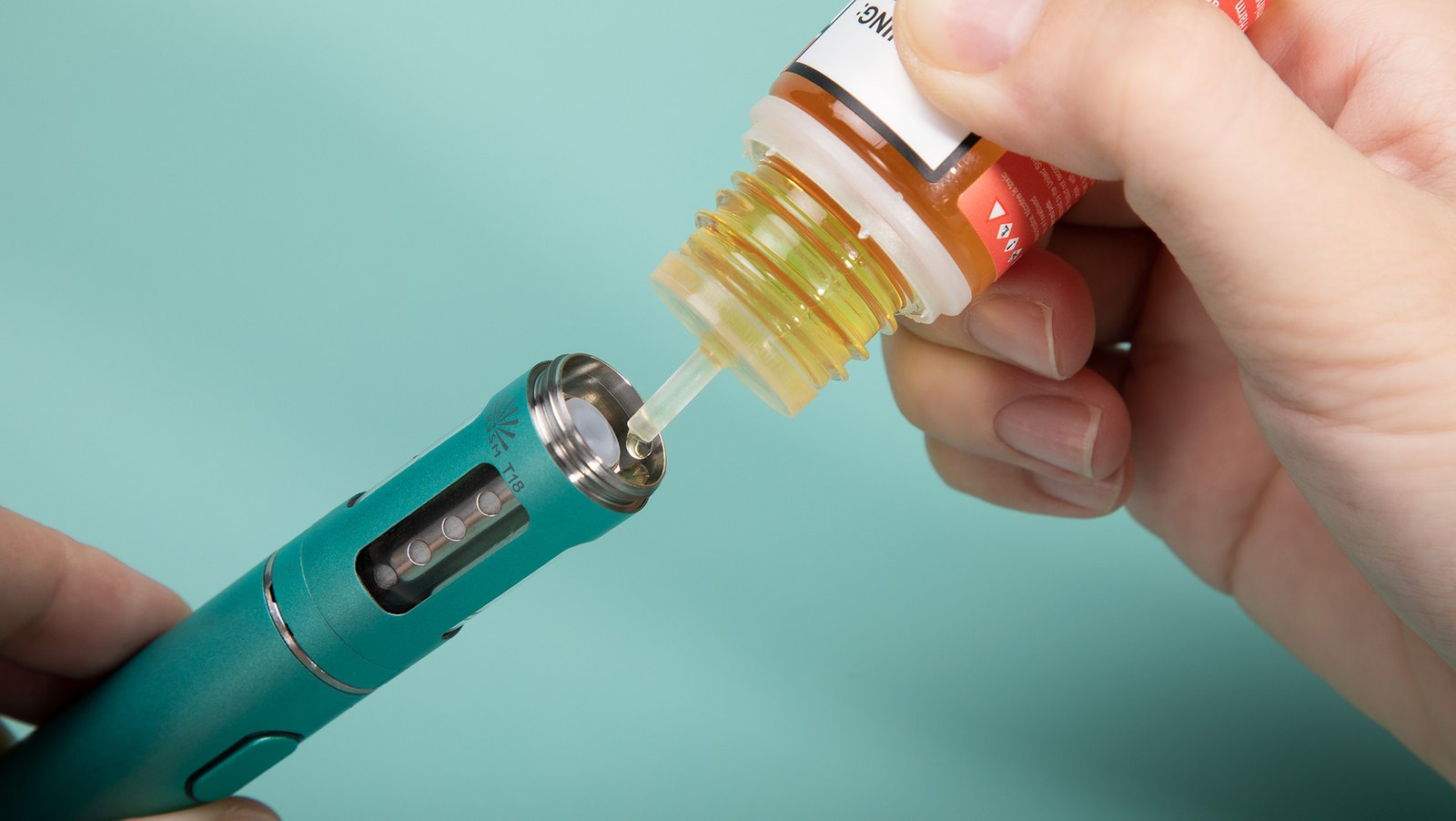
1. Charge it. Plug the pen into its USB cable and a suitable power source. An indicator light shows charging status, but the exact meaning (color, blinking, solid) varies by device: check your manual rather than assuming. Do not leave the pen charging overnight unattended. 2. Fill the tank. Unscrew the tank from the battery, open the fill port (usually by twisting the top or sliding a cap), and fill slowly with e-liquid, leaving a small air gap at the top. Do not overfill: liquid in the central airflow tube causes gurgling and leaking. 3. Prime the coil. This is the step beginners skip and regret. Put 3–5 drops of e-liquid directly onto the exposed cotton of a new coil, install it, fill the tank, and wait 5–10 minutes before the first puff. A dry coil scorches permanently on the first fire. 4. Turn it on. Most button pens turn on and off with five rapid clicks; draw-activated pens have no button and are always ready. Turn a button pen off (five clicks) before putting it in a pocket or bag: accidental activation in a pocket can burn the coil or overheat the device.
How do I inhale?
There are two techniques, and the pen suits one of them. Mouth-to-lung (MTL) is the cigarette-like draw: pull vapor slowly into your mouth, hold it a moment, then inhale into your lungs and exhale. MTL suits higher nicotine strengths, tighter airflow, and beginners. Direct-to-lung (DL) is a deep breath straight into the lungs: it suits low nicotine, high airflow, and sub-ohm devices, and it is not what a vape pen is built for. Trying DL on a pen gives a weak, unsatisfying draw and can flood the coil. Start with MTL, take slow gentle draws rather than sharp pulls, and pause a few seconds between puffs so the wick can re-saturate. For the technique in more depth, see how to inhale a vape, and for choosing a strength, see choosing a nicotine strength.
What e-liquid can I use?
Not any liquid: the coil decides. Most vape pens use small mouth-to-lung coils with tight wicking, which need thinner liquid: 50/50 PG/VG is the safe default, and high-PG liquid also works. Thick high-VG liquid (70/30 or higher) wicks too slowly through small coils, causing dry hits and burnt taste; save it for sub-ohm tanks. Nicotine strength depends on your smoking history: 6–12 mg/ml freebase suits most switchers on a pen, or 10–20 mg/ml nicotine salts if the pen is designed for them (check the manual: salts need low power and high resistance, which most pens provide, but confirm before use). Never put cannabis oil, CBD oil meant for oral use, or any non-vaping liquid in a vape pen: oils not designed for inhalation can cause serious lung injury. See how much nicotine is too much for the signs of overconsumption.
How do I maintain a vape pen?
Clean the tank when you change coils: disassemble the tank, rinse the tank parts (glass, mouthpiece, base hardware) in warm water, dry everything fully before reassembling. Never soak the battery section or the coil itself, and never get water into the battery connection: wipe the battery contact with a dry cotton swab. Replace the coil every 1–3 weeks depending on use, or sooner when flavor fades, vapor drops, or a burnt taste appears. A coil is a consumable; cleaning a used coil rarely restores it. See our coil lifespan guide and how vape coils work. Store it upright, away from heat and direct sunlight, out of reach of children and pets, and with the device turned off. E-liquid bottles go in the same locked-away place: swallowed e-liquid is a poisoning emergency for small children (U.S. Poison Control: 1-800-222-1222).
Troubleshooting: what if something goes wrong?
| Problem | Likely cause | Fix |
|---|---|---|
| No vapor | Dead battery, device off, or burnt coil | Charge; five-click to turn on; replace the coil |
| Burnt taste | Dry wick, unprimed coil, or wattage too high | Prime new coils and wait; lower the setting; replace a scorched coil |
| Leaking | Overfilled tank, loose parts, worn O-ring, or wrong liquid thickness | Fill to the line, tighten connections, replace O-rings, use 50/50 liquid |
| Gurgling / spitback | Flooded coil or liquid in the airflow tube | Flick the tank gently over a tissue, take slower draws, check the fill level |
| Weak flavor | Aging coil or residue buildup | Replace the coil; clean the tank |
| Device hot | Chain vaping or a failing battery | Stop, let it cool; if it recurs, retire the device |
Is using a vape pen safe?
The safety picture is the same as vaping generally. The NHS vaping-to-quit guidance is the honest summary: nicotine vaping is less harmful than smoking but not risk-free, and it is a quit aid for smokers, not a product for non-smokers. The original version of this post stated that studies link vaping to heart disease. That overstates the evidence: some observational studies report associations between vaping and heart disease, but nearly all vapers in those studies are current or former smokers, and the studies cannot separate vaping’s effect from smoking’s damage, so no causal claim is justified today. Nicotine itself raises heart rate and blood pressure in the short term, which is established. The practical safety rules for a pen are simple: use the correct charger, do not charge unattended, retire a device whose battery swells or overheats, keep liquid locked away from children, and buy liquid from regulated sellers.
The FDA’s e-liquid storage guidance covers safe storage and keeping liquid away from children.
Frequently asked questions
How do I start using a vape pen?
Charge it, fill the tank with suitable e-liquid (50/50 for most pens), prime the coil with a few drops and wait 5–10 minutes, turn it on (usually five clicks), and take slow mouth-to-lung draws. Start with a low setting if the pen is adjustable.
What are the different parts of a vape pen?
A battery (the body), a tank (holds the liquid), a coil (heats the liquid), and a mouthpiece. Some pens add a button or a small wattage adjustment. Temperature control is not a vape-pen feature; it belongs to larger box mods.
How do I maintain my vape pen?
Rinse tank parts in warm water when changing coils (never soak the battery or the coil), replace the coil every 1–3 weeks, wipe the battery contact dry, and store the pen upright, off, and out of reach of children.
Can I use any e-liquid in my vape pen?
No. Most pens need 50/50 or high-PG liquid; thick high-VG liquid wicks too slowly and causes dry hits. Match nicotine strength to your smoking history, confirm salt compatibility in the manual, and never vape oils not designed for inhalation.
Why does my vape pen taste burnt?
Almost always a dry or scorched wick: an unprimed new coil, an empty tank, chain vaping without pauses, or a coil past its life. Prime new coils, wait after filling, pause between puffs, and replace the coil when the burnt taste persists.
Browse more in the Vaping & E-Liquids hub.
Affiliate Disclosure
The CakeHeights Editorial Team is committed to providing accurate, research-backed information about cannabis and hemp products. Some links on this page are affiliate links, meaning we may earn a commission at no extra cost to you if you make a purchase through them. Our recommendations are based on independent research, testing, and analysis. We only promote products we believe offer genuine value to our readers. Learn more →

Related Articles
 Vaping & E-Liquids
MTL vs DTL Vaping: What’s the Difference?
 Vaping & E-Liquids
How to Quit Vaping: A Realistic Plan That Works
 Vaping & E-Liquids
Leave a Reply