
Table of Contents
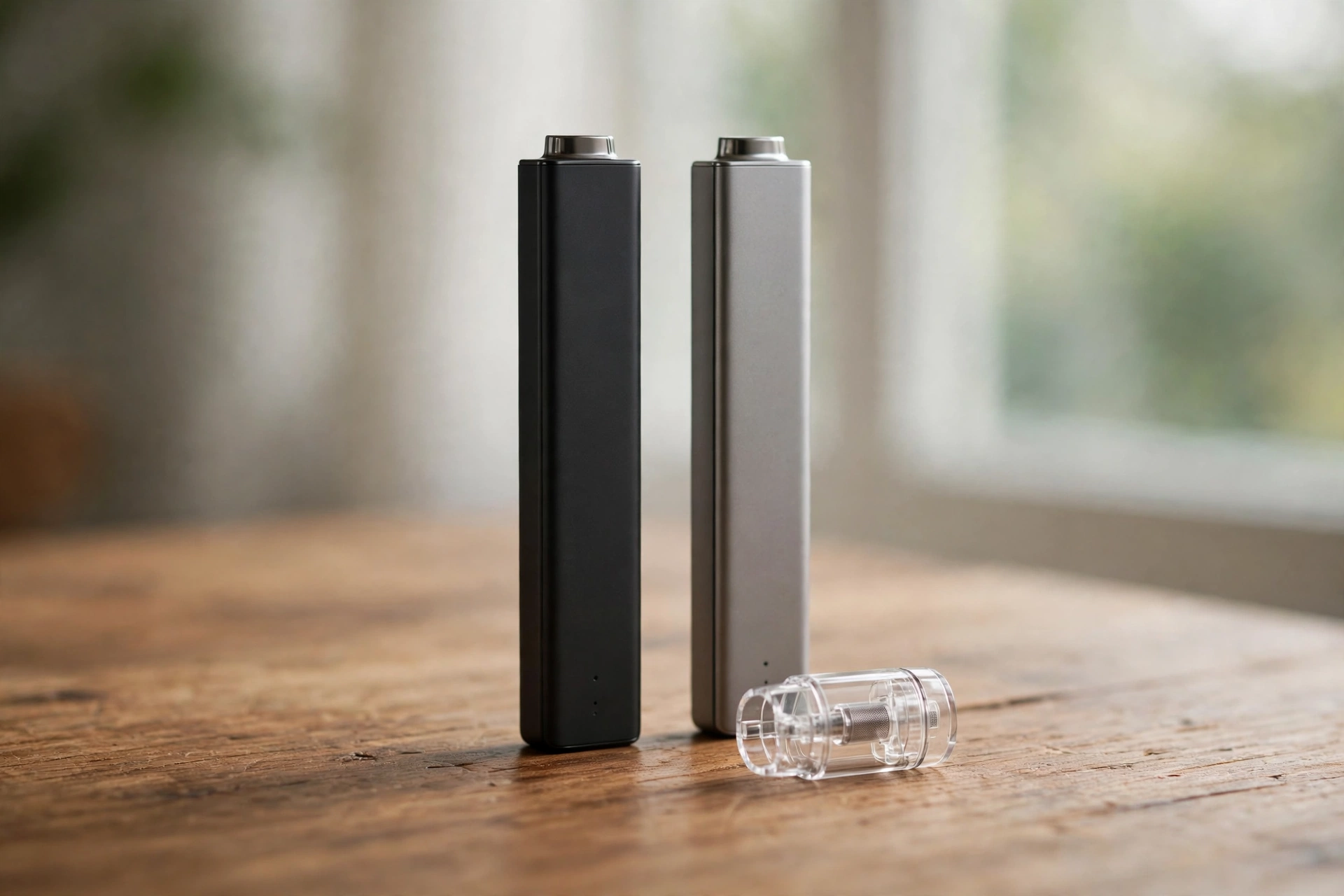
A pod system is the smallest, simplest kind of refillable vape: a compact battery and a small cartridge — the pod — that holds the e-liquid and the coil. Pods took over vaping in the late 2010s for a simple reason: they pair perfectly with nicotine salts, giving ex-smokers a cigarette-like nicotine hit from a device that fits in a pocket and needs almost no maintenance. This guide covers how pods work, the three kinds, and how to choose one. For the full range of device types, see our guide to the different types of vapes.
How a pod system works
Two parts, and almost nothing else:
- The pod — a small cartridge, usually 2 ml in the UK/EU (capped by regulation) and up to larger sizes elsewhere, holding e-liquid and a built-in coil. Some pods have replaceable coils; most are sealed and thrown away when the coil dies.
- The battery — a slim body, usually 300–1,000 mAh, that powers the pod. Most pods are draw-activated (inhale to fire); some have a button, and some have both.
There is no tank to fill with a syringe, no wattage to set, no coil to build. You fill or click in the pod, inhale, and the device does the rest. That simplicity is the whole point — and the reason pods are the standard recommendation for smokers switching to vaping.
The three kinds of pod system
| Pre-filled pods | Refillable pods | Disposables | |
|---|---|---|---|
| What you buy | Sealed pods, one flavor each | Empty pods + bottled e-liquid | The whole device, used once |
| Flavor choice | Limited to the brand’s range | Any compatible liquid | One flavor per device |
| Nicotine | Fixed per pod | Your choice, adjustable | Fixed |
| Cost over time | Medium | Lowest | Highest |
| Waste | Pods discarded | Pods discarded, less often | Whole device + battery discarded |
| Best for | Beginners who want zero fuss | Anyone who wants choice and value | Occasional use, travel, trying vaping |
Refillable pods are the best default for most people: cheaper per milliliter, any flavor, any strength, and far less waste. Pre-filled pods suit people who value convenience above all else. Disposables are the most expensive and most wasteful option over time — and are now banned in the UK (since June 2025), with other jurisdictions considering similar measures.
Why pods and nicotine salts go together
Pods are low-power devices: small coils, tight airflow, modest vapor. That combination pairs with nicotine salts, which deliver high-strength nicotine smoothly — 20–50 mg/ml in the US, capped at 20 mg/ml in the UK, EU, and Canada. The same strength in a high-power sub-ohm tank would be overwhelming; in a pod, it approximates the nicotine delivery of a cigarette closely enough to satisfy a smoker. Freebase liquids also work in pods at lower strengths (6–18 mg/ml), but feel harsher at the same strength. Our nicotine strength guide matches forms and strengths to devices, and our nicotine content guide explains what the numbers mean.
How long do pods last?
A pod lasts until the coil inside it dies — typically a few days to a week of regular use, depending on the liquid (sweet liquids gunk coils faster) and how heavily you vape. The signs are the same as any dying coil: dull or burnt flavor, reduced vapor, leaking, or gurgling. Replace the pod (or the coil, if your pods have replaceable coils) when flavor drops off — vaping a burnt coil tastes terrible and delivers a harsher aerosol. A pod’s e-liquid capacity is separate from its lifespan: a 2 ml pod may need refilling daily for a heavy user, while the coil inside it lasts a week. See our coil lifespan guide for the details.
Choosing a pod system
Five things to weigh:
- Battery size — 300 mAh lasts a light user a day; heavy users want 800 mAh or more, or a device that charges fast over USB-C.
- Pod capacity and availability — check that replacement pods are easy to buy where you live before committing to a device. A pod system is only as good as its pod supply.
- Coil options — some systems offer multiple coil resistances for the same pod (tighter or airier draw). More options means more room to tune the experience.
- Draw vs button — draw-activated feels most like a cigarette; a button gives more control. Most modern pods offer both.
- Leak resistance — top-fill pods with good seals leak less than side-fill designs. Read real user reviews for the specific model, not the marketing.
Maintenance: almost none, but not zero
Pods need little upkeep: wipe the contacts where the pod meets the battery, keep the pod’s fill port clean, and do not let a pod sit empty — a dry coil burns on the first puff. Charge with the cable supplied or a reputable USB charger, and do not leave any lithium battery charging unattended for long periods. For the full battery rules, see our battery safety guide.
Health and regulation
The NHS advises that nicotine vaping is less harmful than smoking and can help smokers quit, while being clear that vaping is not risk-free. The evidence review behind that position — the National Academies’ 2018 report on over 800 studies — is at doi.org/10.17226/24952. Regulation varies: the US requires FDA premarket authorization for vaping products and sets the purchase age at 21; the UK and EU cap nicotine at 20 mg/ml and pod capacity at 2 ml; the UK banned disposable vapes in June 2025. Check local rules before buying, especially when traveling.
Frequently asked questions
What is a vape pod system?
A compact vaping device with two parts: a battery and a small cartridge (the pod) that holds e-liquid and a built-in coil. Pods are the simplest refillable vapes and the standard recommendation for smokers switching.
How do vape pods work?
The battery heats the coil inside the pod, turning the e-liquid into aerosol. Most pods are draw-activated — inhale and the device fires — with no buttons or settings to manage.
Are vape pods refillable?
Refillable pods are — you fill them with bottled e-liquid. Pre-filled pods come sealed with liquid and are discarded when empty. Disposables are the entire device, used once and thrown away.
Why choose pod systems over traditional vapes?
Simplicity, portability, and nicotine satisfaction: pods pair with nicotine salts to deliver a cigarette-like hit from a pocket-sized device with almost no maintenance. Larger devices offer more control and vapor, at the cost of complexity.
How long do vape pods last?
The coil inside a pod typically lasts a few days to a week of regular use. Sweet liquids shorten coil life. The pod’s liquid capacity (often 2 ml) is separate — heavy users may refill daily while the coil lasts a week.
For more on devices, e-liquids, and safety, browse the Vaping & E-Liquids hub.
Affiliate Disclosure
The CakeHeights Editorial Team is committed to providing accurate, research-backed information about cannabis and hemp products. Some links on this page are affiliate links, meaning we may earn a commission at no extra cost to you if you make a purchase through them. Our recommendations are based on independent research, testing, and analysis. We only promote products we believe offer genuine value to our readers. Learn more →

Related Articles
 Vaping & E-Liquids
MTL vs DTL Vaping: What’s the Difference?
 Vaping & E-Liquids
How to Quit Vaping: A Realistic Plan That Works
 Vaping & E-Liquids
Leave a Reply