
Table of Contents
To use a THC vape pen, charge the battery fully, attach a compatible cartridge, and take a small, slow puff — then wait several minutes before the next one. THC pens are simple devices, but the dosing is approximate, the legal status varies by jurisdiction, and unregulated cartridges carry real risks. This beginner guide covers the device, the technique, and the safety rules that matter.
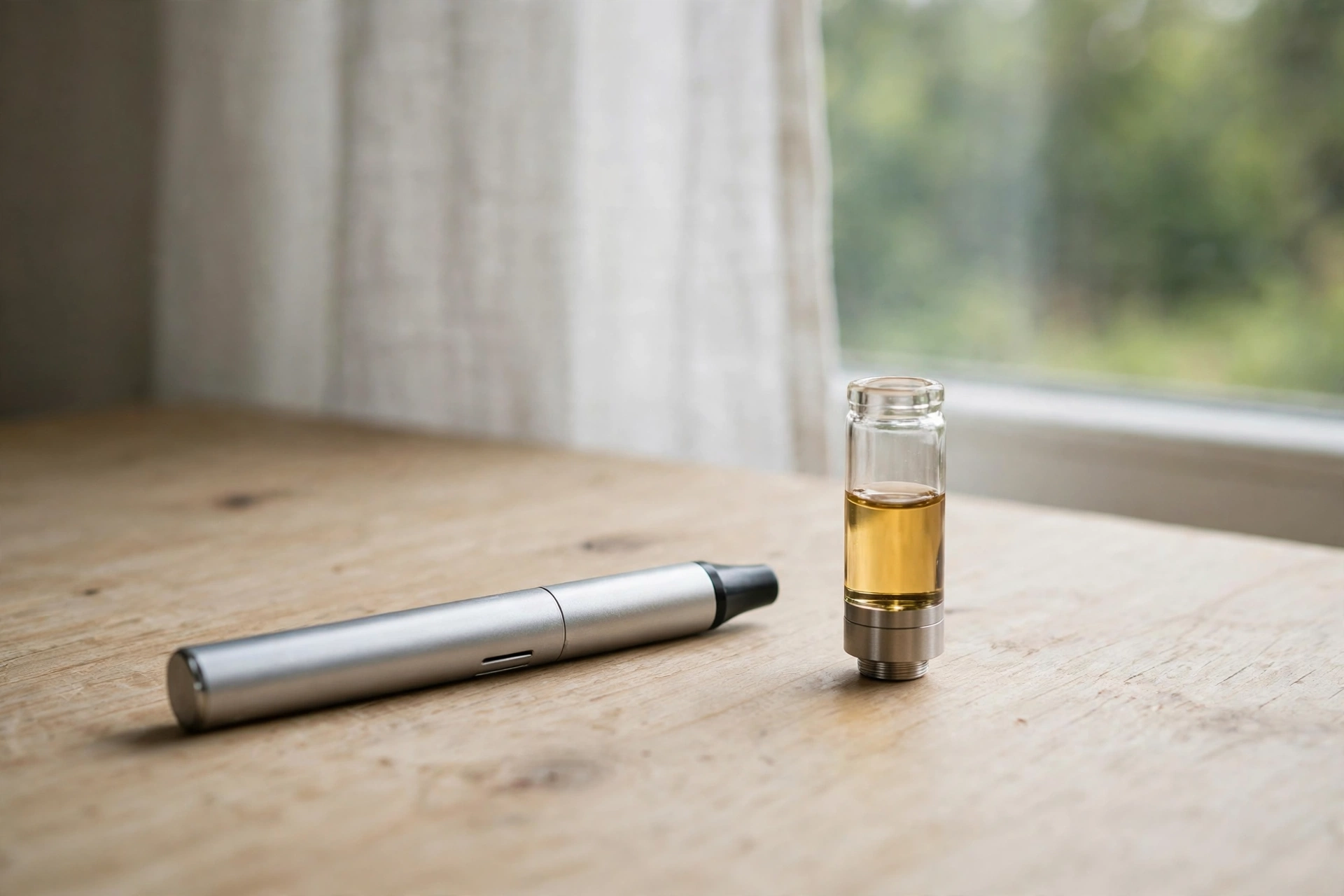
Anatomy of a THC vape pen
- Battery: the power source, usually rechargeable via USB. Most are 510-threaded.
- Cartridge: holds the THC oil and contains the heating element (atomizer).
- Atomizer: the heating element inside the cartridge that vaporizes the oil.
- Mouthpiece: where you inhale from.
Two types dominate: disposables (battery + cartridge in one unit, discarded when empty) and reusables (a rechargeable battery plus replaceable cartridges). Beginners often start with disposables; regular users usually prefer reusables for cost and choice.
Before first use
Charge fully
Charge the battery with the charger that came with it, following the manufacturer’s time guidance. Do not leave a charging battery unattended, and never charge a damaged battery. See our battery safety guide.
Attach the cartridge
Screw the cartridge in firmly — finger-tight, not forced. Overtightening damages the connection and can crack the cartridge. Check that the cartridge is compatible with the battery (510 thread is standard, but not universal).
Preheat gently, if the device offers it
Many pens have a preheat function (usually two button clicks) that warms thick oil so it wicks properly. Use it once before the first puff. Do not repeatedly fire the pen to “prime” it — overheating burns the oil and the wick.
How to inhale: start low, wait, titrate
- Take one small puff: inhale slowly for 2–3 seconds, mouth-to-lung, then exhale gently.
- Wait at least 10–15 minutes before the next puff. Inhaled THC acts within minutes, but the full effect takes time to judge — stacking puffs is how beginners overshoot.
- Increase by one small puff at a time across sessions, not within them, until you know your response.
- Start at the lowest temperature/voltage setting and raise it gradually. Higher settings produce more vapor and a harsher hit.
Dosing by puff is approximate, not precise: puff size, oil potency, and device settings all vary. “Precision dosing” claims for vape pens overstate what the device can do. If you need consistent dosing, discuss options with a clinician — and note that the NCCIH states the FDA has not approved the cannabis plant for any medical use.
Maintenance and troubleshooting
- Cleaning: wipe the mouthpiece exterior and battery connection with a dry cloth or cotton swab. Keep liquid out of the airway and electrical contacts. Never soak the cartridge.
- Clogs: do NOT poke the airway with a thin object — it damages the cartridge and pushes residue deeper. Clean only the accessible exterior and follow the manufacturer’s instructions. Our clogged cartridge guide covers the safe procedure.
- Weak vapor: check the charge, the connection, and whether the cartridge is empty. A cartridge that tastes burnt is finished — replace it.
- Battery issues: clean the contacts, try a different charger, and retire any battery that is hot, swollen, or damaged.
Safety: buy licensed, never drive, store safely
Buy from licensed dispensaries. The 2019–2020 EVALI outbreak — 2,807 hospitalized and 68 deaths in the US — was driven by vitamin E acetate in illicit THC cartridges (found in the lung fluid of 48 of 51 patients). Unregulated cartridges remain the highest-risk product in vaping. Licensed products are tested; street products are not.
Never drive after using THC. Cannabis impairs driving, and the impairment outlasts the feeling of being high. An AAA Foundation study found 84.8% of cannabis users drove on the same day they used, and 53% within an hour — see our driving evidence guide for the full picture.
Store safely. Keep pens and cartridges away from children and pets, upright, in a cool dry place. Keep the device off when not in use.
Legal status (as of November 2026)
THC remains federally illegal in the United States (Schedule I), while states vary widely — some allow recreational use, some medical only, some neither. In Florida, recreational cannabis remains illegal: Amendment 3 failed in November 2024 with 55.9% (60% required). Hemp-derived THC faces the federal two-step change under P.L. 119-37 (synthetic cannabinoids lost hemp status November 12, 2026; the total-THC test and 0.4 mg/container cap take effect December 11, 2026). Laws change — check your jurisdiction before buying, using, or traveling with a THC pen, and never transport cannabis across state or national borders. The FDA’s Delta-8 page explains why unregulated THC products carry additional risks. For the full legal picture, browse the Legal & Safety hub.
Frequently asked questions
What is a THC vape pen?
A portable vaporizer that heats cannabis oil or distillate in a cartridge to produce inhalable vapor — either a disposable all-in-one unit or a rechargeable battery with replaceable cartridges.
How does a THC vape pen work?
The battery powers a heating element inside the cartridge, vaporizing the oil. Button-activated pens fire when you hold the button; draw-activated pens fire when you inhale.
Can you control dosage with a vape pen?
Only approximately. Puff size, oil potency, and settings vary, so dosing is a matter of starting low, waiting, and titrating — not precision. Take one small puff and wait 10–15 minutes before the next.
What is the proper way to inhale from a vape pen?
Take a slow, steady 2–3 second draw into your mouth, then inhale into the lungs and exhale gently. Avoid deep, forceful inhales — they irritate the throat and make dosing harder to judge.
Are THC vape pens legal?
It depends on jurisdiction. THC is federally illegal in the US; states vary. Hemp-derived THC faces new federal restrictions in late 2026. Check local law before buying, using, or traveling with one.
For more on cannabis and vaping, browse the Vaping & E-Liquids hub and the THC & Cannabinoids hub.
Affiliate Disclosure
The CakeHeights Editorial Team is committed to providing accurate, research-backed information about cannabis and hemp products. Some links on this page are affiliate links, meaning we may earn a commission at no extra cost to you if you make a purchase through them. Our recommendations are based on independent research, testing, and analysis. We only promote products we believe offer genuine value to our readers. Learn more →

Related Articles
 Vaping & E-Liquids
MTL vs DTL Vaping: What’s the Difference?
 Vaping & E-Liquids
How to Quit Vaping: A Realistic Plan That Works
 Vaping & E-Liquids
Leave a Reply