
Table of Contents
Vaping can leave you feeling tired, and the usual reasons are straightforward: nicotine is a stimulant that disrupts sleep, the lift it gives fades into a dip, and PG/VG dry the mouth and throat. Tiredness after vaping is common, it is usually mild, and it is fixable — but persistent fatigue deserves a clinician’s look, not a settings tweak.
Why vaping can make you tired
Nicotine: stimulation, then a dip
Nicotine stimulates the nervous system — sharper focus, a brief lift — and then, as blood levels fall, the lift fades. The cycle of stimulation and comedown is the most common reason vapers report feeling drained, especially with heavy or frequent use. It is not that nicotine is a sedative; it is that the stimulation does not last, and the body pays for it afterward.
Sleep disruption
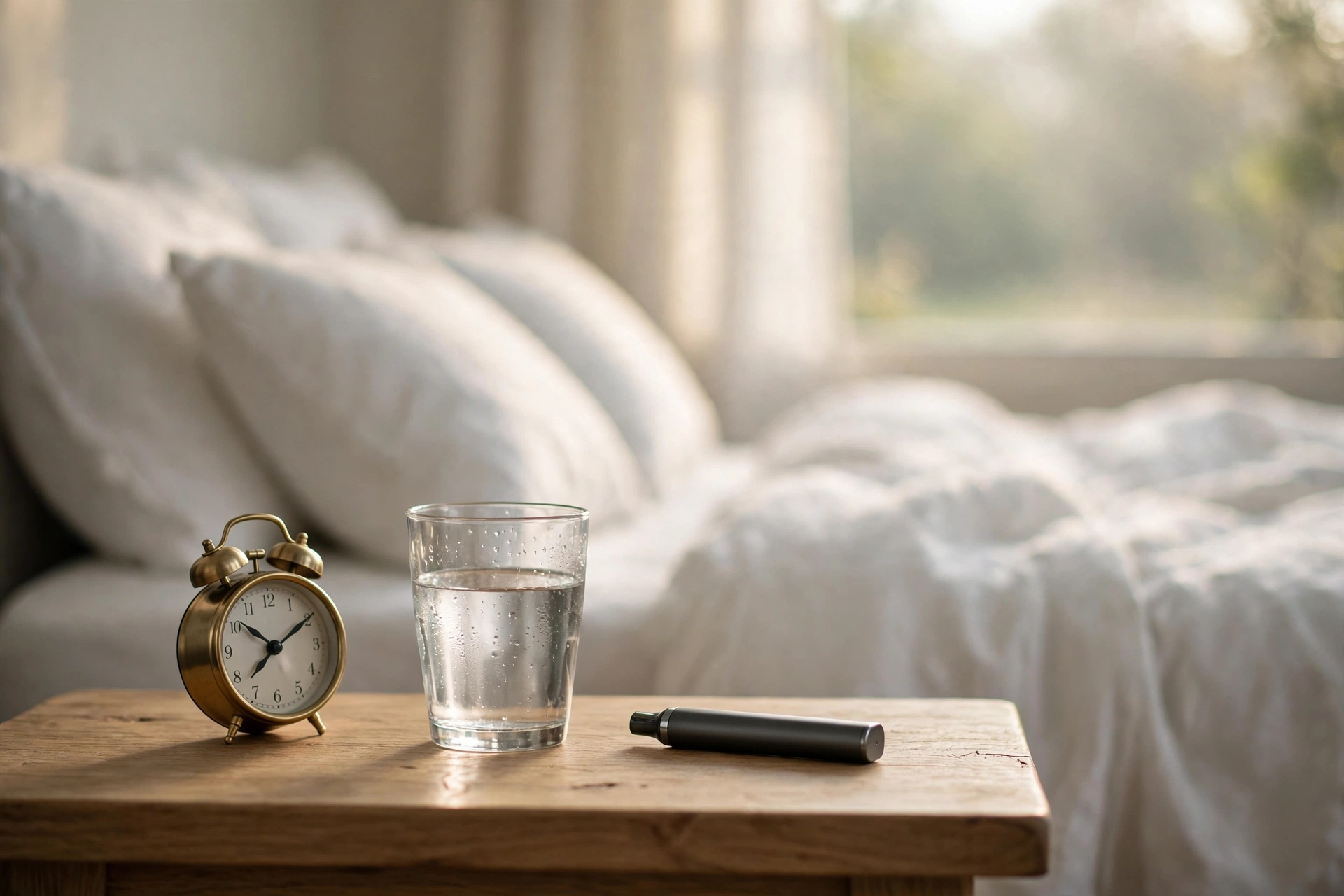
Nicotine can delay sleep onset, fragment sleep, and reduce sleep quality — particularly when used in the evening. Poor sleep is the most reliable route from vaping to daytime tiredness. If you vape close to bedtime and wake unrefreshed, the timing is the first thing to change: stop vaping at least an hour before bed and see whether sleep improves.
Dehydration and dryness
PG and VG both draw moisture from the mouth and throat, and vapers often drink less water than they need during long sessions. Dehydration causes fatigue on its own, and a dry, irritated throat disrupts sleep. Drinking water regularly while vaping is a small fix with an outsized effect.
Withdrawal between sessions
Regular nicotine users feel the dip between doses: irritability, difficulty concentrating, and tiredness are classic early withdrawal symptoms. If tiredness arrives a few hours after your last session and lifts when you vape again, that is dependence talking, not the device. The honest fix is reducing nicotine or quitting — see the resources below.
Vaping vs smoking: the honest comparison
The NHS advises that nicotine vaping is less harmful than smoking and can help smokers quit. That comparison is about harm, not energy: both deliver nicotine, both can disrupt sleep, and both can leave you tired. Switching from smoking to vaping does not guarantee more energy — but quitting nicotine altogether often does, once withdrawal passes.
What actually helps
- Cut evening nicotine. Stop vaping at least an hour before bed; keep the bedroom nicotine-free.
- Drink water. Keep water nearby during sessions and sip regularly — not instead of anything, just as a habit.
- Lower the strength. A lower nicotine strength softens both the lift and the dip. See our nicotine strength guide.
- Sleep 7–9 hours. The basics matter more than any setting: consistent sleep, regular meals, and movement.
- Take breaks. Short pauses between sessions reduce total nicotine and give the body time to recover.
Quitting: support that works
If tiredness is persistent, or you want to stop vaping, support helps: Smokefree.gov offers free tools and tips, and the US National Helpline 1-800-QUIT-NOW (1-800-784-8669) provides free, confidential advice. A clinician can also advise on cessation methods. For the broader evidence on vaping’s effects, see our side-effects evidence guide and our symptoms guide.
Frequently asked questions
Can vaping make you feel sleepy?
Yes. Nicotine’s stimulation fades into a dip, nicotine disrupts sleep, and dehydration adds fatigue. The combination is a common reason vapers feel tired, especially with heavy use or evening vaping.
Is fatigue a side effect of vaping?
Fatigue is commonly reported, usually through sleep disruption and the nicotine lift-and-dip cycle rather than a direct sedative effect. Persistent fatigue should be assessed by a clinician — it has many causes beyond vaping.
How does vaping affect sleep quality?
Nicotine can delay sleep onset, fragment sleep, and reduce sleep quality, particularly when used close to bedtime. Stopping at least an hour before bed is the simplest test of whether vaping is the cause.
Does vaping without nicotine cause tiredness?
It can, mildly — PG/VG dryness and dehydration still apply, and the ritual itself can mask poor sleep habits. But without nicotine, the sleep-disruption and withdrawal mechanisms are absent, so tiredness is less likely and usually has another cause.
Can quitting vaping improve energy levels?
Many people report better energy and sleep after quitting, once the first days of withdrawal pass. If you quit and fatigue persists beyond a few weeks, see a clinician — the cause may be unrelated to vaping.
For more on devices, liquids, and safety, browse the Vaping & E-Liquids hub.
Affiliate Disclosure
The CakeHeights Editorial Team is committed to providing accurate, research-backed information about cannabis and hemp products. Some links on this page are affiliate links, meaning we may earn a commission at no extra cost to you if you make a purchase through them. Our recommendations are based on independent research, testing, and analysis. We only promote products we believe offer genuine value to our readers. Learn more →

Related Articles
 Vaping & E-Liquids
MTL vs DTL Vaping: What’s the Difference?
 Vaping & E-Liquids
How to Quit Vaping: A Realistic Plan That Works
 Vaping & E-Liquids
Leave a Reply