
Table of Contents
First, run one quick test: wipe the device completely dry, stand it upright, and leave it alone for an hour. If liquid reappears around the base, the airflow, or the seals, you have a real leak; if only the mouthpiece feels damp, that is usually condensation. Most leaks come from five fixable causes.
Leak or condensation? Run the one-hour test first
Not every damp vape is leaking. Every time you inhale, warm vapour travels up through the mouthpiece and cools — and some of it turns back into liquid on the way. That is condensation, and it is normal. It shows up as a thin film inside the mouthpiece or a few drops where you put your lips, and it never pools anywhere else.
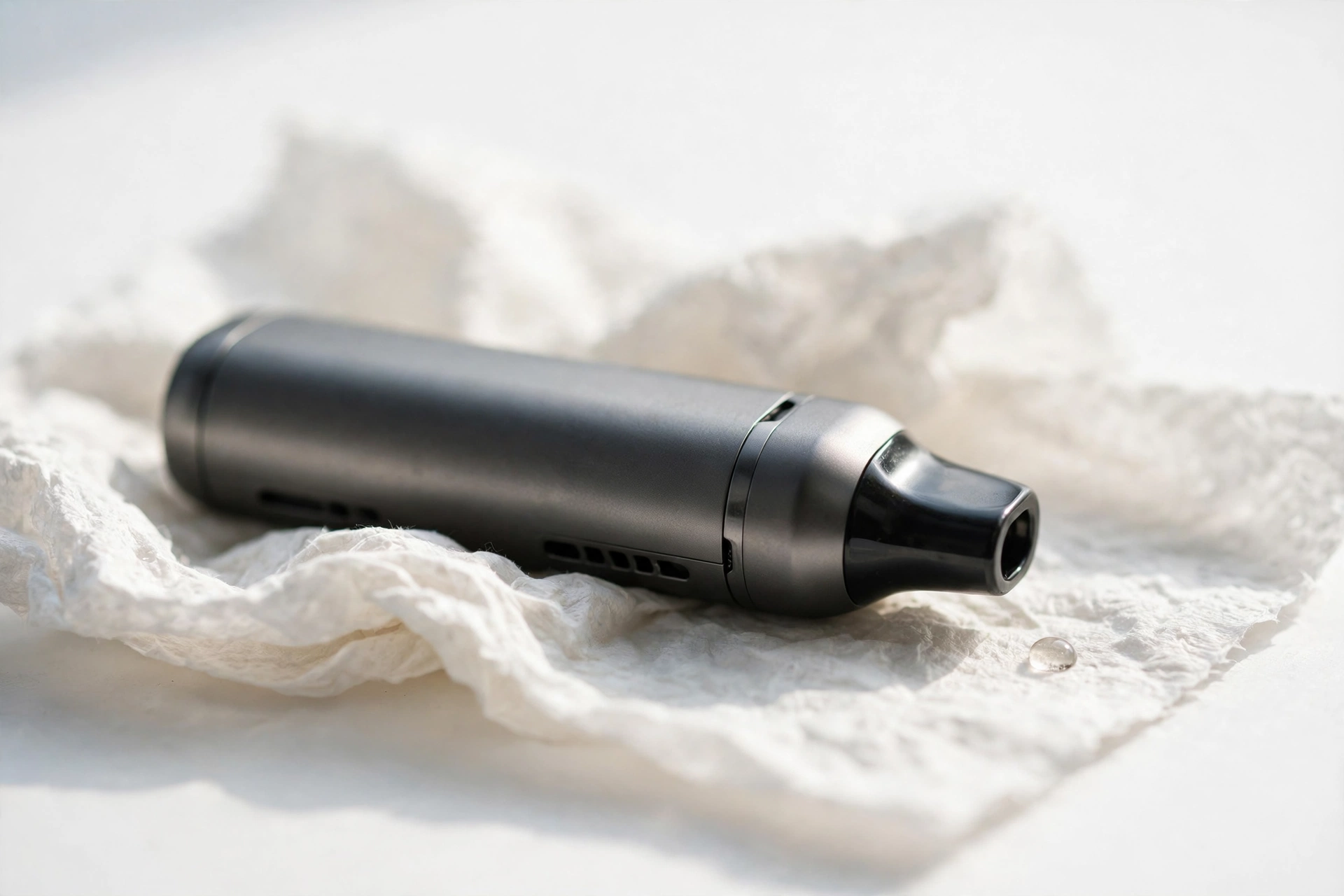
A real leak is different: e-liquid escaping from somewhere it should stay sealed — around the glass, the base, the fill port, or the airflow slots. So before you take anything apart, do the test. Wipe the whole device dry, inside the mouthpiece and out, stand it upright on a tissue, and walk away for an hour. Then look at the tissue.
If the tissue is dry and only the mouthpiece is damp again, it was condensation — wipe it out and carry on. If there is a wet ring under the base or the airflow, or fresh liquid beading around a seal, you have a leak, and the location tells you the cause. Liquid at the bottom points to the coil or a seal; liquid at the top points to the fill port; liquid after a flight or a hot car points to temperature and pressure.
The 5 most common causes (and the fix for each)
Manufacturer guides agree on the most common causes — overfilling, a bad seal, temperature swings, a flooded coil, and the wrong liquid — and the fix for each is usually a few minutes’ work and a spare part you already own.
1. You overfilled it
This is the number one cause, and the most forgiving. A tank or pod needs a small pocket of air at the top. Fill past the max line and there is nowhere for the liquid to go when the device warms up or gets knocked around, so it pushes out through the coil and the airflow holes. Filling with the airflow open, or tilting the tank so liquid runs down the centre tube, sends liquid straight into the chimney.
The fix: fill to the max line and no further, keep the airflow closed while you fill, and aim the liquid at the side of the tank rather than down the middle. Give it a minute or two after filling before you use it, so any air bubbles can settle.
2. A seal or O-ring is worn, missing, or out of place
Tanks and pods stay sealed thanks to small silicone O-rings at the base, the top cap, and the fill port. They stretch and wear with repeated cleaning and coil changes, and they are easy to lose — one slips off during a coil swap and suddenly a device that was dry for months is wet every morning. A cracked tank glass or a cracked pod does the same thing.
The fix: take the tank apart and look at every seal. If one is flattened, torn, or missing, replace it — most devices ship with spares in the box. Check the glass for hairline cracks too. If your device started leaking after a coil change, this is the first place to look, and our guide to choosing the right vape coils explains how coil fit and sealing work together.
3. Temperature or pressure changed
E-liquid expands when it warms up and contracts when it cools, and a sealed tank has nowhere to send the extra pressure. Leave a vape in a hot car, on a sunny windowsill, or in a warm pocket, and the liquid pushes out through the smallest gap. The same thing happens on a plane, where cabin pressure changes squeeze liquid out of the tank.
The fix: keep the device out of heat and out of direct sun, and never leave a full tank in a hot car. For a flight, empty the tank partway or travel with it empty and fill up after landing. If the leak only ever happens after heat or travel, the device is probably fine — the conditions were the problem.
4. The coil is flooded
A flooded coil holds more liquid than it can vaporise. The signs are hard to miss: gurgling, a wet or tight draw, weak vapour, popping, and hot droplets spitting into your mouth. Flooding usually follows a fresh coil that was over-primed, a long draw on a cold device, or a coil that is simply worn out — old cotton stops holding liquid properly and lets it through.
The fix: take the tank off, wrap the airflow end in a tissue, and give it a few short, sharp blows through the mouthpiece to push the excess out. Then take a few gentle puffs without firing to pull the liquid back into the cotton. If it floods again within a day, the coil is done — replace it. Our guide to how long vape coils last covers the lifespan signs, and if the gurgling comes with popping, our guide to why your vape is popping and spitting explains the difference between spitback and a flood.
5. The e-liquid is too thin for the coil
E-liquid is a mix of VG (vegetable glycerin) and PG (propylene glycol), and the ratio matters more than most people expect. Thin, high-PG liquid soaks through cotton fast; in a low-resistance coil with large wicking holes, it can soak through faster than the coil can vaporise it, and the excess drips out of the airflow. That is why sub-ohm tanks usually want liquid with at least 70% VG, while mouth-to-lung tanks are happy with a 50/50 blend.
The fix: match the liquid to the coil. Check the ratio on the bottle and check what your coil is built for — the manual or the coil’s packaging will say. If you switched to a thinner liquid and the leaking started the same week, you have found your culprit.
When a leak means the device is done
Most leaks are fixable, but some are the device telling you it is finished. A cracked pod that keeps weeping no matter which seal you change, a tank whose threads are stripped so the base never sits straight, or a disposable that leaks from a seam — these are not worth fighting. Disposables deserve a special note: if yours is leaking and blinking at the same time, the electronics may be wet, so stop using it and check our guide to why your disposable vape is blinking before you keep puffing on it.
The same logic applies to age. Seals harden, threads wear, and a tank that has survived a year of daily use owes you nothing. A new pod or a fresh set of O-rings costs very little; a bag full of e-liquid costs more.
Keeping it dry from now on
Four habits prevent most leaks before they start. Store the device upright — lying on its side lets liquid sit against the coil and seep through. Fill to the max line, never past it. Match your liquid’s VG/PG ratio to your coil. And replace coils and seals on schedule rather than waiting for a puddle to tell you they are done.
One last habit: wipe the device down once a day. Thirty seconds with a tissue catches a small weep before it becomes a sticky mess in your pocket — and if you ever do spot liquid where it should not be, you will know immediately whether it is back.
Frequently asked questions
Is my vape leaking or is it just condensation?
Wipe it completely dry, stand it upright for an hour, and check. Condensation only dampens the inside of the mouthpiece, while a real leak leaves liquid around the base, the airflow slots, or the seals. If the tissue under the device stays dry, it was condensation.
Why does my vape leak after refilling?
Almost always overfilling or a filling mistake. Liquid above the max line has nowhere to go when the device warms up, and liquid poured down the centre tube floods the coil directly. Fill to the line, keep the airflow closed, and let it sit a minute before vaping.
Why is my vape leaking from the airflow holes?
Liquid at the airflow usually means a flooded coil, a loose or badly seated coil, or liquid too thin for the coil. Clear the flood with a few blows through the mouthpiece, reseat the coil, and check the VG/PG ratio on your bottle matches what the coil needs.
Can a hot car make my vape leak?
Yes. E-liquid expands as it warms, and the extra pressure pushes liquid out through the smallest gap in a sealed tank. Never leave a vape in a hot car or direct sun, and travel with the tank partway empty if you expect big temperature changes.
Should I throw away a vape that keeps leaking?
Not always — try a new coil and new O-rings first, since those fix most persistent leaks. But if the pod or tank is cracked, the threads are stripped, or it is a disposable leaking from a seam, replacement is the sensible call rather than another round of fixes.
This article is general information, not medical advice. E-liquid contains nicotine in most products; keep devices and e-liquid away from children and pets, and stop using a device that leaks onto its battery or electronics. See our medical disclaimer.
For a broader overview of vaping guides on this site, see our vaping and e-liquids hub.
Affiliate Disclosure
The CakeHeights Editorial Team is committed to providing accurate, research-backed information about cannabis and hemp products. Some links on this page are affiliate links, meaning we may earn a commission at no extra cost to you if you make a purchase through them. Our recommendations are based on independent research, testing, and analysis. We only promote products we believe offer genuine value to our readers. Learn more →

Related Articles
 Vaping & E-Liquids
MTL vs DTL Vaping: What’s the Difference?
 Vaping & E-Liquids
How to Quit Vaping: A Realistic Plan That Works
 Vaping & E-Liquids