
Table of Contents
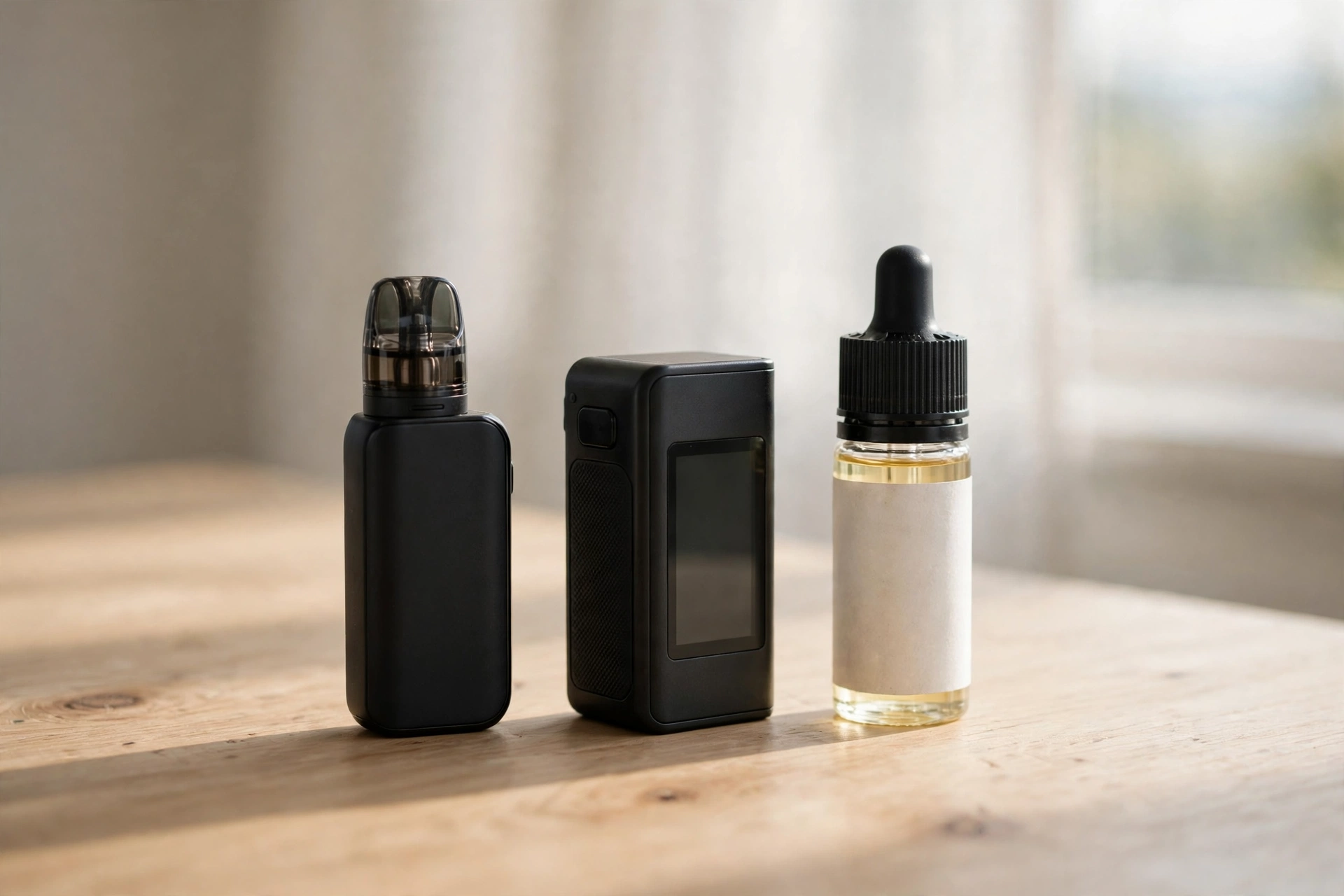
A compact mod is a small, pocketable vaping device, but that phrase covers three different kinds of hardware, and most “mini vape” articles mix them up. Before anything else: a small box mod with a screw-on tank, a pod mod, and a pod system are not the same thing, and the right choice depends on which one you actually want. This guide sorts out the categories, corrects the most common claims about small devices, and gives you a checklist for choosing one, without a fixed list of models that will be out of date within a year.
What counts as a compact mod?
| Category | What it is | Examples from the old version of this post |
|---|---|---|
| Small box mod + tank | A miniature version of a full-size box mod, with a standard 510 connection for a separate tank. Most adjustable, most parts to maintain. | Vaporesso Target Mini; Innokin Coolfire Mini (both small box-mod kits with tanks) |
| Pod mod | A pod device with mod-like power and adjustable wattage, using replaceable pods and coils instead of a tank. | SMOK RPM 40 (1500mAh built-in battery, up to 40W, IQ-R chipset) |
| Pod system | The smallest and simplest: a small battery with a refillable or prefilled pod, usually fixed or limited power, draw-activated. | VooPoo Drag Nano (pod system with GENE.Pod chip) |
The distinction matters because it decides what you can change later. A box mod lets you swap tanks and coils freely. A pod mod locks you into one maker’s pods and coils. A pod system locks you in further and usually offers no wattage control at all. When an article calls all three “mods,” it is hiding the most important buying decision. For the full-size end of the same question, see our beginner’s guide to box mods.
What do you actually give up by going small?
Small devices are genuinely more portable and more discreet. But the trade-offs are real, and one common claim is backwards: small devices do not extend battery life. A smaller body holds a smaller battery, so a compact device almost always needs charging more often than a full-size mod, even though it typically runs at lower power. The honest trade-off list:
- Battery capacity. Compact devices usually carry 800-1,500mAh built-in batteries, against 2,500mAh+ or a replaceable 18650/21700 cell in larger mods. Expect to charge daily, sometimes twice.
- Power ceiling. Most compact devices top out at 15-40W. That is plenty for mouth-to-lung vaping and nicotine salts, but not enough for the big-cloud sub-ohm vaping that larger mods do.
- Pod and coil lock-in. Pod systems and pod mods only take their own pods and coils. If the maker discontinues them, the device becomes a paperweight. Check that coils are widely stocked before buying.
- Less to adjust. Fewer settings means simpler use, but also less control over airflow, wattage, and temperature. For many people that is a feature, not a bug.
How do I choose a compact device?
Work through these in order. The first two decide the category; the rest narrow it down.
- How do you inhale? Mouth-to-lung (MTL), like a cigarette, suits low-power devices, tighter airflow, and higher-nicotine liquids. Direct-to-lung (DTL) needs more power, more airflow, and lower nicotine. Most compact devices are built for MTL; only pod mods with adjustable wattage do restricted DTL well.
- What nicotine? Nicotine salts at higher strengths pair with low-power MTL devices. Freebase nicotine at lower strengths pairs with higher-power devices. Using high-strength salts in a high-power device is a fast route to nicotine overconsumption.
- Battery: built-in or replaceable? Nearly all compact devices have sealed built-in batteries. That is simpler, but the battery cannot be swapped when it degrades, which limits the device’s life. If you want replaceable cells, you are looking at a larger mod; our guide to replaceable vape batteries covers real cell ratings and safety.
- Coil and pod availability. Before buying, check that replacement pods or coils are sold by several retailers, not just one. Discontinued coils strand more devices than any hardware failure.
- Charging. USB-C is now common and charges faster than the older micro-USB; check which port the device has and whether a cable is included. Charge on a flat, non-flammable surface, and do not leave a charging device unattended overnight.
- Size and weight, honestly. “Pocketable” ranges from 60g to 150g. If discretion is the point, weight matters as much as dimensions.
Can a mini vape use any e-liquid?
No, and matching liquid to coil is the most common beginner mistake. The rule is simple: the coil’s resistance decides the liquid.
| Vaping style | Coil resistance | Liquid mix | Nicotine |
|---|---|---|---|
| MTL (tight draw) | 0.8 ohm and above | 50/50 PG/VG | Higher strengths, often salts |
| Restricted DTL | 0.4-0.8 ohm | 60/40 to 70/30 VG/PG | Medium strengths |
| DTL / sub-ohm | Below 0.4 ohm | 70/30 VG/PG or higher VG | Low strengths (3-6 mg/ml typical) |
High-VG liquid in a tight MTL coil wicks slowly and burns the coil; thin 50/50 liquid in a sub-ohm tank leaks and floods. In the UK and EU, nicotine strength is capped at 20 mg/ml and refillable pods at 2 ml under the Tobacco Products Directive; the U.S. has no federal nicotine cap, so strengths vary widely. For the full PG/VG picture, see PG vs. VG explained, and for the hardware side, how vape coils work.
How do I maintain a compact device?
Small devices need the same care as large ones, with less room for error:
- Clean the contacts. Wipe the pod seating area and battery contacts with a dry cloth or cotton bud regularly. Leaked liquid on contacts causes misfires and poor charging.
- Wash tanks and pods correctly. Isopropyl alcohol is the standard cleaner for metal and glass parts; rinse with water afterwards and dry completely before reassembly. Never soak electronics, coils, or built-in batteries, and never use alcohol on a part you have not removed from the device.
- Replace coils on taste, not on a schedule. A burnt taste, weak flavor, or gurgling means the coil is done. Coil life varies from days to weeks depending on liquid sweetness and use.
- Respect the battery. The FDA’s battery-safety guidance applies to built-in batteries too: do not charge with a damaged cable, keep the device away from extreme heat, and stop using any device with a swollen battery or a cracked case. The full list is on the FDA’s vape battery safety page.
- Firmware updates are rare. Most compact devices have no updateable firmware. If yours does, follow the maker’s instructions exactly; if it does not, there is nothing to update, and any article telling you to “check regularly” is padding.
What has changed in small devices?
Three shifts matter. First, pod systems have largely eaten the mini-mod category: most people shopping for a small device in 2026 end up with a pod system, not a small box mod, because pods are simpler and cheaper to start with. Second, USB-C charging is now standard on new devices, replacing micro-USB. Third, regulation keeps tightening: the UK banned disposable vapes in June 2025, which pushed more users toward refillable pod systems, and nicotine and pod-size caps in the UK and EU shape what manufacturers sell there. None of this changes the buying logic above, but it does mean older model lists, including the one this post used to carry, go stale fast. Check current availability before trusting any recommendation, including ours.
On the health question, the honest framing comes from the NHS vaping-to-quit guidance: nicotine vaping is less harmful than smoking, which makes it a reasonable quit aid for smokers, but it is not risk-free, and non-smokers should not start.
Frequently asked questions
What are compact mod vapes?
Small, pocketable vaping devices. The term covers three categories: small box mods with tanks, pod mods with adjustable power, and simple pod systems. Knowing which category a device belongs to matters more than its brand.
Are mini vapes powerful enough?
For mouth-to-lung vaping and nicotine salts, yes: 10-40W is plenty. For direct-to-lung cloud vaping, no: compact devices lack the power and battery capacity, and that is a deliberate trade-off for size.
How do I choose a small vape mod?
Decide your inhale style (MTL or DTL) and nicotine type first, then check battery capacity, coil and pod availability, charging port, and real weight. Avoid any device whose replacement coils are hard to find.
Why choose a compact vape over a larger one?
Portability, discretion, and simplicity. The cost is shorter battery life, lower power, and less flexibility. If you vape heavily or want to swap tanks, a larger mod serves you better.
Can mini vapes use any e-juice?
No. Match the liquid to the coil: 50/50 PG/VG for MTL coils above 0.8 ohm, higher-VG liquids for sub-ohm coils. Using the wrong mix burns coils or causes leaking.
Browse more in the Vaping & E-Liquids hub.
Affiliate Disclosure
The CakeHeights Editorial Team is committed to providing accurate, research-backed information about cannabis and hemp products. Some links on this page are affiliate links, meaning we may earn a commission at no extra cost to you if you make a purchase through them. Our recommendations are based on independent research, testing, and analysis. We only promote products we believe offer genuine value to our readers. Learn more →

Related Articles
 Vaping & E-Liquids
MTL vs DTL Vaping: What’s the Difference?
 Vaping & E-Liquids
How to Quit Vaping: A Realistic Plan That Works
 Vaping & E-Liquids
Leave a Reply