
Table of Contents
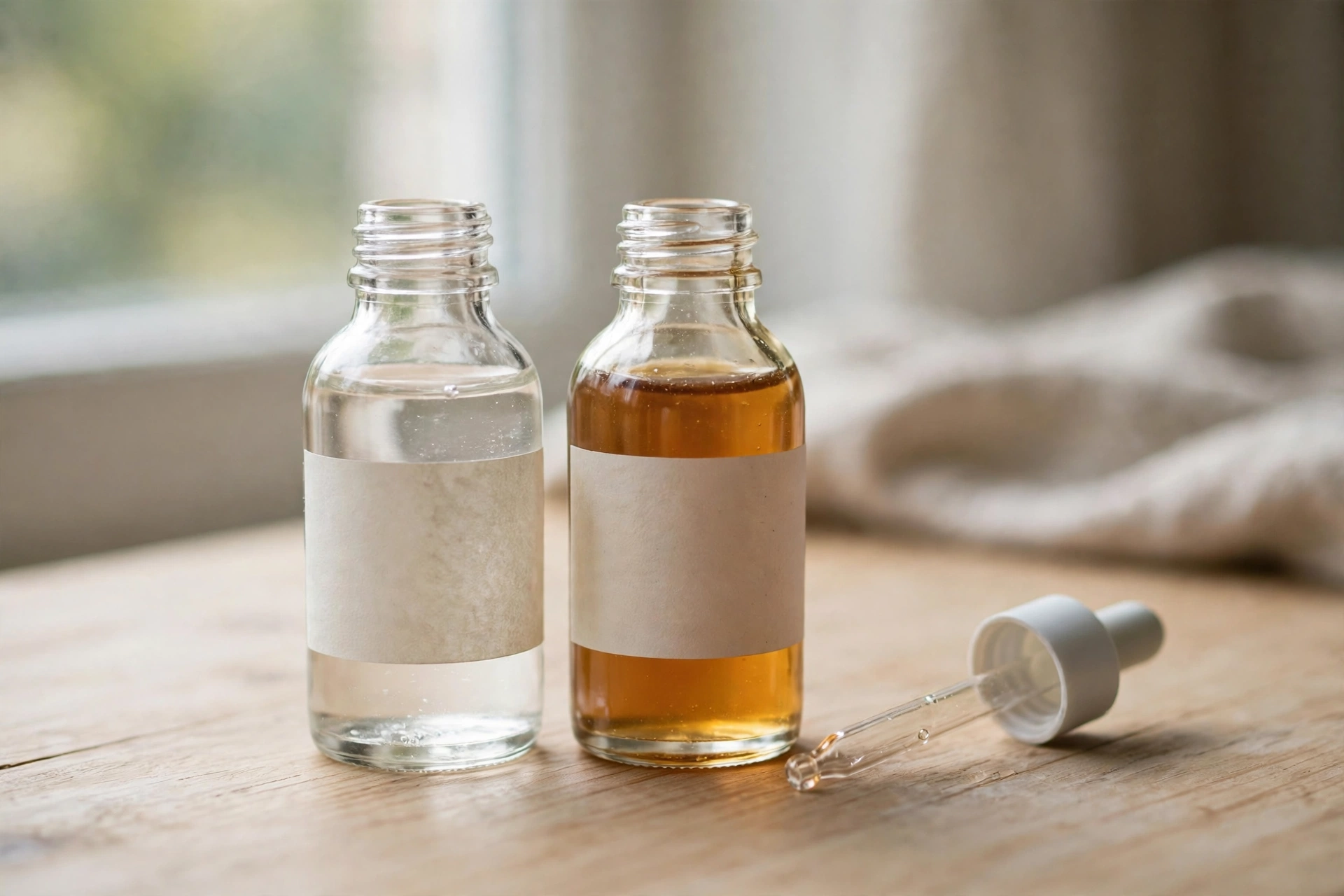
PG (propylene glycol) and VG (vegetable glycerin) are the two base liquids in nearly all e-liquid. PG is thin, carries flavour sharply, and gives a stronger throat hit; VG is thick and slightly sweet, produces denser vapour, and feels smoother. The ratio on the bottle is mostly a device choice, not a quality ranking: thin 50/50 liquid suits small pods and mouth-to-lung kits, while high-VG liquid suits larger sub-ohm tanks. The safety question is more nuanced than most guides admit — both substances are approved for eating, but neither has been approved for inhaling, and the long-term inhalation evidence is still thin.
PG vs VG at a glance
| Property | Propylene glycol (PG) | Vegetable glycerin (VG) |
|---|---|---|
| Consistency | Thin, watery | Thick, syrupy |
| Flavour | Carries flavour sharply and cleanly | Slightly sweet; flavour comes through more softly |
| Throat hit | Stronger, closer to smoking | Smoother and gentler |
| Vapour | Modest clouds | Dense, visible clouds |
| Wicking | Wicks fast through small coil openings | Wicks slowly; needs larger wicking ports |
| Sensitivity | A minority of people react to it (see below) | Reactions are rarer |
| Source | Synthetic (petroleum or plant-derived) | Plant oils (palm, soy, or coconut) |
Neither liquid is an oil, despite the names. That distinction matters: the severe lung injuries linked to vaping in 2019 were associated with vitamin E acetate in illicit THC cartridges, not with PG or VG in regulated nicotine e-liquid. For the broader picture on vaping and quitting smoking, see the NHS guidance on vaping to quit smoking.
What the ratio on the bottle means
| Ratio (PG/VG) | Best suited to | What to expect |
|---|---|---|
| 50/50 | Small pods, mouth-to-lung pens, disposables | Balanced flavour and throat hit, modest vapour; works with high-strength nicotine salts |
| 60/40 (VG/PG) | Larger pods, restricted direct-to-lung kits | More vapour than 50/50, still wicks reliably |
| 70/30 (VG/PG) | Sub-ohm tanks | Thick vapour, smoother hit; pair with lower nicotine (typically 3–6 mg/ml) |
| 80/20 and higher VG | High-power sub-ohm tanks and rebuildables | Maximum vapour; too thick for small pods — expect dry hits and burnt coils |
The practical rule: match the liquid to the coil. Small coil openings need thin liquid; big coils with large wicking ports need thick liquid to avoid leaking and flooding. If a pod tastes burnt with high-VG juice, the liquid is usually too thick for the device — not defective. Our guides to vape coils and inhaling properly cover the device side of the same question.
The safety question: “safe to eat” is not “safe to inhale”
Both PG and VG are listed by the US Food and Drug Administration as Generally Recognized as Safe (GRAS) — for use in food. That designation covers eating and drinking. It does not cover inhaling, and the FDA has never approved either substance for inhalation. Your digestive system and your lungs process substances very differently, so a food-safety verdict cannot simply be transferred to vaping. Short-term inhalation of PG has been studied in contexts such as theatrical fog and asthma inhalers, but decades-long daily inhalation of heated PG/VG mixtures has no equivalent evidence base. The honest summary: PG and VG are among the better-understood vape ingredients, the known risks are modest compared with smoking, and the long-term picture is genuinely incomplete. Anyone who tells you either liquid is definitively safe to inhale is overstating the evidence — and anyone who tells you they are proven dangerous at vaping levels is overstating it in the other direction.
PG sensitivity is real
A minority of people are sensitive to propylene glycol. The typical symptoms are a sore or scratchy throat, dry mouth, or skin irritation that appears with high-PG liquid and fades when switching to higher-VG blends. PG was named the American Contact Dermatitis Society’s Allergen of the Year in 2018, reflecting its recognised role in contact allergy. VG sensitivity is rarer, though people allergic to coconut or palm oil should be cautious with max-VG liquids, since VG is commonly derived from those oils. If vaping consistently irritates your throat, trying a higher-VG ratio is a reasonable first experiment — and if symptoms persist, stop and talk to a clinician rather than pushing through. Nicotine strength can also irritate the throat; how much nicotine is too much covers that side separately.
The antifreeze question, answered honestly
“PG is in antifreeze” is a favourite scare line, and it is technically true — and meaningless. Propylene glycol is used in non-toxic antifreeze formulations precisely because it is far less toxic than ethylene glycol, the conventional antifreeze ingredient that is poisonous to humans and animals. PG is also in foods, medicines, cosmetics, and asthma inhalers. An ingredient’s presence in an industrial product says nothing about its safety in any other use; what matters is the dose, the route of exposure, and the evidence for that specific use. The antifreeze comparison is not a safety argument in either direction.
Choosing your ratio
Start from your device, not from a preference. If you use a pod or a mouth-to-lung kit, start with 50/50. If you use a sub-ohm tank, start with 70/30 VG/PG and lower nicotine. Then adjust one variable at a time: more PG if flavour feels muted or the hit feels too soft; more VG if the throat hit is harsh or you want denser vapour. Buy small bottles while experimenting, and give each ratio a full day before judging it — the first few puffs after a coil change are not representative. For regulated-market context, see UK e-liquid rules and the full vaping and e-liquids hub.
The National Academies’ 2018 e-cigarettes report reviewed more than 800 studies on the health effects of e-cigarettes.
Frequently asked questions
What are PG and VG in vaping?
The two base liquids in e-liquid. PG is thin and carries flavour with a stronger throat hit; VG is thick, slightly sweet, and produces denser vapour. Nicotine and flavourings are added to this base.
How do PG and VG affect flavour?
PG delivers flavour more sharply and cleanly; VG softens flavour slightly and adds a touch of sweetness. High-PG liquids generally taste more defined, high-VG liquids taste smoother.
Can PG cause allergic reactions?
Yes, in a minority of people — typically throat irritation, dry mouth, or skin reactions. PG is a recognised contact allergen. Switching to a higher-VG blend usually resolves it; persistent symptoms warrant medical advice.
What is the best PG to VG ratio?
There is no universal best. Use 50/50 for pods and mouth-to-lung kits, 70/30 VG/PG for sub-ohm tanks, and adjust from there based on throat feel and flavour.
Is VG more viscous than PG?
Yes, considerably. That thickness is why high-VG liquid needs larger coil wicking ports and why it produces denser clouds — and why it performs poorly in small pods.
Affiliate Disclosure
The CakeHeights Editorial Team is committed to providing accurate, research-backed information about cannabis and hemp products. Some links on this page are affiliate links, meaning we may earn a commission at no extra cost to you if you make a purchase through them. Our recommendations are based on independent research, testing, and analysis. We only promote products we believe offer genuine value to our readers. Learn more →

Related Articles
 Vaping & E-Liquids
MTL vs DTL Vaping: What’s the Difference?
 Vaping & E-Liquids
How to Quit Vaping: A Realistic Plan That Works
 Vaping & E-Liquids
Leave a Reply