
Table of Contents
THC is not classified as a stimulant — but it is not a pure depressant either. Its effects are biphasic: low doses tend to feel stimulating (energy, talkativeness, euphoria), while higher doses tend to feel sedating (relaxation, drowsiness, couch-lock). The same compound, the same person, different doses, opposite-feeling effects. That dose-dependence is why THC defies the usual drug categories, and why “is it a stimulant?” has no one-word answer.
What defines a stimulant
Stimulants increase central nervous system activity: alertness, heart rate, blood pressure, and energy. Classic examples are caffeine, nicotine, and prescription amphetamines (Adderall, Ritalin). Their signature profile is consistent: more stimulation at higher doses, with decreased appetite and insomnia as side effects. THC does not fit that profile — it increases appetite, often causes sedation at higher doses, and its alertness effects reverse with dose.
The biphasic dose curve
| Dose | Typical experience | Character |
|---|---|---|
| Low | Euphoria, talkativeness, mild energy, heightened senses | Stimulant-like |
| Moderate | Relaxation, altered time perception, appetite increase | Mixed |
| High | Sedation, anxiety or paranoia (in some), impaired coordination, perceptual distortion | Depressant-like |
“Dose” here means THC amount relative to the individual’s tolerance — a regular user’s “low” is a new user’s “high.” Set, setting, strain chemistry, and consumption method all shift the curve. High-dose perceptual distortion is sometimes called “hallucinogenic,” but THC is not a classic hallucinogen (like LSD or psilocybin): it does not reliably produce the profound perceptual and cognitive restructuring those drugs do.
THC vs caffeine and amphetamines
| Caffeine | Amphetamines | THC | |
|---|---|---|---|
| Primary mechanism | Adenosine blockade | Dopamine/norepinephrine release | CB1 receptor activation (with downstream dopamine effects) |
| Appetite | Suppresses | Suppresses | Stimulates |
| High-dose character | Jittery, anxious, insomnia | Agitation, hypertension | Sedation, anxiety/paranoia, impairment |
| Duration | 4–6 hours | 4–6 hours (immediate-release) | 2–3 hours smoked; 6–8+ hours edibles |
The mechanism: why one compound does both
THC binds to CB1 receptors throughout the brain, including in circuits that regulate dopamine release, arousal, and inhibition. At low doses, the net effect in many people is disinhibition and dopamine-linked reward — feeling stimulated. At higher doses, CB1 activation in other circuits dominates — sedation, motor impairment, and anxiety. The NCCIH cannabis overview covers the evidence base, including the risks: cannabis use disorder, impaired driving, and adolescent brain effects. The NASEM evidence-review approach — grading each claim by its evidence — applies equally to cannabis claims.
Frequently asked questions
Is THC considered a stimulant?
No — not as a formal classification. It has stimulant-like effects at low doses and depressant-like effects at higher doses, which is why it is usually classed separately as a cannabinoid with a mixed profile.
Can THC lead to increased energy?
At low doses, some users report a temporary boost in energy and talkativeness. At higher doses the same users typically feel sedated. Responses vary widely by dose, tolerance, and individual physiology.
What effects does THC have on the body?
Via the endocannabinoid system: mood, memory, appetite, pain sensation, heart rate, and coordination — with effects ranging from euphoria to impairment. See our THC psychoactive effects guide.
How does THC differ from caffeine?
Caffeine is a consistent stimulant (alertness up, appetite down, insomnia risk). THC is biphasic (stimulant-like at low doses, sedating at high doses), increases appetite, and impairs coordination and memory.
Does THC impact cognitive function?
Yes, temporarily: short-term memory, attention, coordination, and reaction time are impaired while intoxicated, more so at higher doses. See our THC benefits and side effects guide.
Browse the THC & Cannabinoids hub.
Affiliate Disclosure
The CakeHeights Editorial Team is committed to providing accurate, research-backed information about cannabis and hemp products. Some links on this page are affiliate links, meaning we may earn a commission at no extra cost to you if you make a purchase through them. Our recommendations are based on independent research, testing, and analysis. We only promote products we believe offer genuine value to our readers. Learn more →

Related Articles
 THC & Cannabinoids
Delta-8 THC Legal in North Carolina? Key Facts & Insights
 THC & Cannabinoids
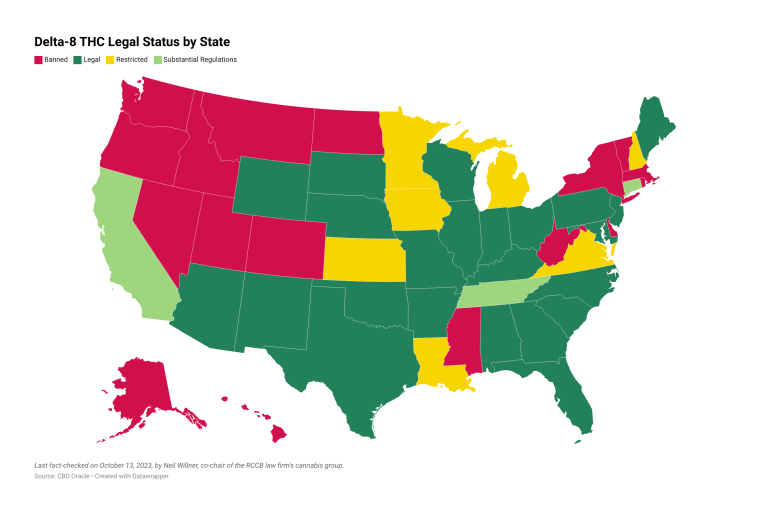
Delta-8 THC Legal Status: A Comprehensive 2023 Analysis
 THC & Cannabinoids